
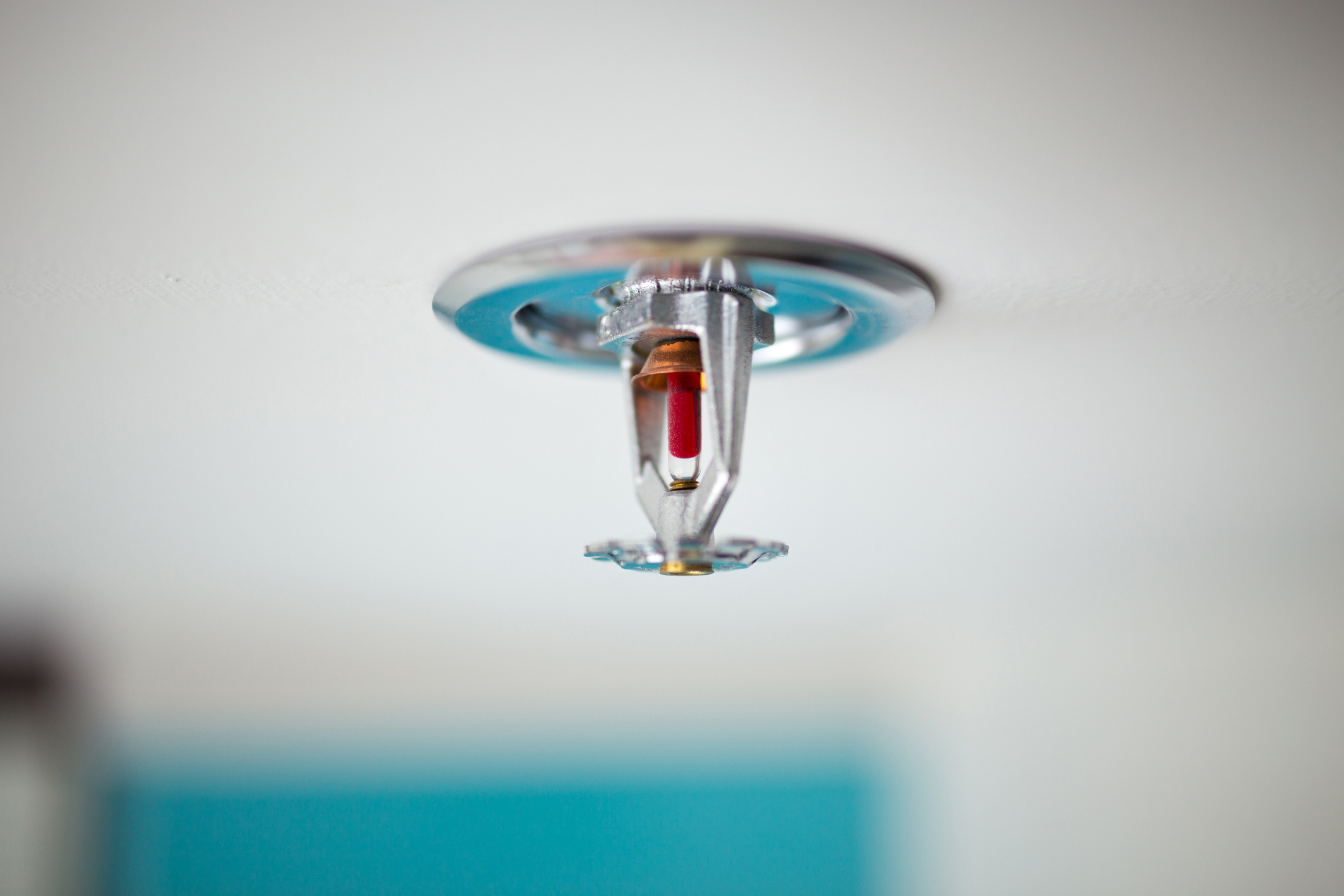
The effectiveness of sprinklers and other automatic fire-suppression systems relies on clear communication between those responsible for the fire safety of the building and the FRS, writes ex fire officer and the British Automatic Fire Sprinkler Association’s (BAFSA) sprinkler ambassador, Nick Coleshill
I have been an operational fire-safety inspection officer for over 30 years, and it still surprises me the lack of awareness of the importance of business continuity management when it comes to fire safety. There seems to be a real need for consistency in the provision of emergency response information made available to Fire & Rescue Services and onsite representatives who must deal with a building’s active fire-safety systems, including sprinklers, in the event of a fire. When this isn’t the case it can have a major knock-on effect, not only on the business or premises itself but on attitudes towards Automatic Fire Suppression Systems (AFSS) amongst landlords, leaseholders and the public in the longer term.
Fire sprinklers are designed to control, suppress or even extinguish a fire within a building. We know that the amount of water released from a sprinkler system will be far less than that from a firefighter’s hose. An AFSS will, in many cases, be connected to an alarm monitoring station that will notify the Fire & Rescue Service, facilitating a prompt attendance and minimising the amount of water released by the sprinkler system.
Representing BAFSA (The British Automatic Fire Sprinkler Association) as the sprinkler coordinator for Sprinkler Saves UK (www.sprinklersaves.co.uk), a dedicated website that collates and reports AFSS activations across the UK, I monitor reports of sprinkler activations and I find it disappointing to see regular news media reports on fires that focus more on water damage than the fact that the activation of the sprinkler system has prevented a minor incident becoming a major fire. That is why it is so important to stress the importance of completing a business continuity plan that includes details on how to isolate a sprinkler system following an activation.
It is, of course, a requirement of the Regulatory Reform (Fire Safety) Order 2005 for the ‘Responsible Person’ at a building to implement the appropriate arrangements for the effective, planning, organisation, control, monitoring and review of preventive and protective measures when it comes to fire safety. Also, under the Building Regulation 38, it is required that fire-safety information is passed from the person carrying out the building works onto the Responsible Person once the build is complete.
In my experience, however, these regulations are either not complied with or insufficient information has been passed to the Responsible Person concerned. There is not just a potential life safety cost to this either. There is a financial cost too. I recently completed a post fire inspection at a student hall of residence building where a single sprinkler head had successfully contained, controlled and extinguished a small communal cluster flat kitchen fire. The estimated cost to make good came could have come in at £13,000 with no major impact to the business continuity of the premises.
However, the actual outcome of the incident was that all the occupants of the building had to be relocated to temporary accommodation because no-one in the building knew how to isolate the sprinkler water supply once the fire had been extinguished by the FRS. This meant the building’s electrics were compromised with a final overall cost to the building owner and insurer estimated to be in the region of £1.5 million.
If the appropriate onsite information for the fire sprinkler system was immediately available to operational crews, we would be focusing on the positive outcome of this incident – i.e. that the fire was extinguished by the residential fire sprinkler system before the arrival of the FRS with no injuries or fire fatalities reported.
My inspection identified some key failures that contributed to such a dramatic impact on the business continuity for the premises:
- Fire safety information contained within the premises information box was not fit for purpose. There was no block plan readily available to the incident commander to enable them to locate the controls and isolate the system.
- Location plates and signs were not fitted to riser cupboards or doors to rooms to ensure that the sprinkler stop valves could be easily identified and isolated.
- Overall there was inadequate training of onsite staff on the active fire-safety measures within the building so there were no protocols to be implemented.
The importance of having onsite information for the FRS was reinforced in an open London Fire Brigade letter sent to shopping centre managers following several fires in the city. It highlighted the importance of fire-safety management and measures that should be taken to ensure the safety of the public, staff and firefighters. The guidance contained within in this letter could be directed at any building installed with an AFSS.
So I ask, if you are a regulator, sprinkler contractor or building manager, that you consider the areas highlighted in this article and ask yourself whether you need to do more to ensure that relevant information is available on site allowing the sprinkler system to be isolated following activation, once it has been confirmed by the FRS that the fire has been extinguished.
Key AFSS info for Fire & Rescue Services
Providing relevant information on the AFSS in situ that is readily available to operational crews is of paramount importance. Here’s a best-practice guide to what should be contained in that information.
- General overview of the AFSS
- Zone and coverage of the AFSS
- Type of water supply/duration
- Laminated copies, zone map that is easy to read and includes the location of the isolation valve sets and pump room
- 24-hour contact numbers for relevant contractors
Sprinkler Saves Review 23/24
Every year BAFSA publishes its Sprinkler Saves Review. This publication is the only globally available report of its kind detailing successful sprinkler activations in UK. BAFSA’s Nick Coleshill works with UK FRS representatives and sprinkler industry colleagues to collate and report sprinkler activations.
The details of these incidents provide further evidence of the reliability and effectiveness of sprinkler systems and support the most recent UK research commissioned by the NFCC and NFSN by Optimal Economics that demonstrated:
- Sprinklers are 99% efficient in extinguishing or controlling a fire
- Sprinklers are 94% efficient in their ability to operate
You can report a ‘Sprinkler Save’ directly on the www.sprinklersaves.co.uk website. All saves help build a case for the increased use of sprinklers as part of a comprehensive fire-safety package.
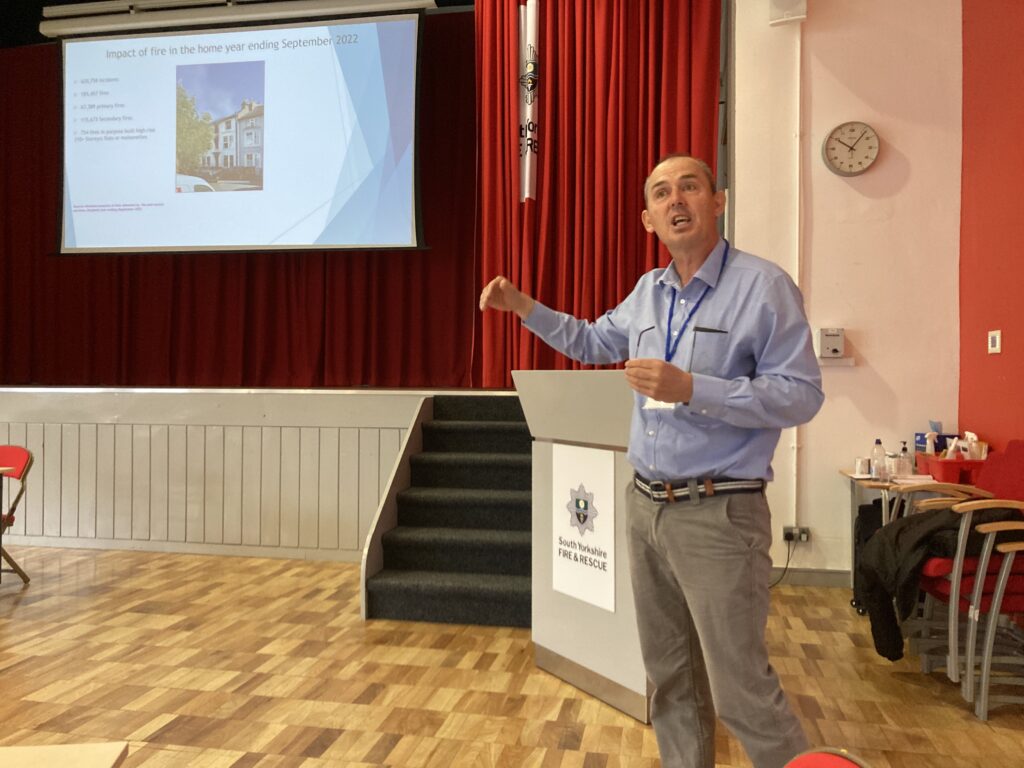
Nick Coleshill is the British Automatic Fire Sprinkler Association’s sprinkler ambassador and runs www.sprinklersaves.co.uk, where he collates sprinkler activations across the UK to provide a body of evidence of the effectiveness of sprinklers as part of a fire safety and prevention strategy. Prior to this Nick was an operational fire officer with the London Fire Brigade with 30 years’ service, 15 of which was in the fire safety department serving as a Fire Safety Inspecting Officer.
About the Author

Dave Staddon - Publisher
Co-Founder of MDM Publishing Ltd. He has worked in fire publishing for close to 30 years. The company's portfolio includes International Fire Protection, International Fire Fighter, Asia Pacific Fire, Gulf Fire & UK Fire.

You must be logged in to post a comment.