
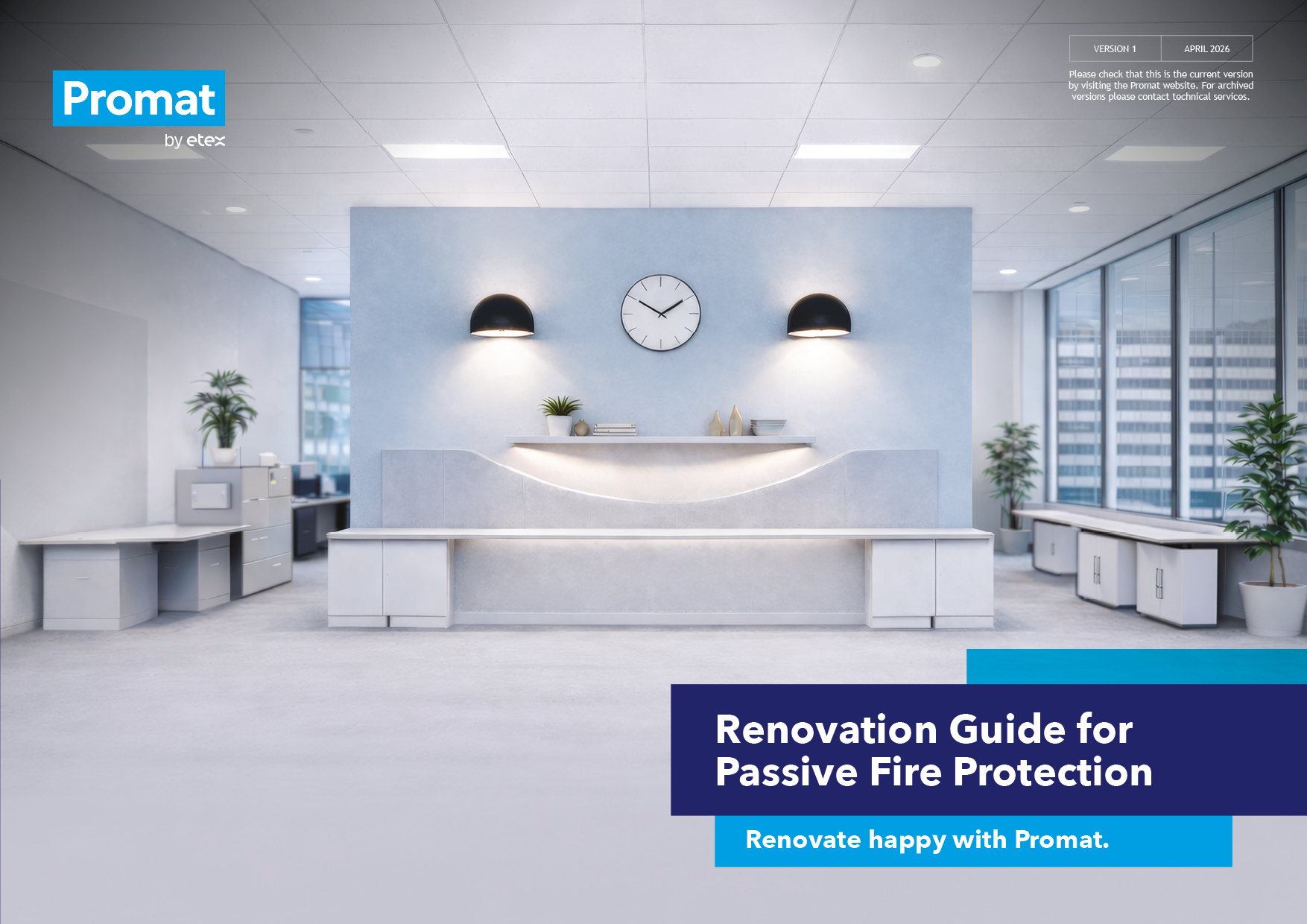
Promat has introduced a new guide to support in the specification of compliant passive fire protection systems in change of use and renovation projects.
Covering the need to ensure fire safety meets the latest legislation when altering building use, the guide looks at what level of passive fire protection is needed in common change of use scenarios, such as turning office blocks into residential buildings.
The guide sets out key considerations to ensure the required level of fire protection is in place, including adequate structural protection to protect the integrity of the building in the event of a fire.
Structural fire protection is essential when repurposing concrete and steel structures to bring them to bring them back into use where there is any doubt about the stability of the material – or the existing level of protection.
Setting out frequent challenges and signposting the solutions, the guide also looks at issues with legacy construction, listed building restrictions, hybrid structures and ensuring compartmentation is in place to restrict the spread of fire.
In addition, it focuses on how to translate fire testing to real-life applications, which can present additional challenges in an existing building.
The launch of the guide follows a large increase in the number of change of use projects as developers look for more sustainable solutions for the built environment, and to address a lack of available space in built-up urban environments and cities.
Available on Promat’s website the guide is designed to simplify the specification and design of passive fire protection systems in change of use projects by highlighting key challenges and solutions.
Commercial Director at Promat, Josh Slack, said: “Retrofitting buildings is a cost-effective way to deliver new projects while also supporting a more sustainable approach to developing the built environment, especially meeting demand for housing.

“However, this cannot be at the cost of safety. Fire safety must be a key consideration in all building design, and even more so in tall buildings. Renovation projects frequently present challenges in the specification and installation of passive fire protection systems due to the element of the unknown in what existing systems and substrates have been used in the fabric of the building.
“This can be compounded by a need to protect legacy, or even listed, buildings while bringing the passive fire protection up to current standards.
“Promat works closely with developers on change of use projects, including protecting structural material from the threat of fire and we believe this guide will help to raise awareness of best practice as well as provide a go-to resource when considering the passive fire protection requirements of change of use and renovation projects.”
Promat is a leading manufacturer of passive fire protection board systems, backed by EN testing and classification reports. To discover how to address common challenges when installing passive fire protection in change of use projects, download the guide now.
About the Author

Dave Staddon - Publisher
Co-Founder of MDM Publishing Ltd. He has worked in fire publishing for close to 30 years. The company's portfolio includes International Fire Protection, International Fire Fighter, Asia Pacific Fire, Gulf Fire & UK Fire.
- Dave Staddon
- Dave Staddon
- Dave Staddon
- Dave Staddon
- Dave Staddon
- Dave Staddon
- Dave Staddon
- Dave Staddon
- Dave Staddon
- Dave Staddon
- Dave Staddon
- Dave Staddon
- Dave Staddon
- Dave Staddon
- Dave Staddon
- Dave Staddon
- Dave Staddon
- Dave Staddon
- Dave Staddon
- Dave Staddon
- Dave Staddon
- Dave Staddon
- Dave Staddon
- Dave Staddon
- Dave Staddon
- Dave Staddon
- Dave Staddon
- Dave Staddon
- Dave Staddon
- Dave Staddon
- Dave Staddon
- Dave Staddon
- Dave Staddon
- Dave Staddon
- Dave Staddon
- Dave Staddon
- Dave Staddon
- Dave Staddon
- Dave Staddon
- Dave Staddon
- Dave Staddon
- Dave Staddon
- Dave Staddon
- Dave Staddon
- Dave Staddon
- Dave Staddon
- Dave Staddon
