
Iain Cox, Chair of the Business Sprinkler Alliance, delves into the far-reaching consequences of fire incidents and emphasises the importance of understanding that building regulations only set the minimum standards. Compliance with the current UK Building Regulations does not necessarily ensure property resilience to fire.
A recent news thread highlighted fires in which buildings were reported to have met regulations, but they still suffered extensive damage or were completely burnt down. This raises questions about why such a building is considered a regulatory success. Understanding that fire regulations prioritise life safety over property protection is crucial for all, be it in industrial, commercial, residential or educational buildings. It’s essential to realise that during a fire, the focus of the fire and rescue service is on evacuating everyone, and saving the building might not always be feasible, leading to a position that the building becomes disposable in such events.
Over the past three years, many fire incidents have occurred, some of which garnered media attention. These incidents have brought to light the substantial damage that fires can inflict on a range of buildings from industrial to residential and from care homes to schools. Each of these events led to significant displacement of school children, homeowners, the elderly and employees. Even though the fires happened many months ago large numbers of these buildings are still under reconstruction and some will never be rebuilt.
School fires
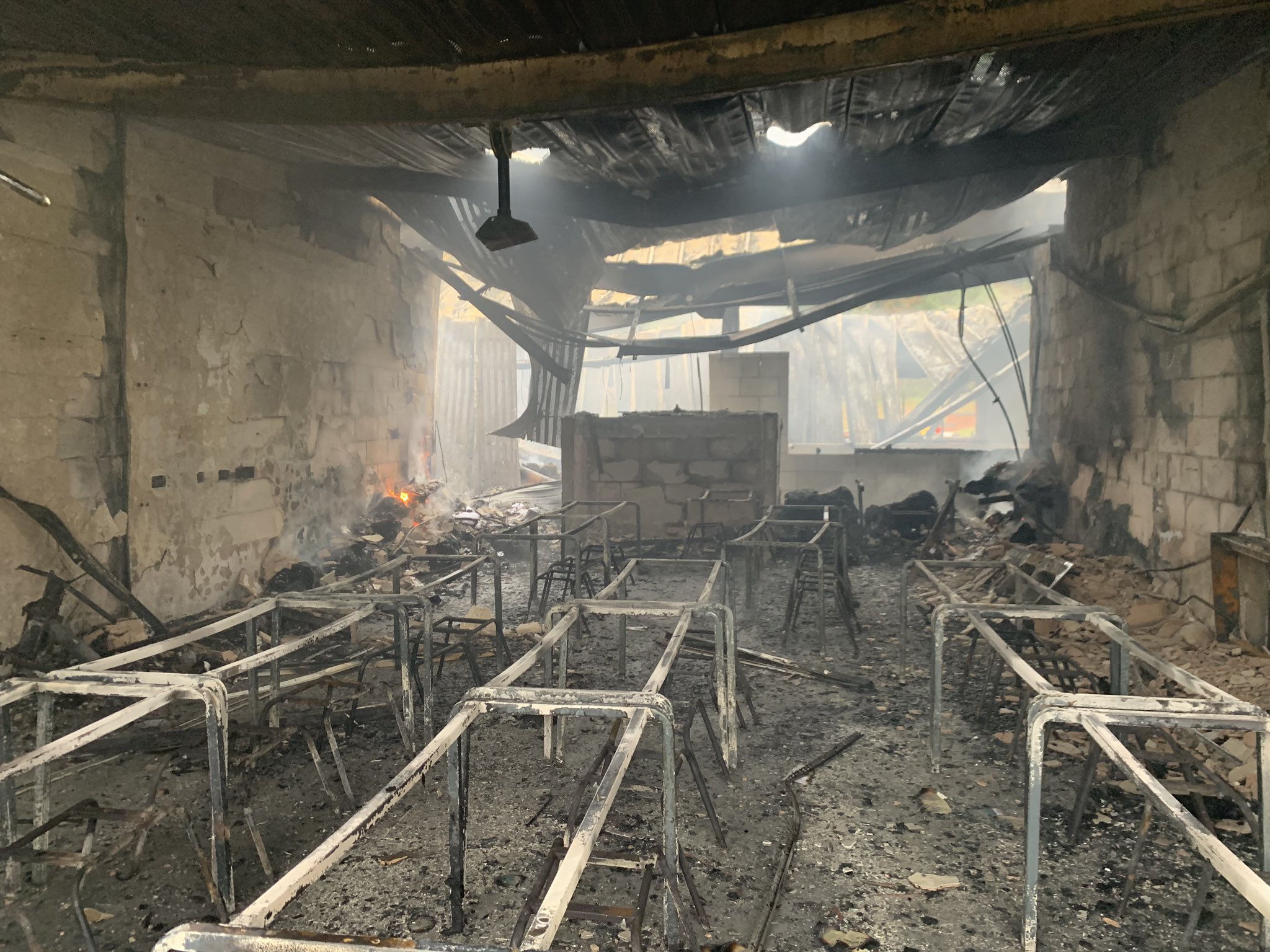
The pandemic era led to upheaval across education, with the closure of schools resulting in a legacy of lost learning. Further unnecessary interruption to education should be avoided, not least when it comes to fire. With hundreds of schools in the UK having a fire each year it needs further action. In the past three years there were major fires in schools across the UK, all without sprinklers that could have minimised those incidents.
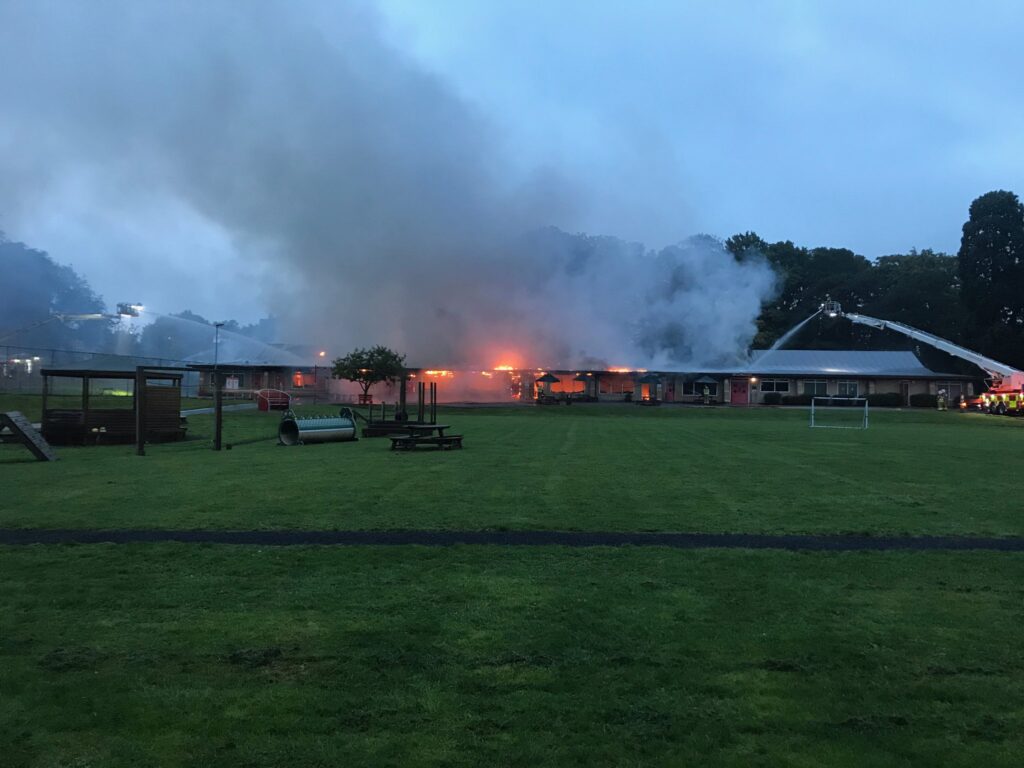
Three school fires in Derbyshire in 2020 are a painful reminder of the damage, disruption and the costs incurred when they are not fitted with sprinklers. On the morning of Saturday, 3 October, six fire engines and two aerial ladder platforms were called to attend a major blaze at St Mary’s Catholic Voluntary Academy in Darley Abbey, Derby. The fire quickly engulfed the building, which was largely destroyed and reported as a ‘total loss’. Just two days later, in the early hours of Monday, 5 October, there was a second severe fire only four miles away, this time at Ravensdale Infant School in Mickleover which required 12 fire engines from the Derbyshire Fire and Rescue Service. Whilst the Fire and Rescue Service brought the fire under control there was extensive damage to the building. Neither building had sprinklers fitted.
Rebuild costs
In the immediate aftermath, the children from the St Mary’s Catholic Voluntary Academy were originally sent to work from home for three weeks before being displaced into two separate local schools. They have now been reunited in temporary accommodation within a refurbished office block over three floors. The replacement school is currently under construction after worked started in February 2023 and it is set for completion in December 2023. In June 2022, the children from the Ravensdale school moved back into their new school, which is reported to have cost £6.9 million to rebuild.
These two devastating fires came in the wake of a blaze in the same area four months earlier at Harrington Junior School in Long Eaton, Derbyshire. Thankfully, no children were on site and teachers and staff who were working in the building were able to evacuate safely. Despite the efforts of the Fire and Rescue Service, they were unable to save the building. Not only did the fire severely affect the children’s education when they returned to temporary classroom accommodation after lockdown, the school had to be rebuilt at reported cost of £5.5 million and reopened in September 2022. These incidents all demonstrate the extensive rebuild times for these buildings.
It is not just the complete destruction of a school that causes interruption in a child’s education. A fire at Yatton Infant School, Somerset, on 31 May 2023 required six crews and 36 firefighters from the Avon Fire and Rescue Service. Whilst the Fire and Rescue service brought the fire under control there was extensive damage to six classrooms in the school, which means half of its facilities are not functional, posing significant challenges to the learning environment. The school had no sprinklers fitted and the impact was felt by at least 100 of the 300 pupils who were displaced to other local schools in Yatton and Congresbury for the rest of the summer term. When the children returned after the summer holiday, temporary or further alternative spaces were needed for the classrooms requiring reconstruction.
Currently, sprinklers are only mandatory in new school buildings in Scotland and centrally funded schools in Wales but not in England and Northern Ireland. Yet observations on the incidence of fire relative to the population of school buildings indicate that the rate of fires in England is like that in Scotland and Wales.
According to a 2019 study by Zurich Municipal,1 education insurer for half of the schools and universities in the UK, two-thirds of schools have ‘poor’ fire protection and are not properly prepared for a potentially damaging fire. It also found that schools in England are ‘twice as likely’ to suffer fires than other school buildings. The insurer has stated that a change to government legislation to make sprinklers mandatory will not only protect children in school but will also contain a fire to the room it originates in should it occur out of school hours.
A disposable dilemma
It is not only schools where we see such destructive fires and the disposable nature of buildings. It’s also typified in the industrial sector where the average cost of a large warehouse fire is £5.9million2 and where over 25 warehouse fires occur every month.
When the latest regulatory guidance was formulated in the early 2000s, the design of warehouses was different than what we tend to see today in the world of logistics. Demand has changed with the rise of e-commerce; we expect our products to be delivered swiftly and this calls for changes to the physical infrastructure of warehouses to adapt to keep pace with consumer expectations. The modern warehouse will potentially be arranged on multiple levels, with automated machinery and within a large volume. The fundamental challenge of concentrations of combustible materials in regular storage arrangement, making them ideal to aid fire spread, remain.
These warehouses are not the ‘common building types’ envisaged by Building Regulations Approved Document B and therefore may need differing solutions. This perspective is not perhaps shared by those developing such buildings. Fundamentally it is a direction and change for these buildings that government needs to reconsider when reviewing the current English compartment sizes for warehousing and the guidance on the provision of sprinklers.
Compartment sizes
The Fire Safety Building Regulations (FSBR) guidance envisages unlimited-sized industrial buildings. In the case of warehouses across Great Britain, this can be 14–20,000m2 in footprint and in many cases up to 18m tall, without incurring guidance for subdivision or sprinklers. Such buildings are truly enormous, roughly seven times the size of your average out-of-town DIY store. But the FSBR makes no consideration for minimising the spread of fire within large compartments of the building.
The building will survive for the period it takes to get people out, after which we transition into a period where the inherent resilience diminishes. They have physical limitations when it comes to firefighting due to their compartment size. As is the case with the schools, again we see a logic that says the building is disposable in the event of fire. Still in the industrial field, the same logic applies to factory spaces which under the FSBR have no limitation on compartment sizes or need for sprinklers.
For example, the fire at the Speedibake bakery in Wakefield in February 2020 was tackled by 140 firefighters. No one was injured in the fire. The fire damage was so extensive that the bakery was not rebuilt. The value of the premises alone was reported to be in excess of £20 million and despite insurance proceeds of £30 million, the owner, Associated British Foods, decided it was not economically viable to rebuild the bakery. The site is now vacant, and 160 jobs were lost in the local area.
Ensuring the safety of a building’s occupants is rightly considered the minimum under current regulations, but it is clearly not the total outcome people would expect and indeed could want. A sprinkler system would serve to protect both the occupants and the building. In the case of schools, it would allow students to return to normality far more rapidly and with considerably less disruption to teachers’ already hectic schedules. For businesses, sprinklers ensure that when fires start, they are quickly extinguished so that damage is minimised. They can be up and running again usually within hours of the incident. Those without such protection can see five-to-six times the damage and suffer much longer spells of interruption.
The undeniable truth remains that, regardless of the building type – be it an office, school, warehouse or industrial facility – incorporating automatic sprinklers as a crucial aspect of the fire strategy during the initial design phase empowers stakeholders to safeguard their asset’s long-term sustainability and value. Embracing this approach, the notion of a disposable building will no longer hold sway as the ‘right thinking’.
For more information, go to www.business-sprinkler-alliance.org
References
1. Schools twice as likely as other buildings to be hit by a blaze
2. Fears pandemic-led e-commerce boom could spark rise in warehouse blazes
About the Author

Although retired Iain is still active in the fire safety sector, working in various bodies and committees to promote fire safety in general, especially promoting third party certification and the greater use of sprinklers. He is Vice Chair of the National Fire Sprinkler Network and leads the Sprinkler Water Liaison Group.
Iain served in Royal Berkshire Fire and Rescue Service for 34 years, appointed Chief Fire Officer in 2003 he was awarded the Queen’s Fire Service Medal in 2009 and retired in 2013. He served as the Chief Fire Officers Association’s Director for Protection and Prevention between 2009 and 2011. Iain is currently the Chair of the Business Sprinkler Alliance and is a board member of BAFE. Iain holds a BSc from Reading University and an MA in Management from Coventry University.

You must be logged in to post a comment.