
Ritchie O Connell, BAFSA’s Wales representative, says that the forthcoming changes to Approved Document B in regard to sprinklers in care homes in England are welcome but well overdue
On 2 September 2024, Rushanara Ali MP, the Parliamentary Under Secretary of State for Building Safety and Homelessness, announced a series of proposed updates to Approved Document B (Volumes 1 and 2). Unusually, these updates will take place over a number of years, the first of which will come into effect on 2 March 2025, with subsequent changes scheduled for September 2026 and September 2029. The first tranche of changes requires, amongst other things, the provision of sprinklers in all new residential care homes regardless of height and the removal of a number of allowances or design freedoms where sprinklers are fitted.
The changes are issued as addendums to the text and are shown below:
Bedrooms
2.42 Each bedroom in a care home should be enclosed in fire resisting construction (minimum REI 30) with fire resisting doors (minimum E 30). Every corridor serving bedrooms should be a protected corridor (see paragraph 2.24).
2.43 Bedrooms should not contain more than one single or double bed.
An additional note has now been added to Paragraph 2.43 to clarify the intent of the paragraph
NOTE: It is not the intention to separate couples who happen to live in a care home by recommending that they sleep in separate bedrooms or beds.
It can be seen that this note has been added to provide clarification of a paragraph which has not previously been clearly understood, although it does not provide a change to the guidance per se. Whether it will resolve the queries is yet to be seen – it is not the first such attempt at clarification of this paragraph.
The second and very welcome change is more far-reaching requiring as it does the provision of sprinkler systems in all new care homes. The published amendment will have the effect of removing the current paragraph 2.46 i.e.
Sprinkler systems
2.46
When a sprinkler system is provided in accordance with Appendix E, the following variations to the guidance given in paragraphs 2.35 to 2.45 are acceptable.
a. Fire doorsets to bedrooms do not need to be fitted with self-closing devices.
b. Protected areas may contain more than 10 beds.
c. Bedrooms may contain more than one bed.
If any of the variations are made, the management procedures should take account of the larger number of residents that may need assistance, and the need to manually close bedroom doors during sleeping hours.
And replacing it with the following unequivocal requirement:
Sprinkler systems
2.46
Care homes should be fitted with a sprinkler system throughout the building in accordance with Appendix E.
The removal of the variations previously allowed had proved contentious in some areas. In the consultation responses informing this change 43% of responders supported the removal of the allowances, whilst 27% disagreed and 30% did not respond.
Whilst it is evident that the provision of sprinklers in care homes will make those premises safer, any consequential reduction in other fire-safety measures would have the effect or diminishing that added element of safety. Would it have made sense when legislating for seat belts to be compulsory in new cars to have allowed reduced performance of brakes and windscreen wipers?
The reference to Appendix E in the new paragraph 2.46 makes clear that the sprinkler systems referred to are sprinkler systems conforming to BS 9251:2021 i.e.
E3
Where required, sprinkler systems should be provided throughout the building or separated part, unless acting as a compensatory feature to address a specific risk. They should be designed and installed in accordance with the following.
a. For residential buildings, the requirements of BS 9251…
After the implementation of the changes in order to satisfy the requirements of the Approved Document, a sprinkler system will be required, bringing England in line with both Wales and Scotland in terms of new care homes. The changes do not, however, extend to existing care homes, with the MHCLG stating in the consultation document:
‘We do not intend, at this stage, to provide for additional sprinkler provisions for other types of buildings and this consultation does not cover retrofitting sprinklers in existing buildings not undertaking buildings works. There is ongoing work looking at fire risk in specialised housing, and there is a separate discussion and a more complex case on retrofitting fire protection in existing buildings, which will not form part of this consultation for Approved Document B. It may not be a simple case for installing sprinklers in some existing buildings, and therefore a more bespoke approach is necessary.’
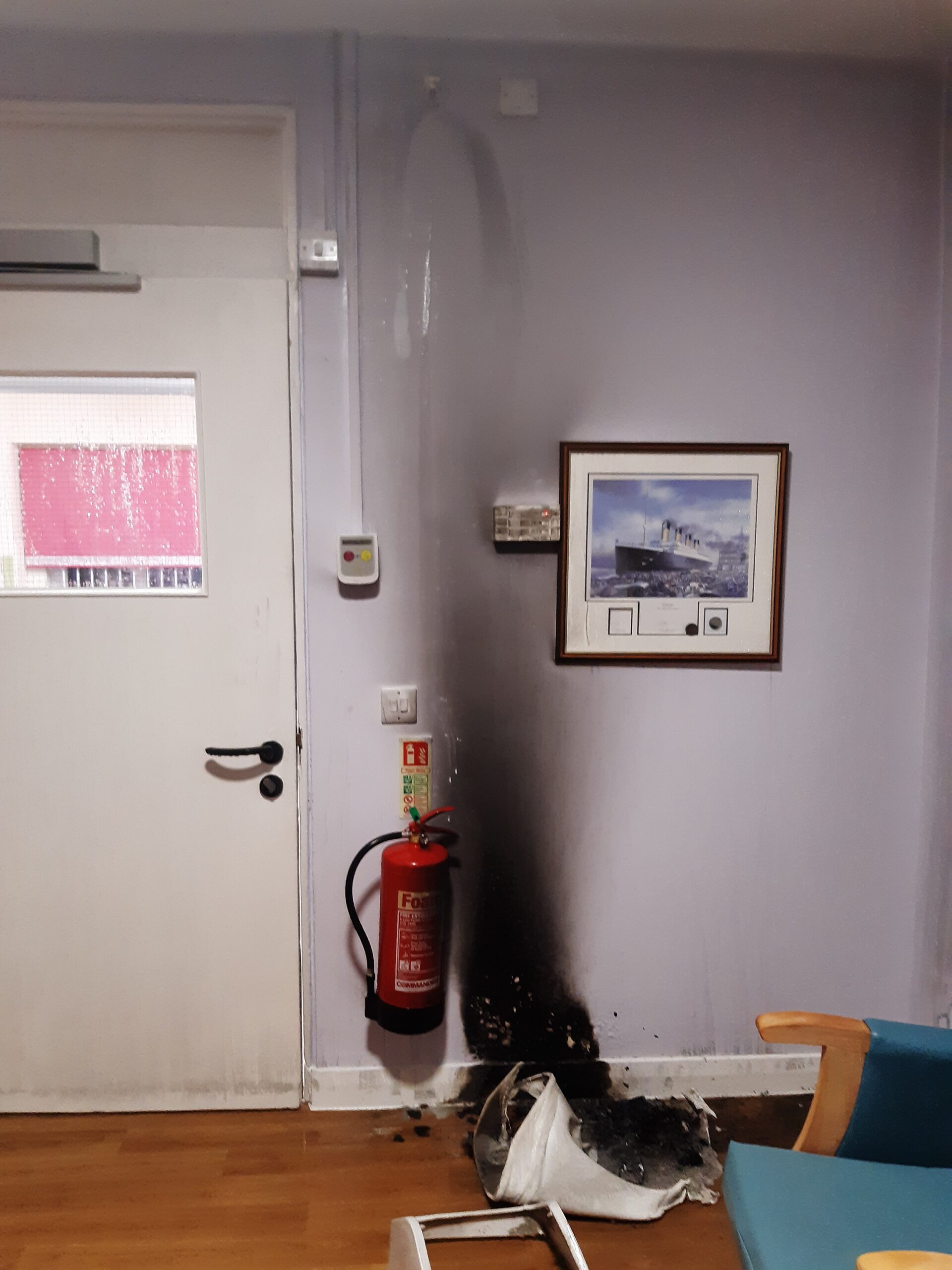
There will be a six-month transitional period until the guidance comes into effect, followed by a further six months to enable current development projects to continue. The changes as laid out do not appear to apply to other forms of specialised housing, of which there are many, and there will no doubt be those who seek to exploit this seeming loophole by redefining the nature of proposed premises, nonetheless this represents a significant step forward in improving the safety of care homes as is evidenced by the Sprinkler Save UK report by Hampshire & Isle of Wight Fire & Rescue Service on 30 March this year. Thankfully Hampshire County Council had previously taken the decision to install sprinklers in all residential and nursing care homes. In this case a small fire in a residential nursing home was successfully extinguished by the onsite sprinkler system.
Residential care homes present a series of unique challenges with respect to fire safety. The needs of the occupants and the resources required to undertake an evacuation in these types of premises require careful consideration both in the design and ongoing operation of such buildings, to ensure that an appropriate level of fire safety is provided. You can read the full report on the save here: https://www.sprinklersaves.co.uk/saves/winchester-care-home-sprinkler-activation/
The change to the approved document is welcome but overdue, sprinklers were reported as cost effective in care homes as long ago as 2015, when a BRE report for the DCLG concluded (inter alia):
The following building types would be expected to experience a net cost benefit from the installation of sprinklers for buildings much less than 10 storeys (30m) in height:
- Care homes
- Places of lawful detention
- Hostels
- Blocks of flats (comparison control group).
So, on behalf of the sprinkler industry and the wider fire-safety community, may I just say to the MHCLG well done for implementing this eminently sensible provision. What took you so long?
