
The role of a firefighter has never been more challenging. Some of these challenges are because of climate change with firefighters called out to incidents of flooding, wildfires and other natural disasters, but others are as a result of the changes in the fabric of our own lives. As a consequence, fires are more dangerous because of the increasing heat load, duration and toxicity of substances released during fire.
Not only must firefighters be well trained, physically and mentally fit, and safely equipped but they must also properly wear the most ergonomic and best protective gear, and maintain, clean and disinfect it.
Risks inherent to the fire service industry
Recently, the fire service industry has become aware of long-term health and safety risks inherent in the fire service profession, including indications of higher incidence rates of cancers and other malignancies believed to stem from occupational exposure. While it is impossible to precisely discern the causes of long-term malignancies, it is now generally accepted that firefighting is linked to long-term health hazards, which are believed to be connected to exposure to unknown chemicals and constituents released during the fire.
Industry organisations and leaders are making a push to raise awareness about these risks and have suggested several best practices by which firefighters can help to reduce their risk. Firefighters must properly wear the best protective gear and, more importantly, maintain, clean and disinfect it.
MSA is helping to advise its customers of industry-accepted cleaning and disinfecting processes and procedures in an effort to help maintain firefighters’ equipment and protect it from damage caused by cleaning agents or the cleaning methods themselves. As a leading safety products manufacturer, MSA is focused on innovating on behalf of firefighters around the world so that their personal protective equipment will work together to help keep them safe. With heightened awareness of the inherent risks they are facing, MSA is actively working with its customers to provide guidance by communicating industry-accepted best practices on the total care of equipment.

M1 SCBA System – designed with cleanability and enhanced hygiene in mind
Talking to our customers we’ve learned that, not surprisingly, equipment cleaning is their number-one concern. As well as wanting to bring the most innovative equipment to the market, MSA considers various aspects of a firefighter’s working environment and designs products that can be easily cleaned and disinfected (for example relying more on self-repelling textiles).
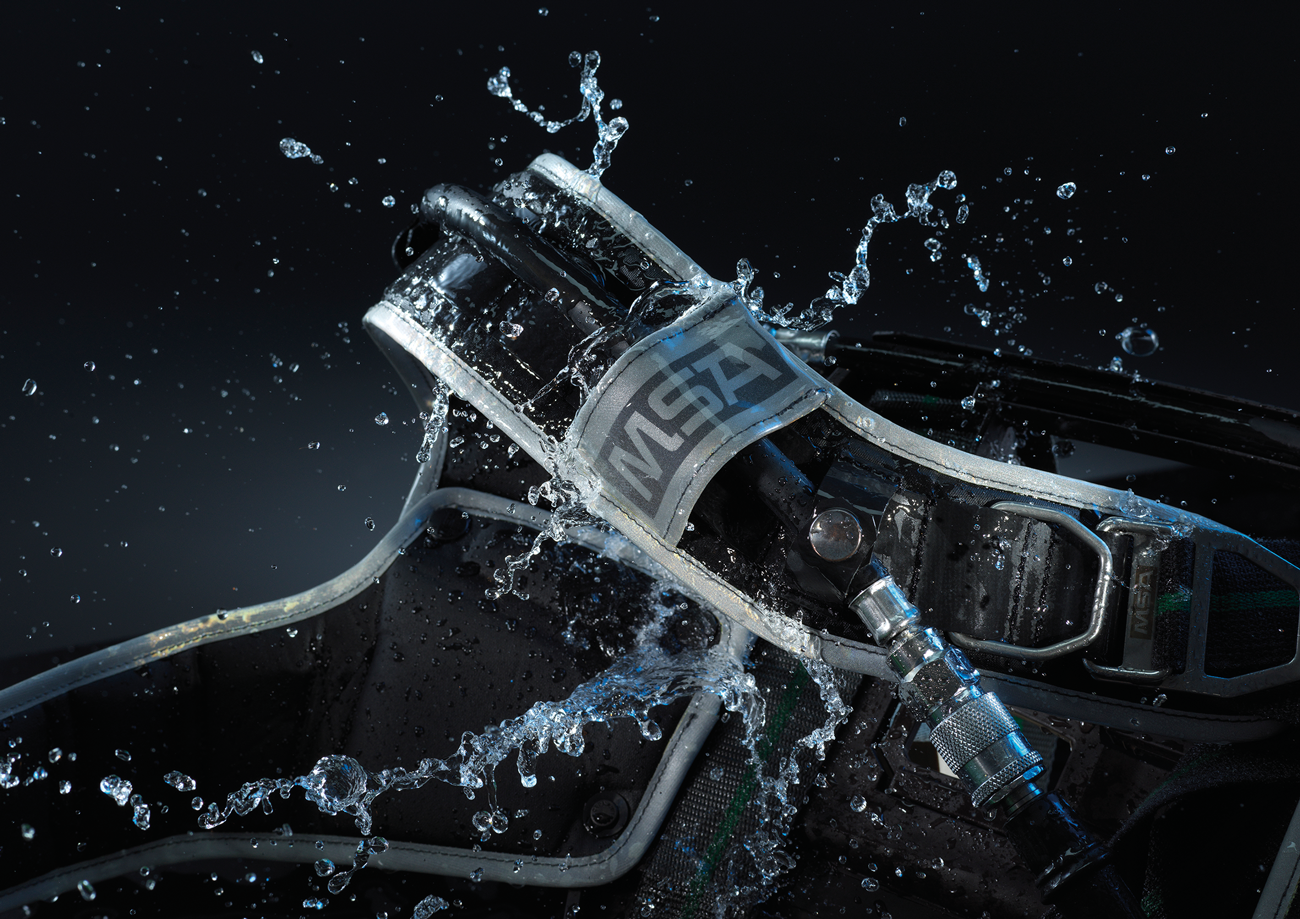
The MSA M1 SCBA has been designed with this in mind. All of the backplate narrow spaces and angles are easily reached while the harness is made from dust- and water-repellent materials that reduces time for mechanical cleaning, aids fast drying and is tear resistant, making it suitable for repeated mechanical wash.
The kit is easy to disassemble and maintain. For example, the G1 mask can be disassembled in less than 30 seconds – and the entire SCBA can be machine washed with no disassembly required.
GALLET F1XF Fire Helmet – easy cleaning according to manual or mechanical procedures
Fire brigades have also asked about cleaning and disinfection procedures for the flagship GALLET F1XF Fire Helmet. Fire helmets can be easily cleaned according to manual or mechanical procedures, depending on the level of equipment of each fire brigade. The entire helmet can be machine washed with no disassembly required. MSA also offers a choice between removable and machine-washable textile soft goods or leather soft goods that can be wiped with microfiber cloth.
COVID-19 outbreak and PPE cleaning & disinfection
MSA’s COVID-19 Resource Center (https://gb.msasafety.com/coronavirus) includes product cleaning and disinfection guides based on recommendations from organisations such as the United States Centers for Disease Control and Prevention (CDC), European Centre for Disease Prevention and Control (ECDC), and World Health Organization (WHO). This resource page features cleaning guides for PPE in the context of the COVID-19 public health emergency.
Ergonomics vs safety – is this a contradiction?
While there are fewer domestic fires, these are becoming more dangerous due to an increasing heat load and duration. Firefighters are wearing their breathing apparatus longer. What if you could actively redistribute the weight of your SCBA according to your personal preferences to help increase comfort?
The ergonomically designed M1 SCBA with adjustable fit and lumbar support moves with you, not against you. It has been designed for every environment, helps to speed up rescue time and supports firefighters working in very confined spaces, where flexibility is important.
The G1 mask from MSA is available in three sizes and also offers three further sizes of nose cup. The GALLET F1XF fire helmets feature a well-balanced design for comfort and intuitive adjustment mechanisms for optimal fit.

The MSA Mission since 1914
At MSA, your health, safety and well-being are what drives us to not only develop technologically advanced safety equipment to help protect you on the job but to advocate for your well-being. In fact, after more than 100 years in business, our mission remains unchanged: that men and women may work in safety and live in health.
Visit https://gb.msasafety.com/firefighter-health to download our ‘Cleaning & Disinfection Guidelines’ and our whitepaper ‘Best Practices to Help Reduce Firefighter Risk’.
For more information, go to https://gb.msasafety.com/M1-UK

You must be logged in to post a comment.