
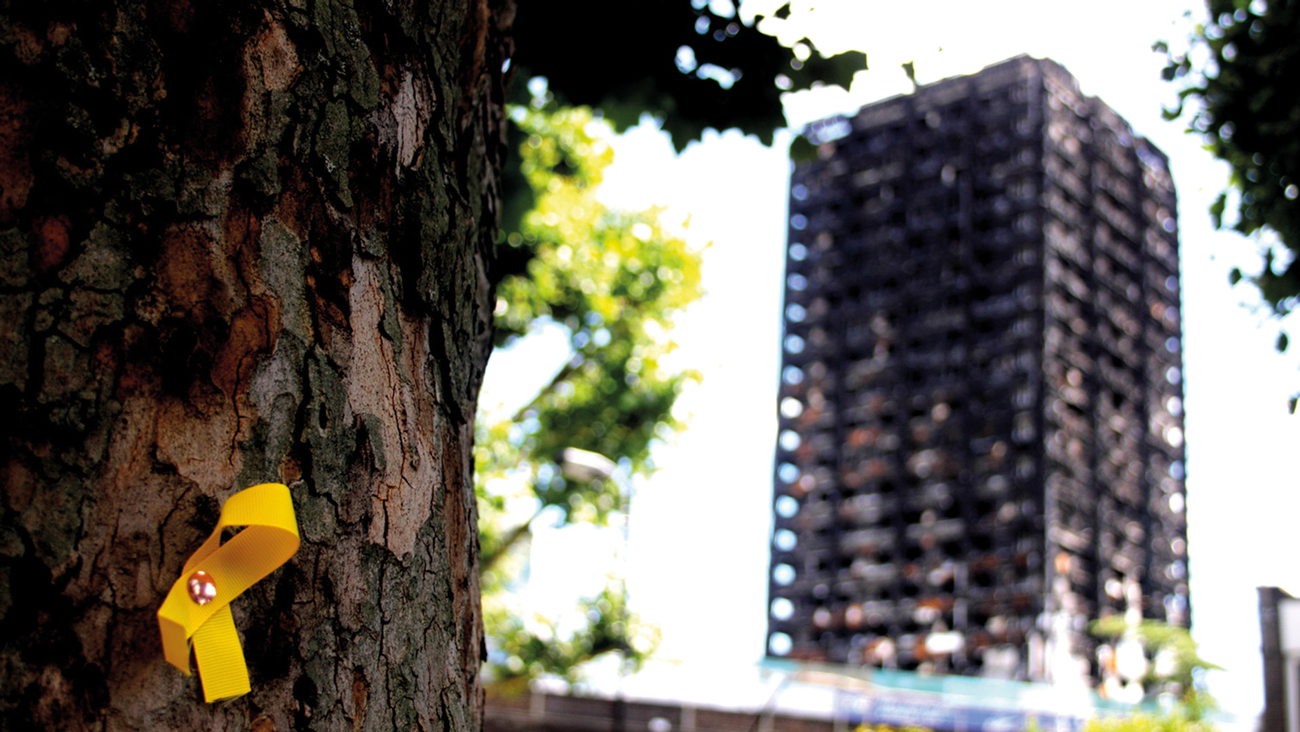
There is no doubt that the first quarter of 2020 has introduced some significant announcements for the future of fire safety, especially when it comes to high-rise buildings and response to the Grenfell Tower inquiry.
This article looks at the pledges made, to see what they mean for the industry, and also the impact on building owners and managers, together with residents across the UK to provide added peace of mind.
The changes to the fire industry already proposed in the first few months of 2020, have been described as the ‘biggest changes in building safety for a generation’, in line with the Building a Safer Future consultation.
Setting the scene
The raft of announcements on fire safety began naturally as a follow-on development and extension of the findings in Dame Judith Hackitt’s final report.
Our noteworthy starting point was the Ministry of Housing, Communities and Local Government (MHCLG) issuing a building safety regulatory reform consultation paper applicable to both existing and proposed multi- occupancy residential buildings that are 30m in height or more.
The significance of the consultation and government ambition was then highlighted by the mention of building safety reforms in the second Queen’s Speech of 2019.
The Queen said that the government will publish a range of draft legislation with the aim of tackling the critical findings of Dame Judith Hackitt’s Independent Review of Building Regulations and Fire Safety.
Proposed legislation includes the Fire Safety Bill, which will apply to England and Wales, to amend the Fire Safety Order 2005, and seeks to clarify responsibility for reducing fire risk in multi-occupancy residential buildings.

The details of the Fire Safety Bill included recommendations of regular inspections of lifts and quarterly fire-door inspections being made compulsory. It is a hugely noteworthy development in its own right to influence an industry where there is no specific legislation that requires fire doors to be checked.
The Fire Safety Bill also intends to ensure evacuation plans are reviewed, regularly updated and communicated to residents in a ‘form that they can reasonably be expected to understand’.
It also highlights the importance of individual flat entrance doors complying with current standards, where the external walls of the building have unsafe cladding,.
This will play a key part in increasing residents’ fire safety, whereby building owners will now face ‘enforcement action’ from emergency services if they do not manage fire risk in a building’s structure.
Budget 2020
More details began to emerge, in the budget 2020, where the newly appointed Chancellor of the Exchequer, Rishi Sunak announced plans for extra government funds to be made available to support building safety, with regards to the critical importance of fire safety.
The extra £1bn pledge is set to fund the removal of combustible Grenfell-style cladding on tower blocks to ensure the safety of residents. And it has been suggested that the government would be publishing a prospectus for the new fund as soon as May and would open for registrations ‘soon after that’.
At the time, the Chancellor said: ‘Two and a half years on, we’re still grappling with the tragic legacy of Grenfell. Expert advice is clear that new public funding must concentrate on removing unsafe materials from high-rise residential buildings, so today I am creating a new building safety fund worth £1 billion.’
The government stated its intention to go further than Hackitt’s proposals by ‘providing clear accountability for, and stronger duties on, those responsible for the safety of high-rise buildings throughout the building’s design, construction and occupation, with clear competence requirements to ensure high standards are upheld.’
New sanctions to deter non-compliance with the system will also be introduced along with a ‘stronger’ framework to ensure construction products meet performance standards.
The news was received as a welcome step in the right direction to ensure residents can soon live with peace of mind that their home is fire safe, in accordance with latest regulations.
Building a Safer Future
Perhaps the biggest announcement came at the start of April, whilst the Grenfell Inquiry was paused due to Covid-19. The Housing Secretary Robert Jenrick MP, revealed ‘ambitious steps to further reform the building safety steps’.
Included within the measures were the mandatory installation of sprinkler systems and consistent wayfinding signage in all new high-rise blocks of flats that stand over 11m tall. In addition, a review of the progress of the removal of unsafe ACM claddings from buildings is expected to be undertaken by David Hancock, the government’s construction expert.
Mr Jenrick highlighted that the reforms are designed to incentivise compliance and to better enable the use of enforcement powers and sanctions.
The new programme will be governed by a new Building Safety Regulator that will initially be led by Dame Judith Hackitt during the set-up phase, which will be tasked with improving the fire safety of buildings.
Mr Jenrick added: ‘This new regime will put residents’ safety at its heart, and follows the announcement of the unprecedented £1 billion fund for removing unsafe cladding from high-rise buildings in the Budget.’
What’s more, the government has stated that this programme, in ‘due course’ will extend to other premises, based on emerging risk evidence.
Building owners and managers
The impact of the changes in fire safety, will undoubtedly fall on the majority on building owners and managers to comply. It is now their responsibility to manage and reduce the risk of fire related to structure and external walls of the building, including cladding, balconies and windows as well as entrance doors to flats and within communal areas.
The changes provide a platform for the introduction of secondary legislation to enable recommendations from the Grenfell Inquiry phase 1 to be introduced. This includes lift inspections, evacuation plans and easily understandable fire-safety instructions for residents.
In response, building owners and managers must now be preparing for these changes, which could become law as soon as this summer.
Whilst these changes are welcome to enhance the fire safety of buildings for residents, they can bring a number of challenges, especially in the need to respond quickly, with many increasingly time, resource and budget stretched, and realistically (at the time of writing) still facing repercussions of the coronavirus lockdown.
By example, the proposals apply to all multi-occupancy buildings of all heights and that means all blocks of flats must have their facades, flat entrance doors and all communal fire doors checked as part of the periodic fire-risk assessment. This will have significant resource and process implications for the industry.
Further, the Grenfell Inquiry phase 1 report included other recommendations for existing residential buildings including floor-level signage and evacuation plans. From Amthal’s experience, many existing residential buildings do not have record drawings of any type, so building owners could be forced to produce fire strategy and evacuation plans.
There are other unknowns, including the exact nature of the risk-assessment process, and also the secondary legislation potential that may extend expectations on fire safety to include apartments and not just common areas.

Case example
Amthal has been the fire-safety partner of choice for leading building owners and managers, including Trinity Estates, who specialise in providing property-management solutions to blocks of flats, residential estates and mixed-use developments of any size and complexity.
Amthal has always worked closely in partnership, establishing a maintained system that could secure residents in terms of fire-safety systems, especially in communal areas, including all fire alarms, emergency lighting, automatic opening vents, dry-risers, sprinklers and associated services across its property portfolio in the south-east.
Says John McDowall, Contracts Manager at Trinity Estates: ‘As a responsible managing agent, we have a legal responsibility for the fire safety of our residents. Whilst this is a clear-enough statement, the considerations and precautions to be taken are challenging due to the mixed tenure of property we look after.’
Amthal has since been keeping abreast of the government changes and is constantly reviewing its procedures with customers such as Trinity, ensuring it is prepared and ready to respond when the changes pass through legislation.
This ensures residents are always protected and managing agents such as Trinity Estates are continuing to fulfil their legal duty.
In summary, the changes proposed by government will undoubtedly ensure that buildings and those that live and work in them are fire safe. For those who own or manage residential buildings, who will be ‘held to account’ if they do not ensure fire safety in their buildings, the requirements will impact further on costs and resource allocation, for investigating buildings and ensuring compliance. This is especially in light of the tight timescales between the announcements being been made and them becoming law.
The secondary concern amongst building owners is the industry’s ability to undertake the volume of assessments required, given the lack of current lack of specific legislation on specific elements such as fire doors and risk assessments, together with the expectation for fire strategy and evacuation plans.
Amthal is working closely with building owners and managers across the UK to deliver the benefits of a safer environment within a holistic fire-safety approach. Working in partnership, means taking the time to understand the implications of the Government’s Fire Safety Bill, alongside the implications of the Building Safety Bill and Building a Safer Future, to achieve all operational requirements for the ultimate benefit of residents’ peace of mind.
For more information, go to www.amthal.co.uk
About the Author

Jamie Allam is CEO of Amthal Fire & Security Limited.

You must be logged in to post a comment.