
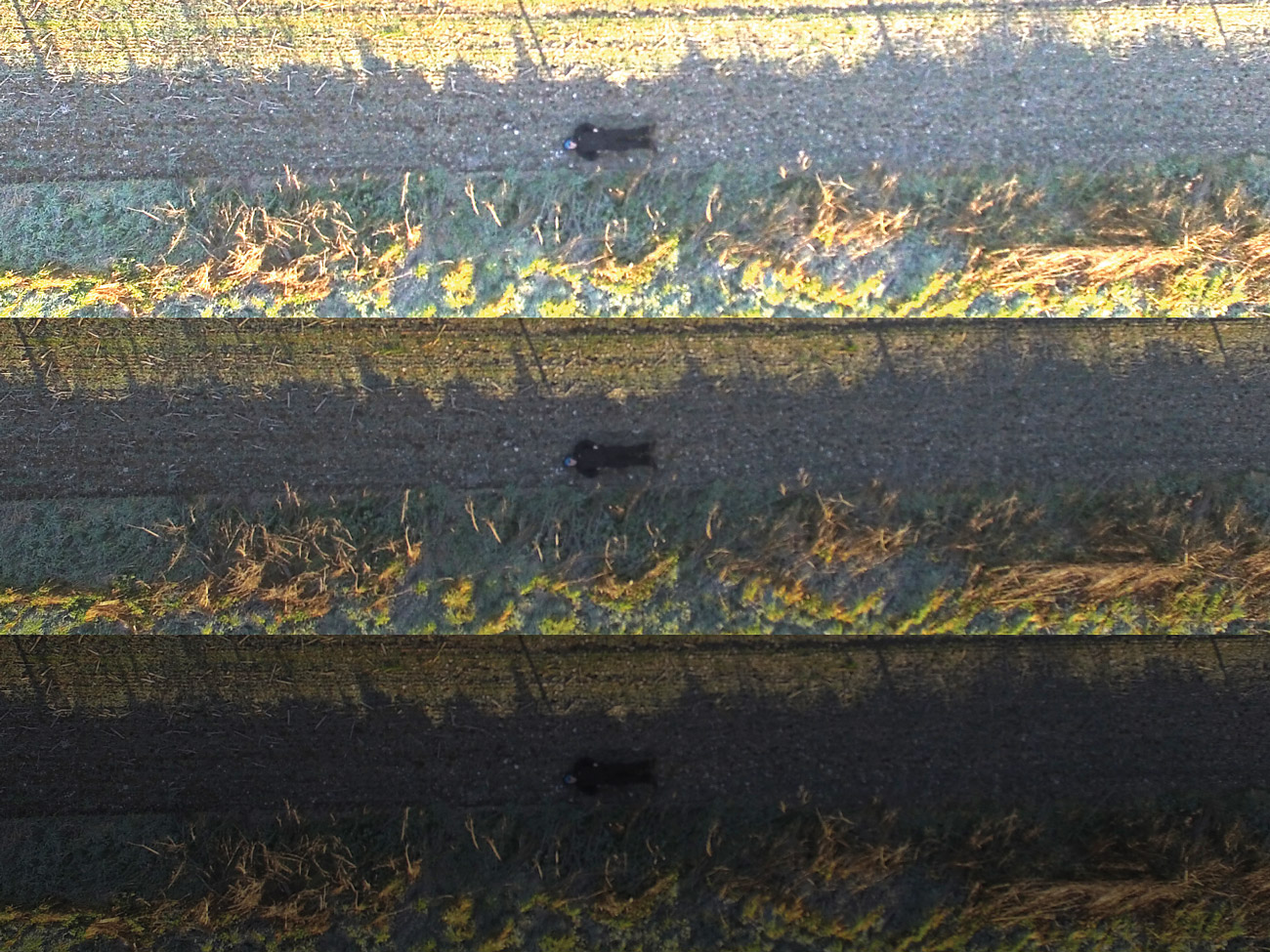
Through the data they can collect or the payloads they can deliver, drones are saving lives faster, safer and cheaper than ever before, making payload selection pivotal to the lifesaving capabilities that a drone can offer. This article offers guidance on visual camera selection for emergency response.
A drone has evolved from being a flying device to essentially becoming a data-collection or delivery device, both of which are defined by a drone’s payload capability. New emerging drone payload capabilities are seducing public-safety organisations with the promise of reducing search times, improving situational awareness, enhancing team safety, reducing costs, or even the potential of delivering medical supplies ahead of rescue teams. Through the data they can collect or the resources they can deliver, drones are saving lives faster, safer and cheaper than ever before. It is no wonder that drones are widely considered to be a force multiplier and, clearly, payload selection is pivotal to all the value-adds mentioned above. Given this abundance of payload applications and the technicality to each of their individual selection requirements, this article will focus solely on the selection of a visual camera for remote sensing. Further payload options – such as thermal cameras, rescue aids and more – will be discussed in subsequent editorial pieces within this series of ‘Selecting a drone for emergency response’ articles.

Visual cameras
The most basic expectation of drone capability is to provide a live video feed of an incident to better the situational-awareness picture, to enhance tactical planning. There is a wide variety available on the market with resolution, frame rate, field of view (FOV), sensitivity of electro-optical (EO) sensors, amongst other variables, all contributing towards image quality. While cinematic-quality video isn’t necessary for emergency response, obviously the sharper the picture, the easier it will be to spot a search object, or analyse a wild fire, or gain situational awareness, and so on.
Remote sensing
Visual cameras are an excellent tool for remote sensing. The USA’s National Search and Rescue Committee (NSARC) have divided remote sensing into four functions, each requiring greater resolution to accomplish:
- Surveillance: Wide-area observation of an area, providing general awareness of terrain or environment;
- Detection: The ability to distinguish an object from the background (e.g. heat source);
- Recognition: The ability to determine what type of object has been detected (e.g. person); and
- Identification: The ability to determine the exact identification of the object (e.g. number plate)
The most essential functions for the conduct of fire and rescue operations are detection and recognition. Given this relatively high level of remote sensing required, a given drone and its sensors’ specification may limit its applicability; it may not be able to look closely enough to identify a search object or may not be able to sweep large areas with sufficient resolution to monitor a wild fire, and so it is vital for response personnel to be able to decipher a payload’s specification features that will impact its remote-sensing capabilities. Thus, it is important to discuss the key variables that impact image quality for emergency-response remote sensing, namely resolution, exposure and FOV.
Visual cameras – resolution
Each pixel is the recorded light, contrast, etc. within an image that adds to detail; therefore, the higher the number of pixels, the better the detail captured. For example, 1080HD has 1,920 pixels along its horizontal edge and 1,080 pixels down its vertical edge, whereas 720HD has 1,080 pixels along its horizontal edge and 720 pixels down its vertical edge – thus offering less detail. The drone visual-camera market currently offers a selection of resolutions – 4K, 2.7K, 1080HD and 720HD – but most emergency-service-use cases use the real-time footage for effect rather than the recorded data for later analysis. Therefore, it should be noted that regardless of the resolution being recorded, the downlink resolution – i.e. what is being viewed on the first-person viewing (FPV) screen – is no higher than 720HD. With current technology, streaming a resolution any higher than 720HD would experience high latency, i.e. a delayed image, due to sheer file size for transfer. While 4K is often preached to be the best solution across marketing literature, be mindful that the majority of drone payload information available is catered towards the photography/videography, inspection, or precision agricultural industry professional. Their best practices and technology advice cannot simply be transferred to an emergency-response setting. If you plan to use the drone for real-time data only, money would be better spent on a quality FPV screen system rather than a 4K camera that only adds value to recorded footage.
Visual cameras – exposure
With visual cameras, exposure is the amount of light which reaches the camera sensor; it is a crucial part of how bright or dark the image appears (see exposure image). Overexposure causes areas of white, whereas underexposure causes areas of black – both result in loss of detail, which will detrimentally impact performance of emergency-response drone use. For example, it could cause a search object to go completely undetected if it falls within these areas of white or black. To monitor exposure, it is vital to have the camera’s histogram viewable (see image). To interpret the histogram – put simply – the image is underexposed when the graphical display overflows to the left of the five bars and the image is overexposed when overflowing to the right – both are referred to as ‘clipping’. Clipping should be avoided for maximum image detail. Although operational techniques could control exposure, such as ensuring the camera is positioned away from the sun, gaining an understanding of three important camera settings will offer more control: aperture, shutter speed and ISO.
The aperture controls how much light enters the camera – similar to an eye’s pupil. While aperture can often be adjusted on handheld cameras, it should be noted that drone visual cameras usually come with a fixed aperture in order to minimise weight and size, leaving shutter speed and ISO as the remaining camera settings to control exposure.
Shutter speed is the amount of time a camera spends taking an image; overexposure will occur when the shutter speed is too slow as the slower speed has let too much light hit the sensor, and vice versa when the shutter speed is too fast, it will result in underexposure. Thus, a visual camera with a larger electronic shutter speed range will offer more exposure control.
ISO indicates the light sensitivity of the imaging sensor. The lowest ISO, referred to as the ‘base ISO’, is 100, which is the least sensitive ISO setting and offers the best possible image quality. However, a higher ISO is necessary when operating in low light conditions as it brightens the image, but grain within an image will be emphasised when doing so – otherwise known as noise. Noise can detract from image clarity, potentially impacting the ease and quality of situational awareness that can be obtained. That said, without attaching a search light to the drone, increasing the ISO is the only option for improving exposure in low light conditions. Therefore, a visual camera with a larger ISO range is preferable so that night and/or low light operations can become possible.
In addition to the exposure considerations already highlighted, as soon as the brightness is outside the dynamic range of the camera’s sensor, overexposure will still occur – even after adjusting the aforementioned settings. In this case, the only solution is the utilisation of neutral density (ND) filters. ND filters reduce the amount of light that enters the lens – ‘sunglasses for a camera’ if you will. ND filters are available in a variety of ratings depending on how much light they block from entering the camera; the higher the number, the more light blocked out. Not all drone visual cameras have ND filters on the market, for example the Parrot Bebop does not offer ND filters, so it is essential to check before selecting a visual camera. ND filters are required for most daylight conditions – especially during summer months.

Visual cameras – field of view (FOV)
In the case of cameras, FOV is the extent of the observable world that the sensor can capture at any given moment. Given that a smaller area covered per pixel equates to better detail – a smaller FOV offers clearer imagery as it is squeezing less of a scene into the number of pixels. For example, when reviewing FOV in isolation, DJI’s X3 visual payload offers greater detail with its 94° FOV than the Yuneec Typhoon’s 4K camera option, which wields a 115° FOV.
Zoom visual cameras
The more pixels a search object equates to, the higher the level of remote sensing that can be achieved. One method of achieving a higher pixel count is flying lower, but this takes away from the time savings that can be achieved with a drone. A more effective method is by utilising a zoom visual camera, which will allow you to fly at a height suitable for detection and then quickly zoom in for recognition purposes upon detecting an object – to verify whether or not it is the search object, rather than conducting the entire flight at a lower recognition-worthy height. A zoom visual camera on a drone is a great emergency-response asset when the correct one is chosen. Notably, digital zoom will cause pixilation (i.e. lower image quality), which reduces response staff’s ability to recognise whether or not the image is the search object; therefore, optical zoom is preferable. Furthermore, without an object-lock function, zooming into an image – whether optically or digitally – will accentuate the movement of the gimbal caused by drone movement or wind, making it very difficult to keep the object in frame for recognition purposes; so, object lock is critical.
Conclusion
All in all, although a visual image is often regarded as the most basic data for a drone to collect, there are still numerous variables that will impact performance. Following the bullet points below should help you to recognise which visual camera option offers better remote-sensing results for emergency response:
- A minimum downlink resolution of 720HD
- Larger electronic shutter-speed range = more exposure control = greater detail
- Larger ISO range = more exposure control = greater detail (critical for low light operations)
- Must offer ND filters for the visual payload (critical for daylight operations)
- Smaller FOV = greater detail
- Optical zoom is preferable to digital zoom
- Object lock for zoom cameras is critical for remote sensing
Unfortunately, drone technology currently lacks in adversarial compatibility, meaning – in most cases – you cannot simply pair any payload with any drone; hence, the airframe that is selected is highly likely to restrict your choice of payloads. With this in mind, it would be advisable to make the payload selection prior to selecting an airframe, as the payload is the component of the system that dictates what can be captured and thus adds the most value.
For more information, go to www.skyboundrescuerproject.com or email skyboundrescuer@gmail.com
References
NSARC, 2016. Unmanned Aircraft System (UAS) Search and Rescue Addendum to the National Search and Rescue Supplement to the International Aeronautical and Maritime Search and Rescue Manual Version 1.0. USA: NSARC.
About the Author

Gemma Alcock is Founder and CEO of SkyBound Rescuer, and a multi-award-winning drone innovator and SAR professional. Gemma became the first UK recipient of the esteemed Public Safety Drone Leadership Award from DRONERESPONDERS for her exceptional leadership advancing the implementation of public safety drone programmes. Gemma is also the Director of Air Operations for Lowland Rescue.

You must be logged in to post a comment.