
A new law, the Assaults on Emergency Workers (Offences) Bill, is currently passing in the UK that will increase sentences for those who assault crucial emergency workers to up to six months and/or a fine in a magistrates’ court and up to 12 months in a Crown Court. This will look to protect police constables, prison officers, custody officers, paramedics, nurses, firefighters, A&E consultants, lifeboat officers, A&E porters, ambulance drivers and mine rescue officers.
Times are already challenging for the fire services, with Britain suffering a crisis in some regions after eight years of cuts – around 40 stations have closed due to low staffing levels. This, amongst other factors, has resulted in a rise in fire-related deaths across the country in the last year.
Firefighters need all the help they can get to respond to this crisis, so as to save lives and minimise their own risk. The law will hopefully help deter people from attacking first responders, but technology can also prove invaluable in these situations. Of course, firefighters already rely on a whole host of technologies which enable them to fight fires more effectively, from thermal cameras to drones for situational awareness. In order to help protect firefighters – and all first responders – from assault, live-streaming video can prove to be an invaluable tool. This article will assess the current threat to first responders, and fire crews in particular, before explaining how live-video-streaming technology works and how it can help keep firefighters safe, whilst delivering real-time situational awareness to aid rapid decision-making.
The rise of attacks against fire crews
It’s shocking that a law is required in the first place to discourage members of the public from assaulting first responders, but the Assaults on Emergency Workers (Offenses) Bill comes in response to a recent spate of both physical and verbal attacks against these critical workers in our society. For example, in the UK during Storm Emma in early 2018, a paramedic was attacked whilst helping a woman with chest pain simply because their ambulance was temporarily parked parallel to the attacker’s car.
Fire crews also frequently suffer from abuse at the hands of the general public. From 2014 to 2016 alone, crews came under attack 1,063 times according to a FOI request – equalling an assault more than ten times a week on average. These attacks included 370 instances of crews being attacked by people throwing objects at them, as well as 71 cases of physical violence – other cases included verbal attacks and harassment. Two firefighters in Northern Ireland reported that when they were dealing with a car fire in North Belfast a gang of men attacked them with a baseball bat and threw objects at them, including an iron bar. One of the firefighters had to take eight weeks off work after the attack, having suffered from broken ribs and bruising on her arm. As well as this, both firefighters have been affected psychologically by the attack. In areas that have the highest frequencies of assaults against firefighters, authorities also reported people throwing fireworks and bricks at crews and shining red and green lasers into their faces and eyes. It appears that incidents like these aren’t a UK-only phenomenon, with two firefighters being shot and one tragically being killed in one attack in Long Beach, California in June 2018.

Live video for the right response
Reports suggest that attacks against firefighters have increased since budget cuts have reduced their ability to engage with the local community. Communication and understanding between the community and firefighters fosters respect and most definitely would help to reduce these attacks, but crews must also be prepared to call for the right protection if they encounter violent people. Many incidents when reported over 999 may not seem to warrant an urgent law-enforcement presence but may then turn out to be dangerous for the firefighters once they arrive on the scene, particularly if they are called with a malicious goal in mind. The aforementioned incident in Long Beach took place after an elderly man, Thomas Kim, lured firefighters to his retirement home by calling emergency services and reporting an explosion. When firefighters arrived on the scene, some windows were blown out, sprinklers were activated and there was a fire which they were able to extinguish. When they began to search the building itself, Kim fired shots at the firefighters – the reason for his aggression was later determined to have stemmed from a feud with a neighbour.
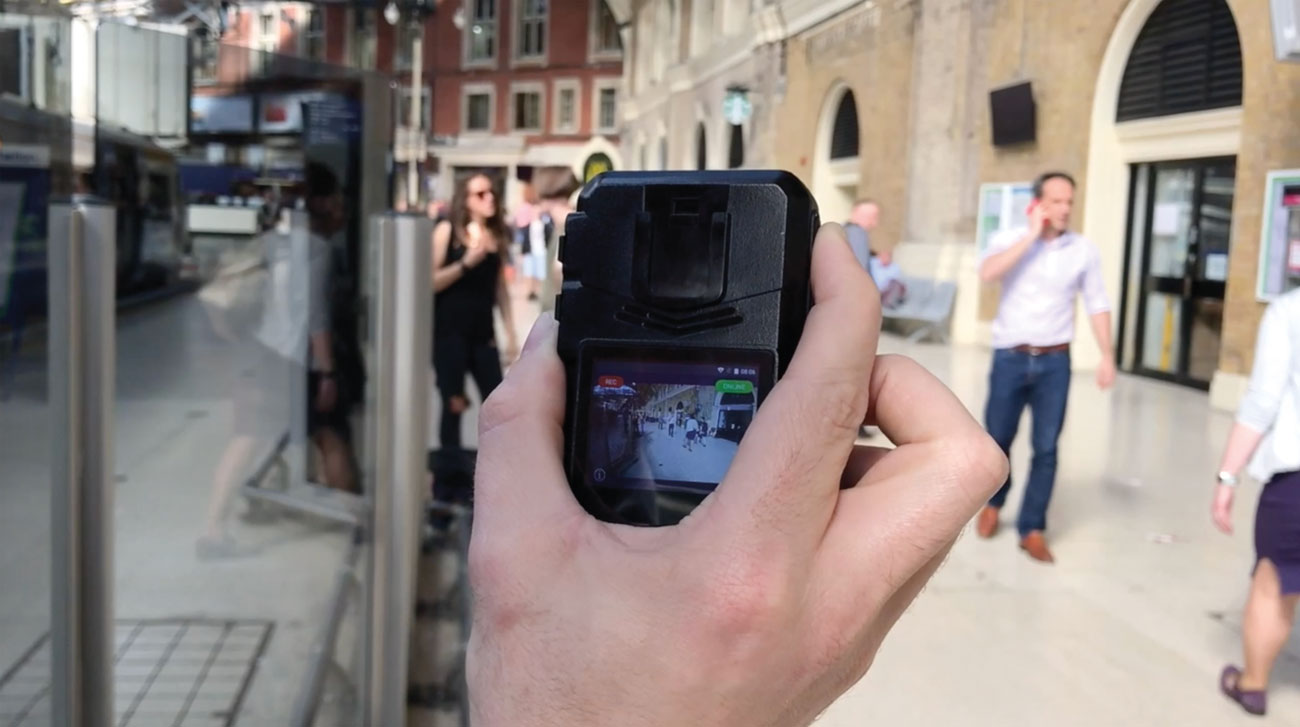
Live-video streaming from a dashcam on the fire engine, and even on sufficiently ruggedised cameras worn by the crew, can provide a very high level of situational awareness for command teams. Ultimately, this is because live video gives commanders a much more immediate view of the scene than a vocal report ever could. This means that command centres can assess the scene in seconds in order to advise crews on the best course of action and send out additional tools or crews immediately if required. It also gives commanders the ability to quickly identify if something ‘isn’t quite right’ so that other emergency services, such as law enforcement or paramedics, can be urgently dispatched to the scene.
The immediacy of live video enables it to save lives, both of firefighters and the public, in the incidence of a fire as well as if firefighters face a violent threat. However, if video is recorded as well, it can be used as evidence or to allocate liability after the fact in a court of law. Furthermore, other video analytics such as facial recognition can be applied to recorded video by law enforcement agencies in order to identify if any criminals not arrested at the scene are on police watchlists so that they can be apprehended. Facial recognition can be applied to live-streaming video, but this application is of more use to police officers whose duty is to apprehend known criminals – firefighters ultimately are protectors of the public and life savers, not enforcers of law.

The technology
Many of the incidents that firefighters have to attend are in either very remote or very congested areas that lack available 4G signal for anything but the bare minimum of vocal reporting. However, live video is only useful to help protect firefighters and members of the public if it really is live. Even the slightest delay could result in an inaccurate reading of the scene or a reaction that comes too late. The technology must be secure, affordable for an already overstretched sector, and reliable to the nth degree.
As said before, streaming video over 4G can be a challenge not only because it can already be constrained or limited but also because video consumes a very large amount of data. Networks can be particularly constrained during larger incidents, as during a fire people automatically reach for their phones, either to call loved ones or to live stream the incident themselves over social networks such as Instagram or Snapchat. Luckily, there is more than one way to egress video over cellular. It is possible to utilise a specialist codec (encoding and decoding algorithm) to stream secure and reliable video over an ultra-low bandwidth even when networks become constrained or are limited for some other reason. Technology can also be used to create a local wireless ‘bubble’ at the scene, and then by using Wi-Fi or mesh radio systems transmit high-bandwidth communications. Control teams can then view, command and protect teams on the ground with situational awareness that is streamed instantly to them using cellular or even satellite communications.
The deployment of live-video streaming may seem like a hefty infrastructural challenge for fire services, but in fact equipping a fire engine with fixed cameras or dash cams is very simple.
Furthermore, if firefighters are already using body-worn cameras, live-streaming video can be applied to these devices at a very similar cost to the deployment of traditional record-only body-worn cameras. Then, infrastructure required to support live streaming back at the command centre can be standalone initially and later integrated into existing command-and-control systems. If looking to expand situational awareness further, the technology can even be deployed on drones to get a wider picture of an incident.
Ultimately, the root cause of this problem stems from the fact that due to reduced resources and personnel the firefighting sector in the UK is less able to engage with local communities. This means that many communities may have less of an understanding of firefighters’ exact responsibilities, how important they are and how many lives they save on a daily basis. It is critical that government funding goes into reinvigorating these community schemes. However, technology can also help to protect teams on the ground against violence by providing commanders with instant situational awareness that enables them to respond effectively and straight away and give command the best possible chance to keep their teams safe.
For more information, go to www.digitalbarriers.com
About the Author

Neil Hendry is Vice President, EMEA at Digital Barriers.

You must be logged in to post a comment.