
The modern-day Fire and Rescue Service (FRS) is an evolving entity, adapting to the multitude of events that surround it, whether tackling fire, extreme weather incidents or medical emergencies, where their support is increasingly required to work alongside all blue light teams and a raft of other authorities and third sector organisations. In the year ending March 2024, FRSs attended 138,9771 fires, the lowest rolling figure since data became available, and a 22% decrease on the year prior. Whilst this is a welcome statistic, call-outs to non-fire incidents continue an upward trend.
Not only are call-outs increasing in number, the variety of incidents that firefighters attend is growing too. As technology such as electric vehicles (EVs) develops, and the world confronts a climate emergency, these events will become more varied, as will the skills that are required to manage them. As a result, focused training must equip firefighters with a breadth of critical response knowledge, experience and tactical preparedness to keep them operationally well-equipped and safe from harm, even in the most dangerous of environments.
Keeping pace with these developments is no easy task, but it is the responsibility of both fire services and training providers alike to ensure that training centres and simulations replicate a firefighter’s current operational environment through realistic, scenario-based training events. Similarly, as manufacturers of fire-safety equipment and technology, it’s our duty to ensure that the safety equipment used in training events serves to support firefighters’ learning and helps to ensure they transition seamlessly from training into operations where unfamiliarity could make the difference between life and death.

Reinventing scenario-based instruction
More than 7,000 delegates from fire and rescue teams receive globally recognised training from the Fire Service College each year, covering a vast range of scenarios including high-rise, residential and industrial structures as well as aviation and marine scenarios, which takes place within realistic and controlled training environments.
This type of realistic training prepares firefighters for the challenging and uncompromising environments in which they will operate, practising using breathing apparatus and safety equipment while experiencing a loss of sensory perception and the presence of external, distracting factors that are also at play within operational firefighting. Achieving realistic conditions within a safe, controlled environment is a resource-intensive process and requires a team of safety officers to ensure firefighter safety before, during and after each event.
Augmenting reality
To reduce the personnel resource required to oversee both training and operational events, Dräger is helping to develop and introduce Arwain’s augmented visibility technology into training centres, whilst retrofitting training facilities with equipment capable of 3D tracking and location of the trainees in real time as they progress through a scenario or training simulation.
Where traditionally, location tracking has relied on GPS and the required unobstructed contact with satellites, Arwain’s digital localisation system augments real-time visibility for Incident Command and the BA Entry Control Officer, providing the ability to see a firefighter’s precise horizontal and vertical location within the confines of a building or complex.
Where this technology has so far been used to supplement tactical direction, as well as provide information for accountability and incident reporting systems, it is now being developed further, with Phase Two of its roll-out utilising machine learning, AI and a series of alarms to recognise not only a firefighter’s location but also their movements, risk of team separation and interactions and reactions to their live environment.
Phase Two includes a process of data gathering wherein the AI system will understand their movements in the field. The Phase Two process of data gathering will also help to reduce the impact of drift, an issue in which a person’s precise location becomes less accurate over time. Pre-alarms will supplement this system to alert firefighters when they veer too far from another member of the crew in low-visibility environments, or if a member of a response team experiences freefall or an impact such as falling debris, as well as understanding their rate of progress and any unusual movements which may indicate entanglement.
AI and augmented visibility can help Incident Commanders monitor the live status, activity and steps of a firefighter when deployed, both in the training centre and on the front line.
Operationalising tactical theory
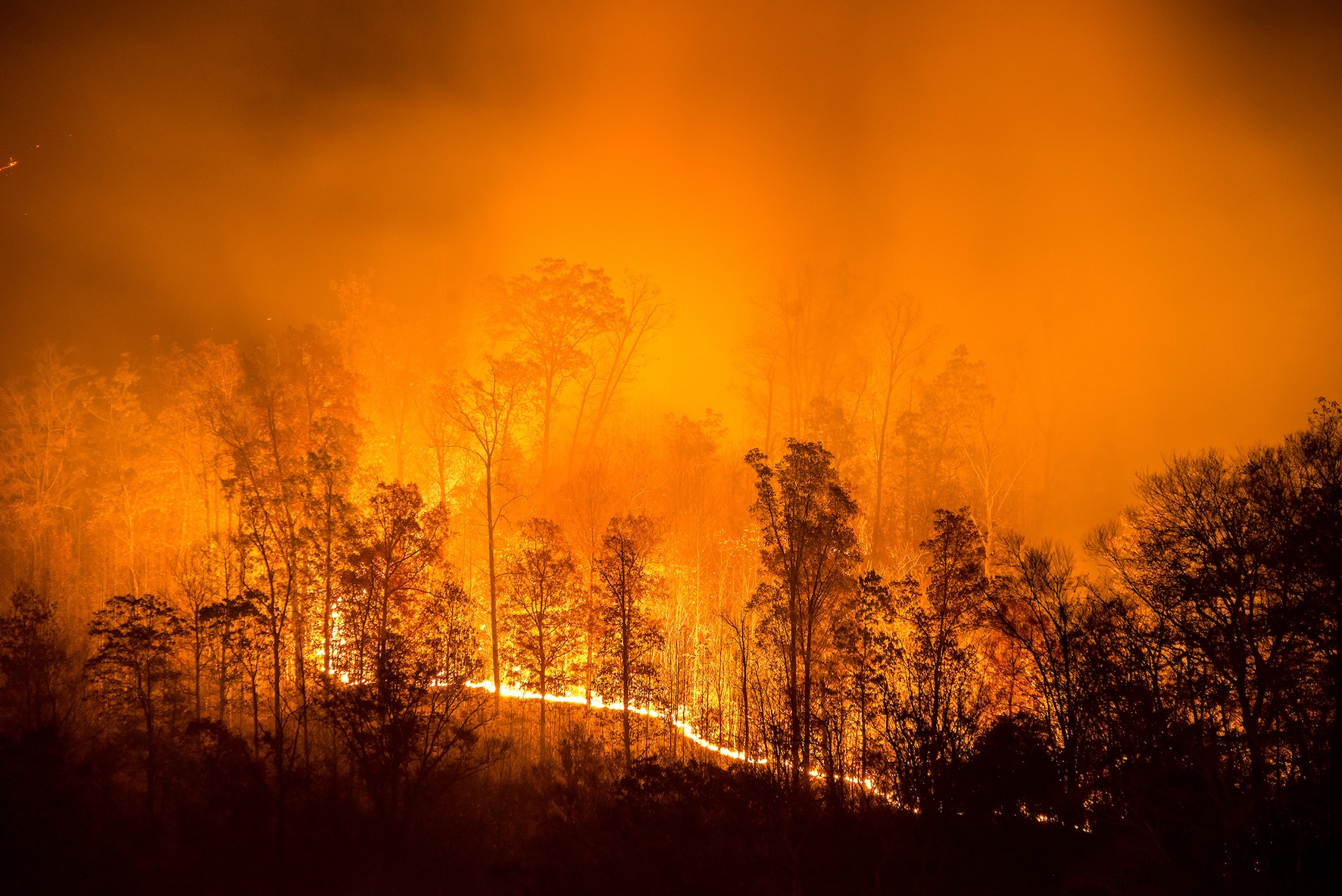
Fires do not always take place in residential or built-up areas; they are increasingly happening in ‘secondary environments’. Examples of this include grassland or wildland fires, refuse fires and fires in abandoned vehicles or derelict buildings.
Whilst largely expected in an external environment, the spread of secondary fires often involves a large and rapidly increasing surface area, requiring a markedly different approach to suppress its spread. Managing firefighters in these unpredictable environments is a similarly labour and resource intensive process, in which managing the energy and hydration levels of fire crews over the large areas they often cover is essential towards maintaining a safe and effective operation. Similarly, managing the rotation of teams in these areas is always a challenge.
To find solutions to these problems, Dräger has developed the Wildland-Fire Sandbox WFS 1000, designed to offer a variety of 3D scenarios for different training and operational levels of fighting forest and vegetation fires thanks to its software-based display. The Sandbox offers the ability to adapt the progress of a simulated fire in line with live weather conditions utilising mapping in a 3D environment, which enables an understanding of the environment and terrain, as well as planning and extinguishing measures relevant to the terrain, using projected images of local geography of the incident ground in 3D visualisation.
The WFS 1000 is also a useful theoretical tool to help firefighters understand the development of a fire in an external environment and the unique characteristics of a wildfire compared to a structural or urban fire. As secondary fires increase in number, and global temperatures rise year on year, firefighters must be trained in how to suppress them, as opposed to leaving them to more specialist forces. In this case, the industry must adapt to trends of the time.

Adapting to current trends
FRSs attended 31,849 road traffic collisions in the year ending March 2024, an increase of 2.1% from the previous year and an increase of 2.3% compared with the same time period five years earlier. The complexity of handling vehicle-related incidents is becoming more complicated by the day, particularly considering the recent rise of EVs which pose different risks to fire crews and passengers than traditional petrol or diesel engine vehicles.
Added to this, it is standard practice that the fuel type of a vehicle must be incorporated in a crew’s initial risk assessment before entering an incident which may be unclear, particularly in the case of a multi-vehicle pile-up where a crew must also determine the severity and point of impact on vehicles, identify trapped persons and navigate confined spaces. EVs are also typically significantly heavier than the average vehicle, which carries an increased risk in itself.
To understand the risks of an EV road traffic collision, which will become a more common occurrence as they continue to rise in popularity, Dräger has evolved its CFS 7000 passenger vehicle simulator to include replicas of high-voltage elements and enable training on how to handle crashed vehicles with hybrid or electric drives.
Replaceable break-open elements are installed in the side door and on the engine bonnet to practise rescuing trapped persons with incident sound effects also installed to replicate a realistic operational environment. By adapting training scenarios to mimic the current commercial and consumer vehicle market and anticipating trends in their development, firefighters and emergency personnel are being given the tools to practise and develop skills appropriate for these emerging risks.
A modern responsibility
The modern world is a fast-evolving entity, producing new developments and dangers to its people and property. To counter these modern dangers, firefighters must have the knowledge, training and technology to keep them from harm, and develop new skills for dealing with emerging risks. To instill fire crews with confidence and teach the correct behaviors that save lives, training must accurately replicate operational environments wherever possible.
Investing in training doesn’t stop at ‘training’, however. We must also ensure that the same safety equipment used in training events can be used at the scene of emergency, where unfamiliarity could make the difference between life and death. This is part of our duty to protect firefighters from harm and develop Technology for Life®.
References
About the Author

Brian Hesler is a Consultant and Specialist Advisor at Draeger Safety UK and former Chief Fire Officer for the Northumberland Fire and Rescue Service.

You must be logged in to post a comment.