
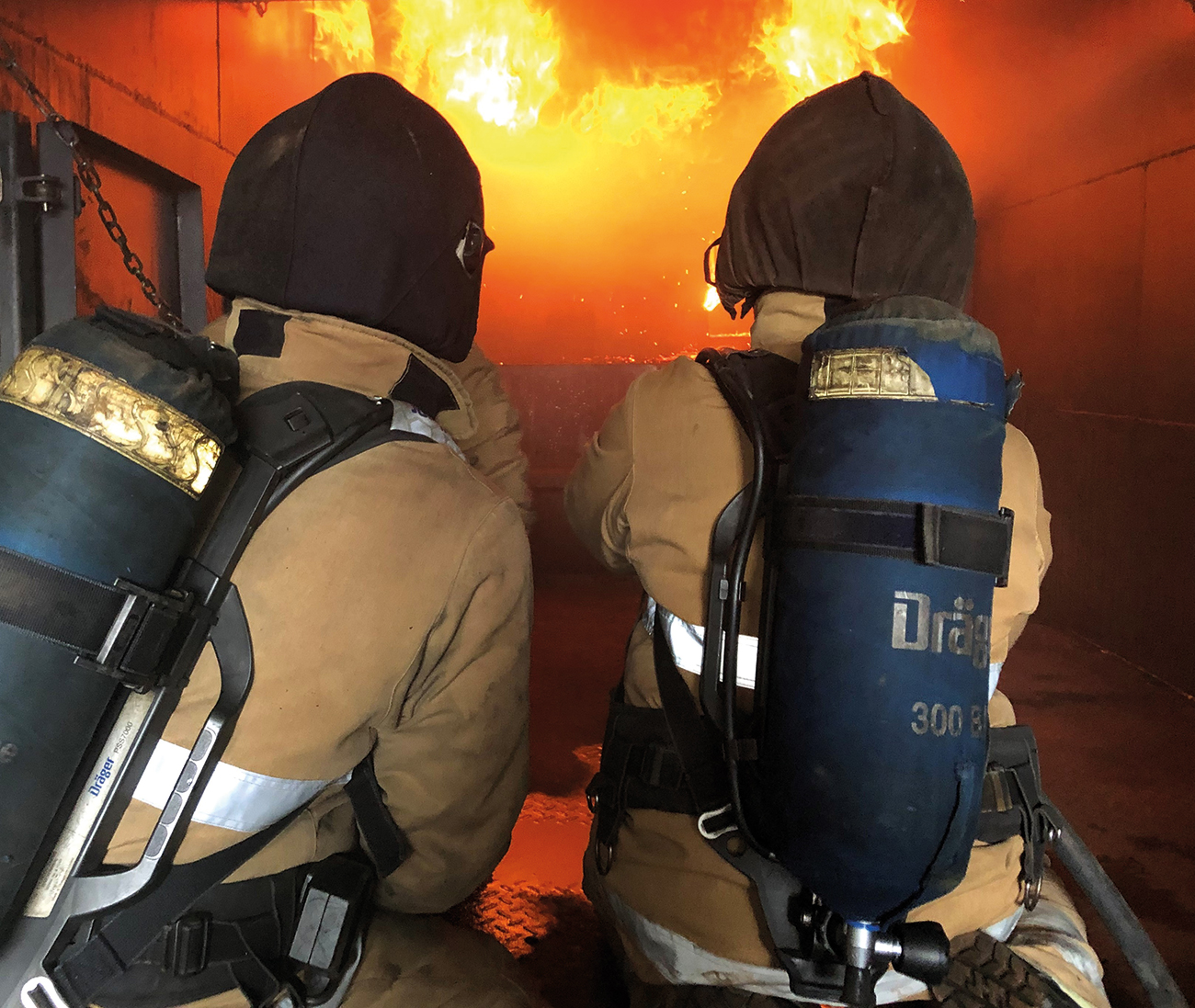
Since the pandemic, it has been well documented that firefighters’ personal protective equipment (PPE) needs to be thoroughly and consistently cleaned after use to protect firefighter health. They need to be cleaned of bacteria and viruses such as Covid-19 but also chemicals, bodily fluids, fire smoke and other potential contaminants they may come into contact with during an incident.
Even after flames are put out, substances remain in soot and vapour on the surface of PPE. If the toxic substance regularly gets into the airways or onto the skin, there may be serious health implications for the current and subsequent PPE users. However, as these dangers only usually manifest themselves in the medium to long term, awareness has been relatively low for a long time.
While it is positive news that awareness is now greater, there is a significant grey area that is creating misunderstandings in the industry as to what the differences are between cleaning, disinfecting and decontaminating. The purpose of this article is to clarify those differences and signpost advice in order that fire services do not assume that cleaning processes are disinfecting or decontaminating when they may not be.
The misunderstandings are understandable, as parts of the market are not making clear the remit of their cleaning systems. Without this clarity, the danger is that firefighters will use kit that is exposing them to germs and contaminants that could be harmful to their health.
Definitions and practical meaning
Cleaning is defined as the removal of all visible soiling or dirt from a person, device or service. A cleaning process, i.e. thoroughly washing hands and wiping surfaces, removes 99–99.9% of microbes.
Decontamination, on the other hand, refers to a special cleaning situation where nuclear, biological and chemical contamination is removed.
Disinfection, meanwhile, specifically means to transform dead or living material into a condition that avoids infection, reducing microbes by 99.999%.
When processing previously worn firefighting PPE equipment, the focus should be on ‘cleaning’ and ‘disinfecting’ as it reduces the number of germs to a level that does not pose a risk to healthy humans. Additional decontamination may be required in special cases where kit has been exposed to asbestos or unusual/a cocktail of harmful chemicals.
Approved specialist cleaning and disinfecting solutions should only be used where necessary. While the focus must always be on the health of the firefighter, we also need to consider sustainability, and where public sector budgets are utilised and specialist PPE equipment costly, a common-sense approach should be taken to ensure kit that is still fit for purpose is not unnecessarily destroyed.
Cleaning should, of course, deliver clean kit, but the cleaning regime should also be appropriate, as far as possible, to multiple PPE products and have high material compatibility to minimise wear and tear. It should be able to save time by shortening the service cycle and be economical in terms of consumption of cleaning agents, water, energy and the production of wastewater. Most of all, it must offer a high degree of protection to workers by avoiding unnecessary contact with any potential contamination.
Why grey areas are a concern
It’s important that the different definitions and remits of cleaning, disinfection and contamination are understood so that fire services do not believe they are decontaminating or disinfecting kit, when in fact they are cleaning it – however thoroughly. On the – albeit relatively rare – occasions where kit is exposed to asbestos, potentially toxic chemicals, or bodily fluids, it is vital that kit is treated correctly.
Whereas there are products on the market that heavily infer that full decontamination is in their remit, manufacturers need to be absolutely clear and honest in the descriptions of their mechanical washing machines. Mechanical PPE cleaning machines are becoming increasingly used in preference to manual cleaning processes, to ensure thorough and consistent cleaning and disinfecting and while they also ‘decontaminate’ up to a point, it is not a ‘catch-all’ decontamination solution. We would still strongly advise that kit exposed to asbestos, for example, is sent for specialist cleaning.

Advice for fire services
To reduce health risks of dirty PPE to firefighters, we advise that all kit is considered contaminated in the first instance. Then a process for handling used PPE should be established, which prevents direct contact with the contaminated equipment from the point at which is it removed at the incident until it is reprocessed at the workshop or specialist cleaning service.
An assessment of what contamination has occurred, either by the user via saliva, blood, nasal discharge, tears, urine, sweat and vomit, or by the incident through soot, respiratory toxins, dust particles, particles, gases and vapours, is essential. This assessment will determine whether the PPE needs to be sent away for specialist cleaning or can be processed in the fire service’s own cleaning workshop.
Clearly defined processes, divided into contaminated and clean phases, will also protect service technicians in the workshop from harmful substances on contaminated equipment.
In realising the many benefits of mechanical cleaning systems, our advice for ensuring that expectations of cleaning systems are correct is to speak to the cleaning system or PPE manufacturer. This is how fire services can request complete clarity, where wording and advice is regulated.
Fire services should also look to specialist government-run chemical advice services, as well as transport services that will provide a list of processes that should be undertaken, following transport accidents.
Training is another area where manufacturers, such as Dräger, support fire services in safe cleaning processes. Our Academy enables participants to carry out all cleaning and disinfecting measures for personal respiratory and body protective equipment properly based on applicable regulations and guidelines.
Our fundamental advice is that fire services should recognise there is a grey area and check the remit of any equipment they use. Cleaning PPE is one of the most difficult issues to pin down, and our view is always that firefighter PPE and support is about technology for life, and not about selling products.
For more information, go to www.draeger.com
About the Author

Brian Hesler is a Consultant and Specialist Advisor at Draeger Safety UK and former Chief Fire Officer for the Northumberland Fire and Rescue Service.

You must be logged in to post a comment.