
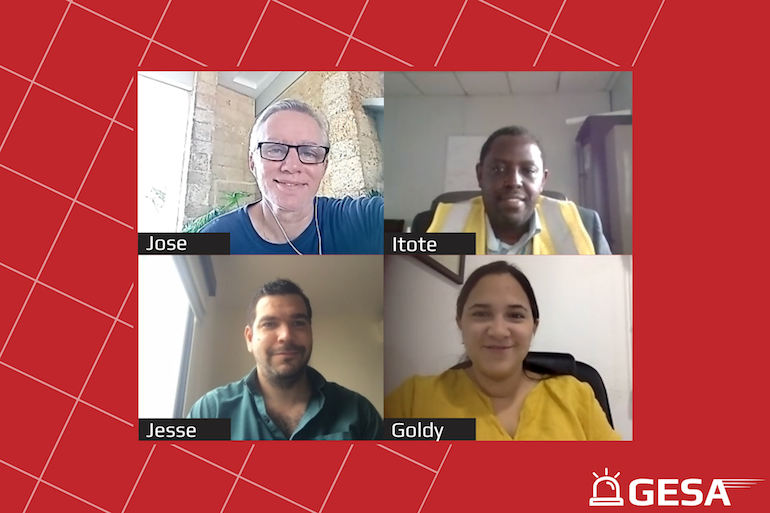
Donations of Emergency Services gear, vehicles and rescue equipment are a welcome sight to under-resourced departments around the world struggling to provide emergency care. However, despite the best intentions of the donors, there’s often a mismatch between what’s donated and the real needs of departments on the ground. GESA’s Advisory Council members – practitioner leaders from around the world with first-hand experience with the positives and negatives of the donation-recipient experience – are exploring this issue, its roots, and how we can make a real difference on the global Emergency Services donations pipeline. Two key observations from our recent discussion are below. Look for a complete two-pager on the topic in your next MDM magazine!
1. Who drives donations – the donor, or the department looking for gear?
Overall, Advisory Council members said it’s actually the donor that typically drives donations. Donations are rarely driven by the specific needs of the recipient. Global North Donors have goods they want to retire. And many have longstanding relationships with departments in the Global South. Goldy Rivas, volunteer firefighter and former Communications Director at the Guayaquil Fire Department, explained: ‘Every time Houston (our partner city) has gear they want to donate, they add it to a shipping container. When the container is full, they send it to us and we sort it out. They send us a mix of what they have available and we hope it fits our needs.’
2. How much of the donated gear is useful to the recipients?
The AC members estimated that roughly 30% of the gear donated to their respective countries is not really useful – a level that was surprisingly consistent from East Africa to Latin America. What did they mean by ‘not really useful’? There were a number of issues cited:
- Incomplete turnout gear. A department may receive jackets, but not pants, meaning firefighters are not fully protected.
- Turnout gear that doesn’t fit. Gear from the Global North often comes several sizes too big for firefighters from some developed nations.
- Gear built for a completely different climate. One AC member mentioned how his department in the Caribbean recently received -40°C gear. ‘The firefighters are proud to have something new, but there is no use case for the gear here.’
- Different brands of vehicles or equipment. Having a series of different donated vehicles makes maintenance and training – already a challenge – even trickier.
- Gear that is simply too worn out to use. ‘We love the donations,’ one AC member explained, ‘but some of the gear we get is just too worn to use.’
GESA is digging deeper on this issue over the coming months, looking at how we can re-imagine and improve the donor-to-department pipeline. Be on the lookout for our survey on the topic where we will invite practitioners around the world to contribute their insight. Together, we have the opportunity to improve the efficacy of the Emergency Services donation pipeline!
Help GESA find solutions by applying for membership or joining the conversation at the GESAction Forum
