
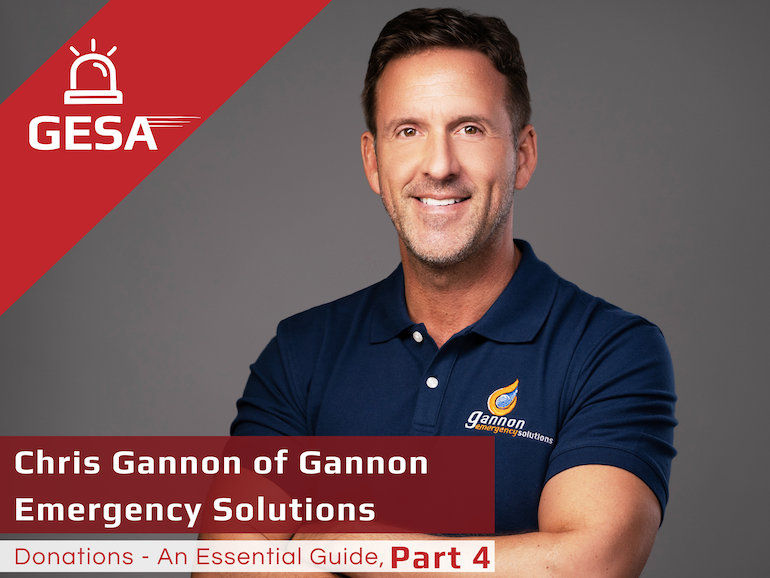
By Chris Gannon, writing for GESA (Global Emergency Services Action)
Before considering donations…
Donations of gear and equipment, as we’ve discussed in earlier articles, can be a mixed bag.
Some contributions are in the end useless, occasionally even dangerous. Estimates from Global Emergency Services Action suggest that up to 30% of all donated gear and equipment aren’t worth even unpacking, unusable to recipient departments because the goods are inappropriate for local conditions or are no longer fit for service. Even goods that might fit local needs often come without adequate training, spare parts and necessary information like manuals.
Still, donations can play a crucial role as we seek to build capacity and quality in underserved communities around the world. Donations can help departments improve service. They can also help policy makers and budget holders see the value of investing more in Emergency Services equipment – including new equipment. And donations can help sensitize the public to what is possible with political and financial support, giving hope to communities that need help.
Sadly, the system as it is currently ‘organized’ isn’t achieving anywhere near what it might…
The process can be arduous and long. Just because you are donating humanitarian equipment to firefighters in need doesn’t mean that every local authority in every recipient country will have the import rules and regulations in place to receive goods – and wave everything through customs quickly with confetti and thanks. Firefighters on both sides are often volunteers with no government affiliations, no special exemptions and no special experience in the donations process. In frustration, some donors have even stopped trying to work with certain countries, impatient as their well-intentioned donations remain stuck for months or longer awaiting liberation from customs offices. Imagine – firefighters on both sides struggling to complete the handoff, waiting while emergencies go unattended…
We need to break the logjam and create a donations system – a pipeline – that takes all this good will and puts it to better use. Success will start with better understanding the actual situations facing recipient departments, helping make a stronger match and enabling departments to evaluate their own needs and request gear they can use. Success will mean building standards for donations so we can stop shipping goods that should be retired or trashed, while recycling the maximum amount of gear that can be given additional life. We will know we’re on the right track when we stop sending a high-volume of pumpers to communities with no hydrants or heavy PPE to tropical nations where it isn’t appropriate and can be dangerous. Imagine donating a long wheelbase truck to an ancient city with narrow streets where it can’t even operate. Imagine vehicles shipped across the world (at great cost) to countries where local fuel grades or altitude make them unusable. I’ve seen all of these examples and worse.
The good news is…
For our sector, for donations – but more broadly for an improvement of service globally – success means going beyond good intentions and insisting on good results. The good news is that we’ve just scratched the surface and so much is possible. Ten years ago, making the connection between donors and supplier companies and communities was nearly impossible – hit or miss at best. Today with advances in connectivity, improvements in global logistics, and growth in the developing world, there is more opportunity and more incentive to make the connection. We can do the homework we need on both sides. We can Zoom or Skype to discuss recipient requests and even conduct part of our training virtually. We can build and share standards for donations to make sure everything shipped is worth shipping. We can keep in touch after goods are received to offer support. And working together, we can create models that are economically and environmentally sustainable.
Our sector is on the brink of some true advances. So much is possible. Learning and collaboration are at the core, and I applaud the efforts of Global Emergency Services Action as they work to bring standards, coordination, and learning together to make progress at scale. We need to connect departments and manufacturers in the Global North with purchasers and donation recipients in the Global South to create a better, safer, happier and more prosperous world.
Chris Gannon
Chris Gannon has spent 29 years in the industry as a national Fire Chief, government advisor, CEO of Gannon Emergency Solutions, and has built a reputation as a pioneer in reviewing and improving Emergency Services around the world. For more information, please visit www.gannonemergency.com or www.gannonemergencyusa.com.
GESA (Global Emergency Services Action)
GESA is an international non-profit founded in 2020 by leader companies in the Emergency Services sector. GESA is a coalition of companies, consultants and practitioners working together to change the future of the global Emergency Services marketplace. We are currently developing our flagship platform – the GESA Equipment Exchange – a web-based tool that will connect Global South departments with manufacturers, consultants, trainers, and suppliers to tie donations to a sustainable, longer-term pipeline of sales and service. For information, membership inquiries and more, please contact amack@gesaction.org
