
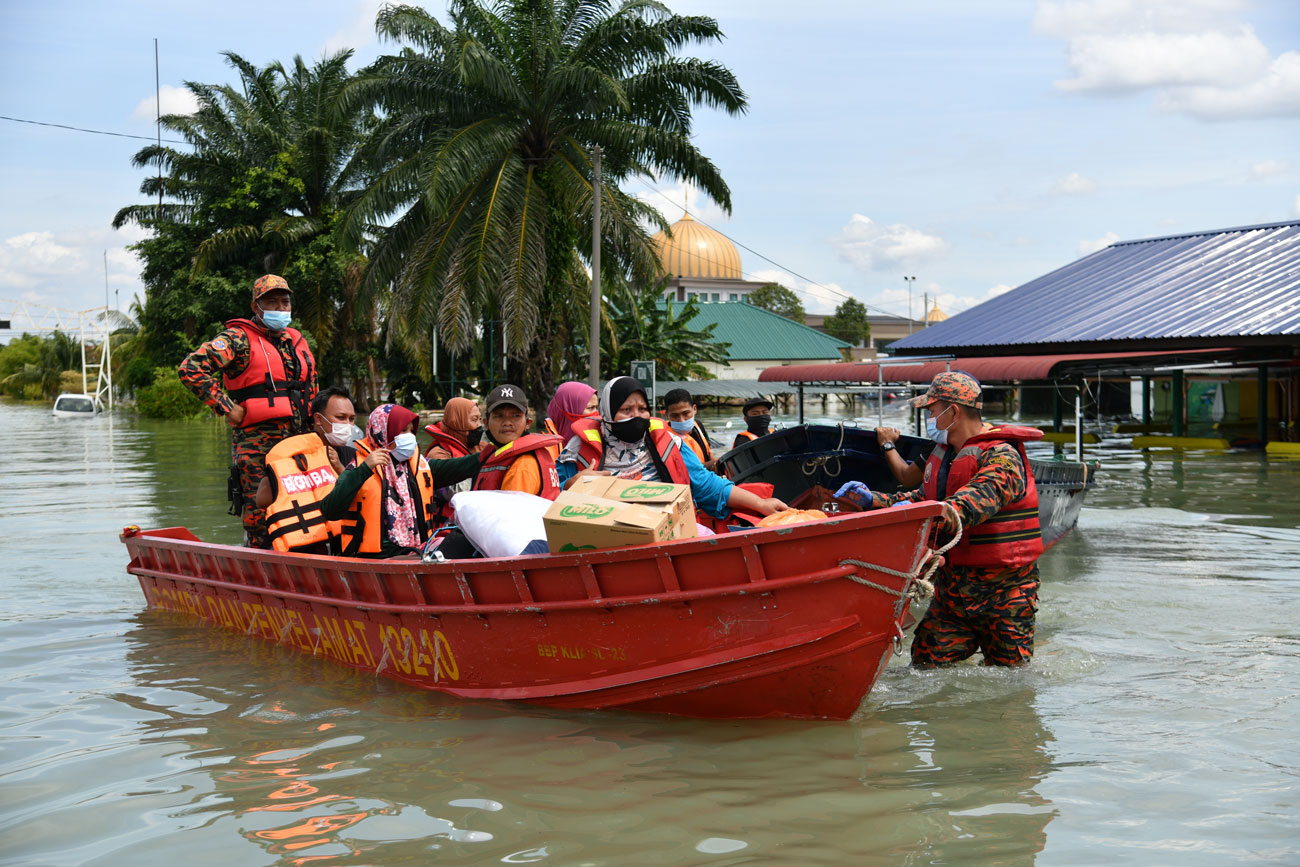
As storms, wildfires and other calamities continue to escalate across the globe, big-city fire chiefs offer a road map for how departments should prepare for the worst effects of climate change.
Across the world, climate change is leading to weather-driven disasters that are more frequent, more severe and more widespread, putting first responders on the front lines in ever more daunting scenarios. New thinking, more preparation and better resources will be essential for departments to meet this challenge.
That is the urgent message from big-city fire chiefs, the U.S. Fire Administrator and other fire leaders from around the world who met in September at NFPA headquarters as part of the Urban Fire Forum. The annual meeting brings together chiefs from some of the world’s largest fire departments and other dignitaries to discuss emerging issues and provide policy guidance for fire departments around the globe. It’s the first time that the influential group – including the Metropolitan Fire Chiefs Association, a member section of NFPA, and the International Association of Fire Chiefs (IAFC) – has addressed fire service preparedness as it relates to climate change.
The position paper ‘isn’t just a call to action – it’s a road map to ensure our firefighters and communities are best prepared for the undeniable impacts of climate volatility,’ Jim Pauley, president and CEO of NFPA, said after participating in the discussions.
The hope is that the guidance in the paper will trickle down ‘from the Metro Fire Chiefs through our suburban and rural communities to make a difference in response to climate change,’ said U.S. Fire Administrator Lori Moore-Merrell, who helped craft the policy paper along with fire chiefs from the U.S., Europe and Latin America.

In the paper, the chiefs did not mince words about the high costs borne by the fire service in recent years as floods, storms and especially wildfires have become more frequent and intense. The ‘numerous and prolonged disasters’ have strained resources and personnel, are ‘driving the demand for specialized skills and equipment’, and ‘are causing our fire service leaders to rethink their customary risks and adjust to new and emerging threats of today’s emergency response environment,’ the chiefs wrote.
The paper also outlines strategies for departments to consider as they adjust to the demands of increasing climate volatility in their areas (see ‘Five keys’). The paper includes guidance on preparation, building partnerships, resilience, member health and safety, and the need to rethink community risk. Getting started right away is critical, especially with experts predicting that weather-driven disasters will further intensify.
‘We need to be proactive in our thinking and be adaptable to resilient solutions,’ Moore-Merrell said. ‘The time to bolster our fire department’s resilience and resources is now.’
New thinking
For years, climate scientists and international organizations such as the United Nations have made ominous predictions that severe weather events will grow stronger, become more frequent and impact more people as a result of a warming global climate. In 2023 especially, those warnings seem to have become a reality.
By early September, with four months remaining in the year, the National Oceanic and Atmospheric Administration (NOAA) announced that 2023 had already earned the ignominious distinction of having more $1 billion weather-related disasters (23) than any year in United States history. And those events – ranging from historic flooding in Vermont, hailstorms in Minnesota, deadly fires in Hawaii, and severe storms across the South – represent just a fraction of the historic destruction that weather-related events wrought worldwide.
In just the last few months, droughts and fires have scorched the Amazon basin in western Brazil, and in Turkey, generational floods combined with historic wildfires have killed dozens of people, destroyed crops, and left thousands homeless. In July, a global heatwave killed scores of people and set the mark as the hottest month in recorded world history, according to NASA. This year’s events have built on what was also a rough 2022, when 42 separate billion-dollar weather-related disasters were documented worldwide.
Of course, floods, wildfires, severe storms and other events are nothing new to local fire departments. Most already have a thorough understanding of the environmental hazards their communities are prone to, and they regularly train for those scenarios. Climate change, however, has made those historical patterns less reliable predictors for the types of events that could happen in the future. In parts of Europe, for instance, flooding, wildfires and hurricanes are occurring in areas that aren’t historically known for such dramatic events. In places where wildfires, floods and hurricanes are routine, they now happen more frequently and on a scale that’s unprecedented and difficult to prepare for.
That pattern has been especially true of wildfire, which has devastated regions across the world with a history of fire – such as the American West, the Mediterranean and Australia – but also regions where wildfires have been historically rare, such as northern Europe and even Siberia.
In 2021, NFPA launched an innovative new programme, Outthink Wildfire™, with the ambitious goal of ending community destruction from wildfire in the U.S. within 30 years. The strategy relies, in part, on helping governments enact smarter policies while also providing local fire departments with the training, equipment and other resources that they badly need to turn things around. The chiefs’ position paper on climate fits hand in glove with the programme, Pauley said.
‘What the chiefs endorsed is a set of principles that NFPA already had in our Outthink Wildfire program, which is changing where we build, how we build, and how we can bring first responders and the community together to better prepare themselves for those events,’ he said.
As the climate becomes more unpredictable, the chiefs also stressed that departments need to be proactive in rethinking the risks and hazards that their local communities face. The paper lists two tools to help departments better understand future risks: NFPA 1300, Standard on Community Risk Assessment and Community Risk Reduction Plan Development, and resilience.climate.gov, a federal website that provides county-level data on how rain and heat patterns may change in the years to come. NFPA 1300 contains guidance on how to conduct a community risk assessment to evaluate hazards, and for developing a community risk-reduction plan to mitigate and respond to the impacts of those hazards.

In addition to rethinking risks, the paper urges fire departments to do extensive preplanning and consider how the fire service and community partners will work together to respond when these complex disasters strike. Because a large event like a flood will almost certainly stretch a department’s capacities, the more planning and thinking a fire department can do in advance, the more likely it will be to maximize its efficiency and effectiveness during the event, the paper said. ‘A climate-resilient fire department will require greater capacity to respond to emergencies, including the resources and ability to respond to simultaneous emergencies,’ the chiefs said.
The chiefs advocate for a ‘whole-system approach’ to planning and response. That involves looking at how physical and social systems interconnect within a community and seeking out potential collaborations with groups such as law enforcement, public health, public works, emergency management and volunteer organizations. Ideally, this also includes outreach efforts to raise awareness of new hazards and inspire communities to harden homes and critical infrastructure. The approach also advocates for the adoption of up-to-date building codes to lessen the impact of extreme climate events.
As part of its planning, local fire departments also need to consider how and where to deploy supplies, equipment, and personnel to have the biggest and most immediate impact when it is needed, the paper said. Departments should also work to understand ahead of time the federal and regional systems in place to help them when disasters strike. This includes the National Mutual Aid System, also known as the Emergency Management Assistance Compact, which ‘fosters interstate cooperation and coordination by enabling states and territories to request and aid during times of crisis and facilitates the sharing of critical resources, expertise, and personnel across jurisdictional boundaries,’ the paper said.
The chiefs also stressed that, in order to remain resilient, departments need to remain cognizant of the physical and mental tolls that disaster events can take on fire personnel and their families. The paper urges leaders to ‘consider the needs and perspectives of fire officers and responders who will be on the front line in response to any event.’
Two documents, NFPA 1710, Standard for the Organization and Deployment of Fire Suppression Operations, Emergency Medical Operations, and Special Operations to the Public by Career Fire Departments, and NFPA 1582, Standard on Comprehensive Occupational Medical Program for Fire Departments, can help departments put in place operational systems to keep firefighters from becoming overstressed. NFPA 1710 helps departments ‘create a standard of cover for fire and rescue department response jurisdiction with minimum standards for crew size and deployment models based on risk level in each first-due response zone,’ the paper says. NFPA 1582 provides guidance for occupational and medical programmes to maintain mental and physical health of crews.
However, beyond the specific guidance the paper provides, Moore-Merrell, the U.S. Fire Administrator, believes its value will be immense in helping the climate crisis gain more traction in the fire service. Even as many fire leaders have faced the challenges brought on by a changing climate, too few have begun planning for its long-term consequences.
‘The biggest gap that the paper will fill is just providing the understanding and recognition that things are changing,’ she said. ‘This paper articulates these recognitions so that others can start to understand its effects, process what’s happening, and think about what we need to do to respond.’
Five keys
The Urban Fire Forum position paper on climate change and the fire service outlines five key principles for departments to incorporate into their planning to ensure a climate-resilient fire service:
Proactive risk rethinking
Tailor community-specific solutions to anticipate and address climate threats. Utilize tools like NFPA 1300, Standard on Community Risk Assessment and Community Risk Reduction Plan Development, to conduct community risk assessments and implement risk-based solutions.
Whole-system approach
Emphasize collaboration with related departments like law enforcement, public health and emergency management. Given the increased frequency and intensity of climate-related events, a cohesive response is crucial.
Mission focus
Prioritize the well-being of front-line responders and communities. Tools like NFPA 1710, Standard for the Organization and Deployment of Fire Suppression Operations, Emergency Medical Operations, and Special Operations to the Public by Career Fire Departments, and NFPA 1582, Standard on Comprehensive Occupational Medical Program for Fire Departments, offer guidance for crew size, deployment models, and responders’ physical and mental well-being.
Collaboration and Inclusivity
Engage all community sectors to participate in preparedness, especially in underserved neighbourhoods.
Durable solutions
Adopt long-lasting resilience solutions that serve both present and future community needs.
For more information, go to https://nfpa.libsyn.com/heat-the-silent-killer
This article is reprinted with permission from NFPA Journal, © 2023 NFPA.

You must be logged in to post a comment.