
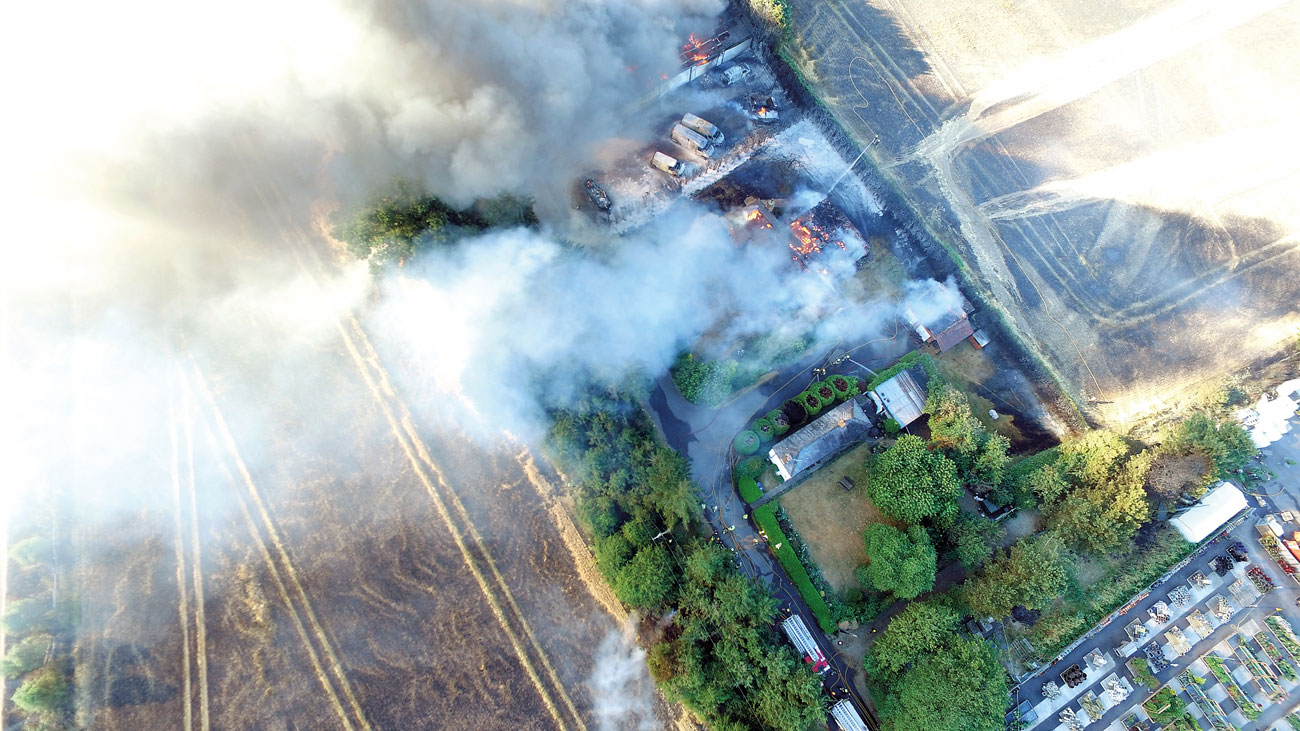
We’ve all read about people not receiving a utility bill for many years because the supplier has failed to keep their address up to date, but if an emergency service is using poor address data, it can affect a whole lot more than the bottom line – it can cost lives.
Getting the address right may sound like a basic requirement, however, with over two-and-a-half million address changes every six weeks*, the scope for error is substantial. With the continual development of new houses and estates, house conversions into flats, and the perpetual rise and decline of businesses, it’s little wonder many organisations struggle to keep their address data clean.
Single truth address
Over the last two decades, address management experts, Aligned Assets, have supplied over half the Fire and Rescue Services in Great Britain with their specially designed corporate gazetteer to help them manage and share accurate address data. Based on the most advanced addressing product available, Ordnance Survey’s AddressBase Premium dataset, all addresses comply with British Standard BS7666, and therefore have their own Unique Property Reference Number (UPRN) and geographical coordinates. It’s this UPRN that links the plethora of address details from past and present to the one single up-to-date address. So no matter how many times a property name or number, or street name has changed, if the historical layers are linked by the UPRN, or for streets the Unique Street Reference Number (USRN), the most recent address can always be identified.

Reducing response times
For Fire and Rescue Services, being able to link historical data to the present address is critical. Imagine a member of the public calling in an emergency, but they only know the location as a previous name, such as a pub that’s widely known as The Red Lion, despite it having changed name to The Western Tavern some time previously. With the UPRN linking historical and current address data, this old name can be quickly identified allowing Command and Control to mobilise emergency crews to the correct address. Using an effective corporate gazetteer that seamlessly integrates and shares with all the different systems being used enables speedy accuracy, and therefore improved response times. Buckinghamshire Fire and Rescue Service have been using Aligned Assets’ corporate gazetteer, Bluelight, for four years, and for them, one of the greatest benefits is this integration with other systems.
Matthew Ella, Buckinghamshire FRS, says: ‘Unlike our previous gazetteer, Bluelight has enabled integration with other systems, such as our premise risk management system. This ensures that our other systems have access to a single accurate, set of address data, therefore allowing a single truth throughout the organisation. If we’re all accessing the same up-to-date address data, then no mistakes can be made. From an analytical perspective, using a single address through multiple systems allows analysis to be more efficient and reliable. There’s even the potential to automate more of our analysis using Bluelight as our source reference between systems.’

Accuracy for FRS collaborations
Four years ago Buckinghamshire FRS collaborated with Oxfordshire and Royal Berkshire Fire and Rescue Services to provide a consolidated Thames Valley Fire Control Service (TVFCS). Based at the Royal Berkshire FRS headquarters in Calcot, Reading, the TVFCS answers 999 calls and mobilises fire engines on behalf of the three fire and rescue services to incidents across the Thames Valley, serving a combined population of over two million people. With a vastly increased geographical area to service, the accuracy of address data becomes ever more vital.
As Buckinghamshire FRS were already accessing the most accurate address data through the Bluelight gazetteer, they were best placed to share that data with TVFCS, enabling crews to be efficiently mobilised across the three services. The process of updating and sharing addresses through this single mobilising system has ensured consistency, reliability and efficiency. This couldn’t be more critical for incidents occurring on county borders where the nearest fire resource is mobilised to the scene. For the TVFCS, this single-truth addressing has eliminated any kind of addressing error caused by duplicate address records, and has therefore resulted in better response times.
Matthew Ella, Buckinghamshire FRS, says: ‘As part of the Thames Valley collaboration, TVFCS use the Automatic Vehicle Location System (AVLS) to mobilise resources to incidents. This method of mobilisation ensures the resources that have the quickest response times are mobilised regardless of the location of the incident or the home station of the resource. The use of AVLS alongside a single source of address data ensures the fastest possible response is sent to every incident.
Driving efficiency
To increase efficiency further, TVFCS are starting to implement the gazetteer’s filtering capability. By eliminating certain irrelevant classifications, such as telecommunications masts or cattle grids, the gazetteer can retrieve an accurate address even quicker, resulting in an even faster response.
‘By finely tuning the gazetteer for the specific needs of your FRS, you can maximise the potential to improve response times. We’re looking forward to speaking to TVFCS next year to gain a full understanding of the efficiencies they’ve achieved,’ says Dinesh Thanigasalam, Commercial Director of Aligned Assets.
Buckinghamshire FRS have further enhanced their use of the gazetteer by purchasing a module that allows them to record and share location-specific information, such as risk data, against a British Standard BS7666 property or street. Once this is fully implemented TVFCS will be able to share the location-specific intelligence along with the address to the attending crews.
Keeping abreast of business lifecycles
As Buckinghamshire FRS strive to increase efficiency and reduce costs, they are applying the same address accuracy ethos to their proactive, protection targeting work with businesses by using the most accurate business data available, 118 Business Names.
Matthew Ella, Buckinghamshire FRS, continues: ‘A project that has benefited from improved utilisation of our gazetteer is our protection targeting. We know businesses are setting up, breaking down or just moving premises all the time. With no internal resource for manually identifying and updating business records, using 118 Business Names means we are able to correctly identify the current occupiers of commercial premises. The Business Names dataset includes a market sector description for each company. We’re able to build this information into our targeting methodology along with other datasets to establish a risk score for each commercial premise.’
Buckinghamshire FRS is continually maximising the potential of their corporate gazetteer for both their reactive and proactive work in the community. Their practices have best placed them for sharing address data with the regional TVFCS, while their success in sharing location intelligence and employing the most up-to-date business data could soon be rolled out across the whole collaboration.
Contact Aligned Assets to find out how your FRS can enjoy the efficiencies of using the most agile gazetteer delivering AddressBase Premium. Or if you’re at the NEC for the Emergency Services Show in September, pop along to Stand B37 for a chat.
For more information, go to www.aligned-assets.co.uk
Reference
* Source: GeoPlace
About the Author

Dinesh Thanigasalam is commercial director for address management and augmented reality specialists Aligned Assets.

You must be logged in to post a comment.