
The UK’s latest exporting news is exceptional and should be welcome news to the exporting element of the UK Fire sector.
£837bn year-on-year to February 2023. This is 23% growth over the preceding five-year average. It means that HMG’s export target in its Export Strategy, of ‘GBP 1Tn by 2030’ will be met and, in my view, far exceeded.
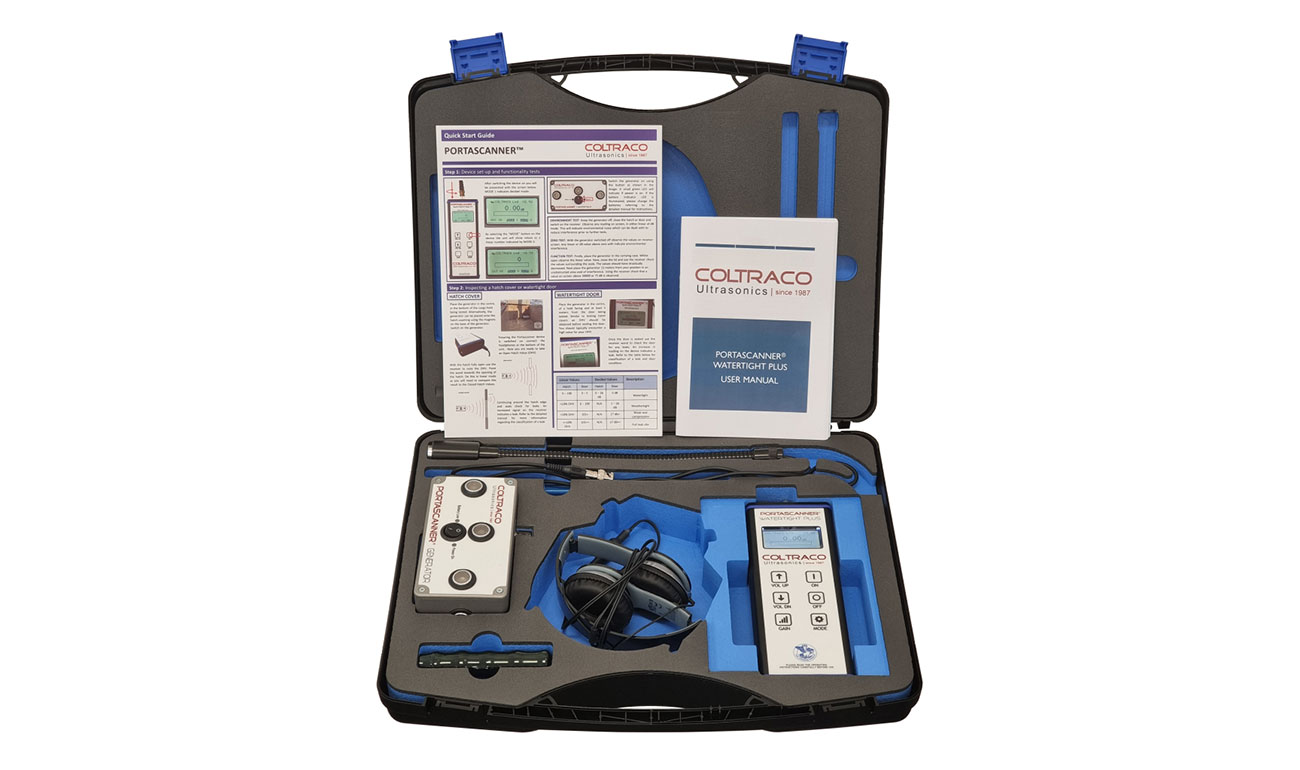
My own company, Coltraco Ultrasonics is now the world’s only companies to design, manufacture and export instruments and systems to monitor the contents of both liquefied and non-liquefied gaseous extinguishing systems and the flow rates of water deluge and sprinkler systems, and we have recently developed an instrument to identify the liquid level contents of fluids in pipework, in both horizontal and vertical planes. This year we won our second Queen’s Award for Enterprise and export 90% of our manufactured output to 120 countries.
In Business & Government we discuss the ‘scaling up’ smaller British companies to become larger ones, but far less how to scale up UK Exporting overall. One way is to better understand the relationship between Government & Business and how we export at all.
The number of UK Exporters is approximately 261,000 out of a UK company population of 5.6m. So, this means something special: that only 1/20th of our companies produce, through exporting, the equivalent of one-third of the value of the UK’s GDP.
UK exporters are 20% more efficient and profitable than non-exporters. As the Government’s first Export Strategy made clear, because they are exposed to greater competitive pressures globally, and have to constantly invent and innovate their way through them, to continue to succeed in them.
We hear a great deal about the productivity issue in the UK but rarely say that exporting companies in our economy are already its ‘productivity wizards’.

Knowingly or otherwise, UK Exporters exist and operate within a wider strategic fabric. Regardless of domestic issues there is remarkable consistency in UK Foreign Policy, in a highly contested, global environment, thanks in no small measure to the eminent Professor John Bew and his brilliant Civil Servant colleagues at No. 10 and CO, in the Integrated Review of Security, Defence, Development & Foreign Policy, which was updated this year as the Integrated Review Refresh. You can read them here:
One way to look at British Foreign Policy is to see it as continuum. It is a sequence of cross-departmental policy formulation and implementation: Atlantic Charter Renewal, UK Dialogue Partner status with ASEAN, HMS Queen Elizabeth II’s Carrier Deployment to the Indo-Pacific, the UK-led Joint Expeditionary Force, Support to Ukraine following Russia’s illegal invasion, UK participation in the 44-nation European Political Committee, the UK-France Summit, the Windsor Framework, the Integrated Review Refresh, the AUKUS Announcement, CPTPP Accession and the forthcoming Defence Command Paper Refresh
Seeing these as a continuum that balance in strategic terms the role of the United Kingdom in the Euro-Atlantic and Indo-Pacific, and the need for UK Trade & UK Finance to intrinsically support UK Diplomatic and UK Defence policy.
It reveals a fundamental principle that for UK Foreign Policy to succeed in our highly challenging and contested world, to preserve our freedoms to navigate and trade, and the rules-based international system itself, Government needs the implicit support of UK Trade & Finance, UK Industry and UK Academia, because we are at a moment globally when government & society need to come together in a whole-nation endeavour to succeed.
An easy way to remember the vital place of UK Exporters in British Foreign Policy is to consider what can be called the ‘8 Core UK Capabilities’. On the Government side there are four of them: Defence; Diplomacy, Security and Development. On the Private Sector side there are another four: Trade, Finance, the Intellectual & Scientific, and the Cultural.
From this framework then, one can say with confidence, as a UK Exporter, that you are playing your part in public service by your highly productive private sector service. I warmly congratulate you and thank my friend, Mr David Staddon, for the opportunity to write this article.
About the Author

Carl Stephen Patrick Hunter OBE is Chairman of Coltraco Ultrasonics, a high-exporting manufacturer, Chairman of the British Exporters Association, Director-General of the Durham Institute of Research, Development & Invention at Durham University, Director of the Centre of Underwater Acoustic Analysis, Professor-in-Practice at Durham University Business School, Chairman of the Council on Geostrategy Forum, Visiting Fellow of the Royal Navy Strategic Studies Centre and Fellow of the Royal Aeronautical Society and of the Institute of Marine Engineering, Science & Technology

You must be logged in to post a comment.