
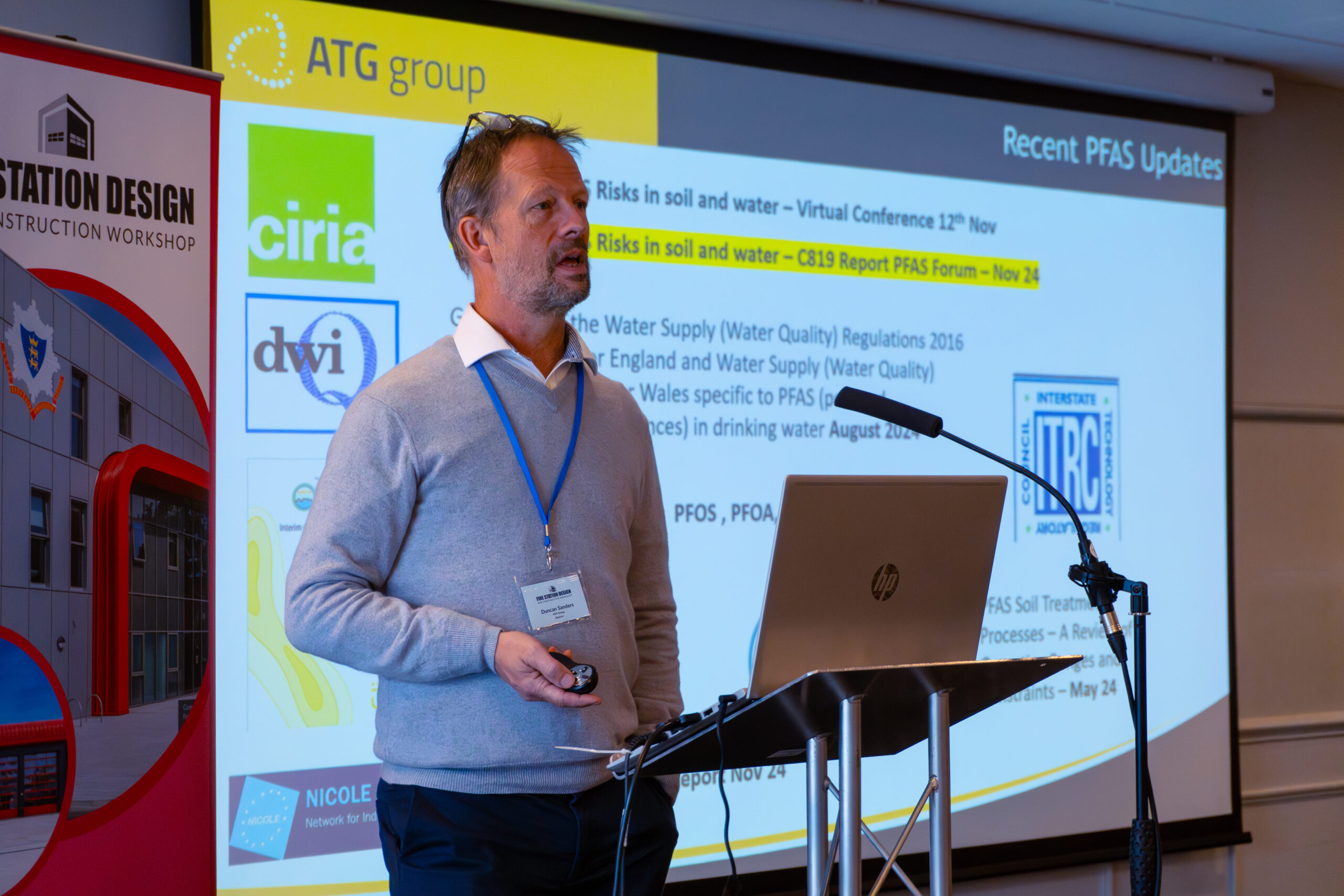
All tickets sold out, every room at the venue booked, and demand for exhibition space resulting in a waitlist for next year.
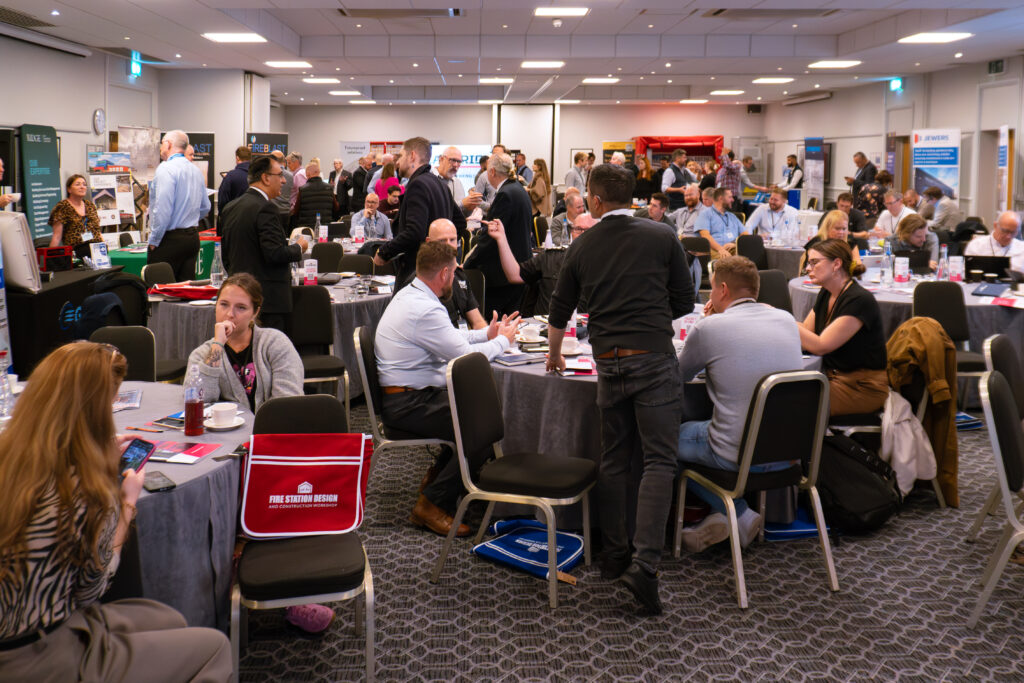
The Fire Station Design and Construction Workshop returned on 13–14 October with its biggest year yet, bringing together estates managers, facilities teams, and project managers from across the UK to share ideas, insights, and best practices in modern fire station design.
With delegates from 24 fire and rescue services and representatives from more than 20 private companies, the event once again proved why it has become a must-attend for anyone involved in planning, building, or maintaining fire stations and estates.

Event structure & format
The conference runs across two days. Traditionally it kicks off with an evening networking session, but this year the programme expanded with a new early-afternoon addition for fire and rescue service personnel.
Day 1
The event opened with NFEG (National Fire Estates Group) hosting a meeting, which made perfect sense given how many attendees at the conference are also members of NFEG. Led by Ijaz Bashir (Scottish Fire and Rescue Service) and Paul Brookes (Royal Berkshire Fire and Rescue Service) they covered the latest on benchmarking, condition standards and sustainability methodology, and asset management software. There was also an insightful presentation from Ciaran O’Kane on the NIFRS estate.
A couple of hours later, the focus shifted to the networking evening. Attendees were split into teams for a fire-themed quiz, followed by food and drinks. On paper, a quiz sounds like the kind of thing most people would dodge, but it landed exactly the way it did last year. It broke the ice, and set up a genuinely relaxed atmosphere.
Day 2
The main conference day featured seven talks from industry experts on topics such as modular construction, sustainability, PFAS, digital estates management, firefighter training, and decontamination. All of the sessions were fantastic. Even where topics overlapped with last year, which is understandable given these are ongoing challenges, there was great value in hearing different perspectives.
Each talk was followed by a Q&A session, which let delegates and speakers dig deeper into the details. It’s not something you get at every conference, but it’s a big part of what makes FSDW feel so collaborative and workshop-like.
Running alongside the talks was an exhibition with architects, engineers, and specialist suppliers showcasing new equipment and technologies. The variety is what stood out here. The exhibition had everything from storage solutions to industrial flooring, drying room systems, and steel kitchens. Breaks between sessions gave people time to explore the stands, grab a coffee, check out demo equipment, and continue networking.
A couple of presentations ran over, but the organisers kept things on track with quick shuffles of the schedule.
The day was supposed to close with a panel discussion on standardisation, but with a few delegates heading off early to beat the traffic, it ended up being dropped. A disappointment for some, but the organisers are already looking at adjusting next year’s schedule to avoid the same issue.
Key Takeaways
Here are some of the key themes that stood out across the two days:
1. Sustainability is built one practical step at a time
Most services are focused on decarbonisation, but this year the conversation shifted from big long-term targets to immediate, achievable actions such as LED and heat pump upgrades, better energy-use data, and expanding carbon literacy. The idea is simple: real progress comes from small steps taken consistently.
2. Modular construction is a serious option
Charlotte Moore’s case study on RBFRS’s new learning and development centre showed how far modular has come. Faster build times, controlled factory conditions, and consistent quality are turning modular into a legitimate option for both new stations and training facilities, not just temporary buildings.
3. Data is becoming the backbone of estates management
Multiple speakers highlighted how better data is helping services spot issues earlier and prioritise more effectively. With tools like Drone as a Service (Daas) now in play, it’s obvious that a huge chunk of estates work in the future will be driven by accurate, real-time information rather than guesswork.
4. PFAS is the next big challenge
Zoning and decontamination flows are now standard practice in new station designs, so the conversation has moved beyond simply acknowledging the need. What stood out this year was the growing concern around PFAS.
A lot of services are still figuring out what PFAS means for their estates. How do you reduce exposure? What needs replacing? How do you manage legacy contamination? What processes actually make a measurable difference?
It’s an emerging challenge that doesn’t have a neat, universally agreed solution yet, and it’s clear this will be one of the biggest design, procurement, and operational considerations over the next few years.
5. The real value comes from shared experience
One of the things that makes FSDW stand out is how open everyone is. People genuinely want to share what’s working and what isn’t. You see it in the Q&A sessions. Delegates aren’t just watching presentations, they’re actively comparing approaches so they can take home ideas that will improve their own estates.

Why FSDW works so well
For most attendees, FSDW isn’t a trade show they reluctantly turn up to just to tick a box. The people who attend are the decision-makers and innovators genuinely shaping the future of fire station design, and that sets the tone straight away. The format is built around collaboration, with fire services and private companies mixing in a way that leads to real conversations instead of one-way sales pitches.
With so many returning faces, it’s clear FSDW is becoming an annual fixture for a lot of estates teams. People come back because they get value from the discussions, and the chance to compare notes with others facing the same challenges. That loyalty is only going to grow as the event continues to develop.
Next year’s conference
Planning for FSDW 2026 is already underway, and with demand for tickets and exhibition space outgrowing the current venue, the event is moving to the Crowne Plaza in Stratford-upon-Avon. It’ll take place on 12–13 October 2026.
If you’re interested in attending or exhibiting, visit firestationdesign.co.uk to learn more.
FSDW 2025 in numbers
- 105 attendees
- 35% increase in attendance vs last year
- 24 fire and rescue services represented
- 18 exhibitors
- 100% attendee satisfaction
- 96% would recommend the conference to a colleague
About the Author

Fire Station Design and Construction Workshop
A conference for fire service leaders & project teams to connect and share ideas on modern fire station design.

You must be logged in to post a comment.