
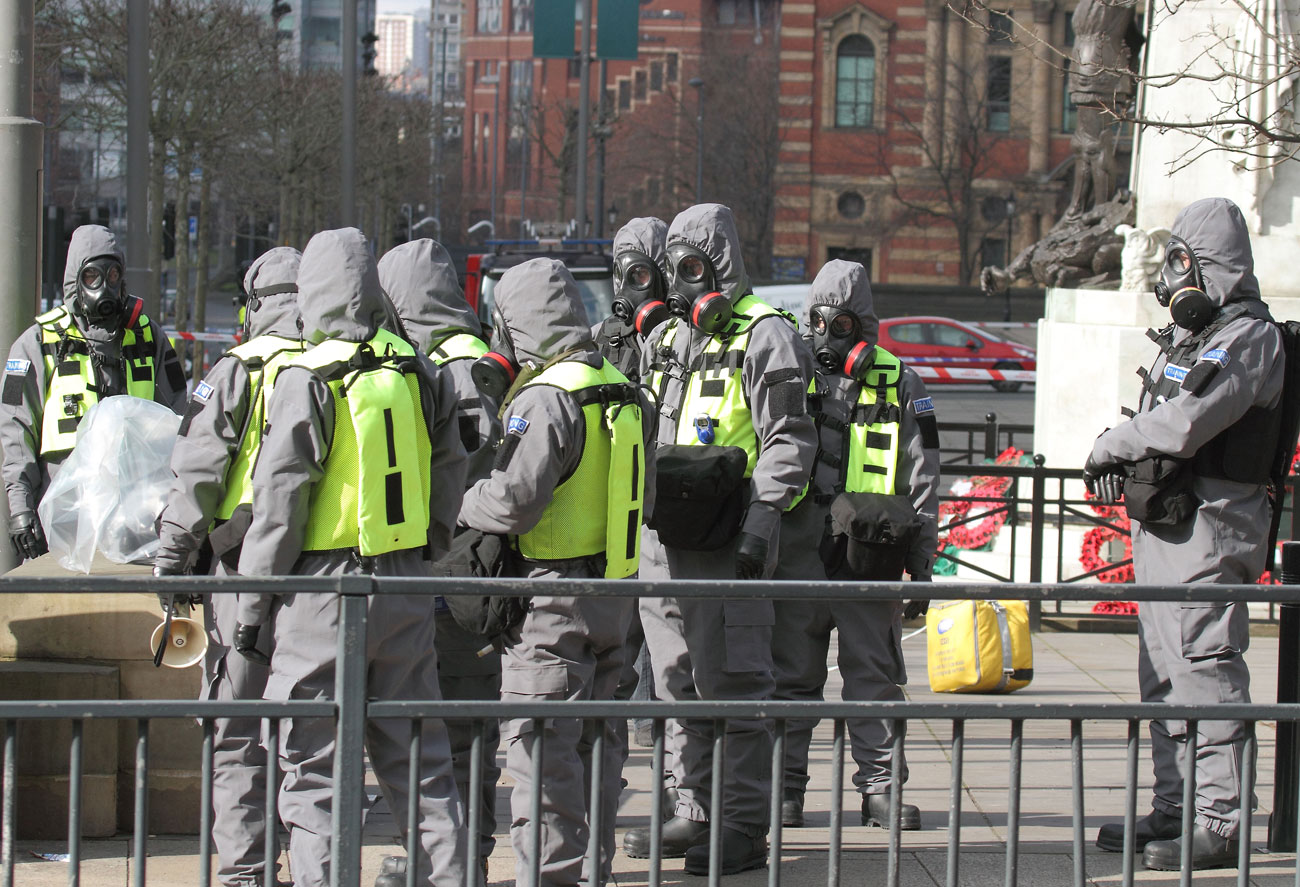
First responders and front-line workers are critical to the functioning of society. From firefighting to law enforcement, and from emergency medicine to the standard burden of care, ensuring public safety is a foundational element of the trust between a citizen and their government. It is a two-way relationship — citizens and governments rely on their first responders for care, while it is incumbent on the governments to provide their first responders with the necessary tools, equipment and support. Establishing and maintaining this relationship is critical in normal times but particularly so during a pandemic, whether man-made or natural in origin.
The delivery of care in a pandemic strains first responder and health care networks to the extreme. For those on the front lines of medical delivery, they are expected to deliver pandemic-related healthcare interventions, at the same time as responding to the normal burden of disease, injury and medical crises. For firefighters, law enforcement and others – all of whom are equally important in a pandemic but whose roles are often under-appreciated – they will need to provide life-saving interventions amidst complex and often limiting pandemic response requirements, e.g. masks and PPE. While living and working in a pandemic is challenging for everyone, few professions will experience this double burden to the same degree as first responders.
This presents new demands for first responders, and new requirements for pre-pandemic preparedness. It is even more important, then, that these vital members of society are provided the support they need before and during the emergence of a novel or previously encountered disease or a disaster, which could create conditions for the spread of disease or harmful contamination.
Prioritizing first responders
As a first principle, ensuring that first responders have the equipment and materials necessary to deliver care and safety interventions in a non-crisis environment is essential. Meeting the demands of first responders and front-line workers prior to a pandemic is and must be a continuing priority. This is a challenge to any local, provincial or national government, given the need to balance competing budgetary demands and political priorities. The established baselines of care and support are unique to the individual countries and will result in associated gaps and shortfalls.
If Covid-19 demonstrated anything it is that this baseline of care and the expectations of the population will be strained in the former and surge in the latter. It is then of paramount importance that any pandemic preparedness programme considers the needs of these workers and the effects that they will experience in a crisis.


Building a First Responder Corps
The spread of a disease or response to a catastrophic incident will reduce the number of first responders available – due to illness but also a marked increase in demand, leading to burnout – thereby reducing the local and national capacity to respond. Building a surge capacity of back-up responders or individuals who can backfill occupations, or take on roles filled by first responders, freeing them to deliver front-line care is a critical planning measure. For example, a trained corps of local officials capable of conducting testing and providing PPE to the public would free nurses up from those duties. Leveraging volunteer and part-time firefighters, where possible, will also provide additional relief for full-time firefighters during a pandemic. This is particularly important as first responders will also experience higher-than-usual levels of burnout and fatigue. This increases the need to have additional staff support at all levels of care delivery. Most importantly, building confidence in the cadre of first responders that there will be additional support personnel, as well as the necessary equipment in a crisis will ensure that strained healthcare networks do not break.
Pre-positioning equipment
Developing strategic stockpiles of medical countermeasures (MCMs), personal protective equipment (PPE), medicines and other supplies is vital in pandemic preparedness, not just in the sense of having necessary equipment but in building the necessary confidence amongst first responders. This is not merely a source of materials on which to draw in normal operating times but a ‘break glass in case of emergency’ store of equipment and supplies that first responders can access in a pandemic. As was seen with Covid, disruption to supply chains can happen rapidly and with significant consequences, and an over reliance on ‘just in time’ supply is likely to leave shortfalls in the provision of critical equipment and supplies.
First responders must also train in a pandemic environment to familiarize themselves with the equipment and the complexities of operating under such conditions. This training will expose weaknesses and vulnerabilities in both the equipment and the procedures, but also highlight gaps that need filling prior to an emergency.


Pre-planning and wargaming
Building the stockpiles is a first step, but it is insufficient alone. Knowing how the stockpile will be distributed, to whom, when and under what conditions is vital before the outbreak of a pandemic. Merely waiting for a crisis to erupt to define logistics pathways is insufficient. This process is not static but must be dynamic and consider the unique conditions or situations first responders can and will face. It first requires continuous engagement with first responders, front-line workers, government planners and industry to develop contingencies that meet the unique needs of the diversity of first responders (fire, law enforcement, medical, public health professionals etc.). It is far better to identify shortcomings in advance of a crisis than during an emergency. Here, it is critical to identify the unique needs of each service as well as the commonalities across all first responders. Not all PPE and MCMs are interchangeable, and the needs of a firefighter are different to those of a nurse.
Second, it must also plan for the worst-case scenario, and the situations first responders are likely to face. The outbreak of a pandemic disease will not stop other natural or man-made disasters from occurring, and it will not slow the normal burden of health care and business-as-usual requirements. An earthquake will damage transportation networks isolating first responders from pre-positioned equipment; a hurricane will disrupt power supplies, slowing communication and limiting coordination. It is not enough to plan for the delivery of MCMs, vaccines or other medical assistance under perfect conditions or without the risk of disruption.
Whole government integration
Pandemic preparedness is not merely a health care or first responder issue alone. It must be an integrated part of a whole-of-government response to everything from civil defence to disaster relief and more. Indeed, pandemic preparedness and first responder support will draw from and support other national disaster relief and response efforts. Investments in first responder support and pandemic preparedness should not be seen as an added expense, but as part of a broader national health security insurance effort, one that will have innumerable additional benefits. A well-resourced first responder cadre, prepared institutions and coordinated response plans will make for a more resilient society, one capable of responding to pandemics, natural disasters and more.
About the Author

Joshua C. Huminski
Joshua C. Huminski is a Director at the Center for the Study of the Presidency & Congress, where he focuses on international security policy programmes including strategic competition, Euro-Atlantic security cooperation and preparedness.

You must be logged in to post a comment.