
You’re halfway into a full night’s sleep when the sirens start up again. An incoming barrage slams into the city.
Most of the kids at the hospital are getting through, but not all of them.
Donning a plate carrier in place of your bunker gear, an unsettling rhythm to the day includes checkpoints, touching base with local intel reports and trying to shelter Ukraine’s youth from the front lines.
Welcome to Operation Orphan.
Logan Barrett is a volunteer firefighter in Paris, Ontario, Canada. He came to our station and plugged in his laptop, primed with a video he’d compiled from his experiences serving with an international organization that seeks to protect children in hostile environments.
Operation Orphan was founded by Brad and Cyrilyn Moore after a trip in 2003 to Uganda, where they found a mission: to form a charity that would be fully resourced to help children who have lived through the horror of being orphaned. They also had an audacious desire to be able to say that 100% of all donated money will go to the projects taken on by the organization.
In his video, Logan showed our firefighters the eerie reality of war in a developed nation. We recognized the vehicles and storefronts behind the rolling armour. We saw the blinking traffic lights and robust hospital rooms. Flashes of text messages warning of bombs and troop movements on his cell phone made us realize that this conflict looked a lot like home.
We sat there as he finished, almost silent. Stunned and pensive.
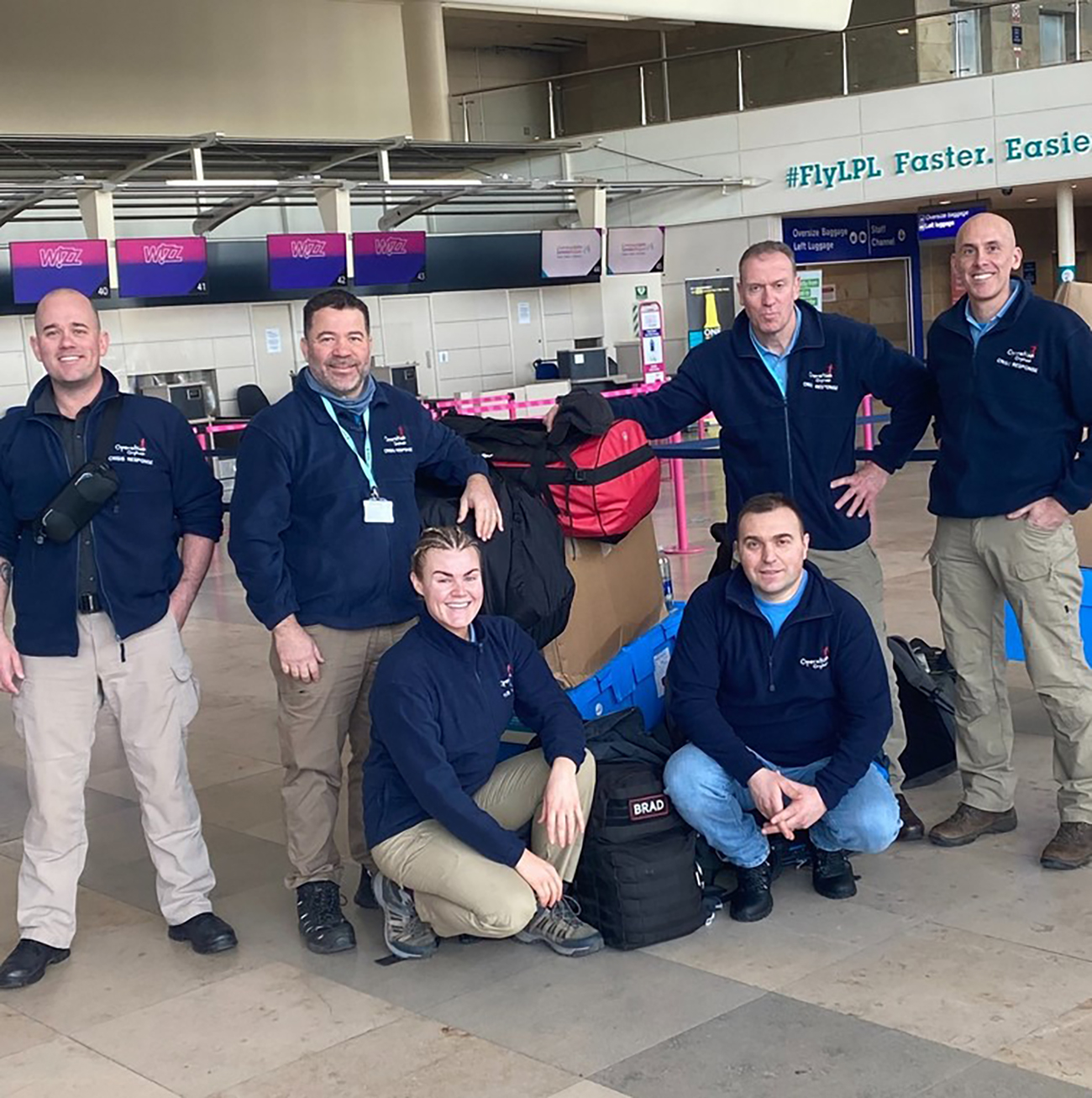
Logan came to our station with a call to action: Operation Orphan is looking for first responders to deploy to conflict zones to help protect children.
I pulled him aside to ask for some contact information for the people behind Operation Orphan and soon traded a few emails with Cyrilyn and Brad.
Particularly, I was interested to find out more about how active first responders could deploy with Operation Orphan via their Crisis Response Team (CRT) to places where disaster had struck. Firefighters, after all, are well versed in the trade of managing emergencies. Cyrilyn noted the mandate of the CRT, which falls directly toward the skill set of a first responder.
‘Where children are orphaned through a sudden disaster, natural or man-made, Operation Orphan will do all we can to ensure these children are identified, made safe and kept safe. To be quick to deploy to help in crisis situations where there has been mass loss of life, to bring aid and help prevent children from being exploited.’

To be considered for service on the CRT, a selection process includes a written test that precedes a robust course that Dave Hearn, also of Operation Orphan, was able to comment on in our email thread.
‘Initially designed by a UK Search and Rescue professional with input from a Colonel in the UK Army, the long weekend has been adapted to test the ability and resilience of potential applicants. It’s an opportunity for an applicant to see if they are a right fit for the mission and for the CRT leadership team to see if the applicant can stand up to the rigors of a disaster situation and working in a team.’
In our time passing email back and forth, Cyrilyn mentioned the ‘art of travel’ for people who make it onto the Crisis Response Team.
‘Before we send teams to a country, we hold a training team day to talk about the place we are visiting and equip people for the kind of trip it will be. The Crisis Response Team will have already had the training needed and en route to their deployment will discuss anything needed for the trip. This is much faster, so there’s less time to be prepared. Team members have to be prepared for anything and that’s why the selection is so important.’
Logan’s presentation showcased the gritty roadwork of the CRT. We could see their experience in first person through his recordings, showing the on-the-ground action as they encountered it. Re-routing their movements, analysing open-source intelligence reports and, most importantly, providing direct and impactful aid to the kids who had been affected by the war.
It’s one thing to regard the photos of demolished civilian buildings on Instagram. It’s easy to distance yourself from it.
I was shaken by the things I’d seen in Logan’s video. Enough to be viscerally stirred to write. With scenes that looked like they could have been filmed in my neighbourhood’s day care, I wanted to know what other firefighters could do to help. Brad informed me of their most pressing needs.
‘In my opinion, we could use the following help in Ukraine right now: fundraising –we are finding customs difficult and costly, so one option is to try and buy humanitarian aid inside the country and move it to the places where it’s needed; equipment – now that we are poised to send in teams further into Ukraine, we could use equipment such as body armour and better radios/comms solutions; and as always, we can always use additional members of the CRT team – we are a small team, and volunteers can’t always get time off to deploy, so having a “deeper bench” is always important.’
Firefighters are equipped to handle the pressure of emergency operations. Imagining a circumstance where those pressures do not end when the call is complete might begin to shine a light on what the experience of being trapped by warfare might feel like. That helpless feeling only compounds for children. The confusion and fear are things we help to quell at a fire scene. Firefighters can bring the same ease, if only by a fraction, to the kids in Ukraine.
The dots along the road map for the mission changes frequently – as is expected out of a landscape as dynamic as a battleground. Still, the people that shape Operation Orphan forge forward with a noble aim – to protect the most vulnerable victims of war.
For more information, go to www.operation-orphan.org

You must be logged in to post a comment.