

In the relentless pursuit of global climate change goals, the demand for renewable energy sources has spurred a transformative wave across various industries. One of the most significant shifts is the increasing popularity of electric and hybrid public transport, particularly buses and coaches. While this shift holds immense promise for a greener future, it also brings forth a new set of challenges, particularly concerning fire risks. In this comprehensive exploration, we delve into the evolving landscape of fire risks in the bus industry due to electrification and discuss proactive measures vehicle owners and operators can adopt to ensure safety.
Adapting to changing regulations
In the realm of regulations, the United Nations Economic Commission for Europe (UNECE) enacted Regulation 107, mandating commercial combustion engine buses to be equipped with suitable fire-suppression systems. However, these regulations do not comprehensively address the unique challenges posed by electric vehicles (EVs). Most modern electric vehicles rely on lithium-ion batteries, introducing novel risks compared to their traditional counterparts.
Under current regulations, it remains non-compulsory for non-combustion-engine vehicles, such as EVs, to feature automated fire-suppression systems. This regulatory gap raises significant concerns regarding the safety of these vehicles, especially in the event of a fire. Responding to this gap, UNECE Regulation 100 emphasizes the importance of early warning systems for EVs. By detecting potential battery failures in their nascent stages, these systems can release cooling agents when temperature anomalies are detected, adding a crucial layer of safety and mitigating risks associated with these advanced powertrains.
Understanding the new fire risks
One of the primary and most alarming dangers associated with lithium-ion batteries is thermal runaway. This phenomenon occurs due to various factors, including physical damage, overheating, overcharging, or overvoltage. The result is rapid temperature escalation, which can lead to fires, toxic emissions and even large explosions. The challenge intensifies due to the ineffectiveness of conventional automatic system shutdowns in halting thermal runaway. Consequently, it is imperative to detect and suppress this condition promptly.
Fires, driven by thermal runaway, present a formidable challenge. They can persist for days or even weeks, requiring substantial water resources for extinguishing. Early-fire-warning systems, coupled with spot-cooling mechanisms, prove invaluable in detecting thermal runaway in its initial stages. By localizing and suppressing the fire risk early, these systems prevent catastrophic outcomes and minimize operational downtime, thereby ensuring passenger safety and operational continuity.
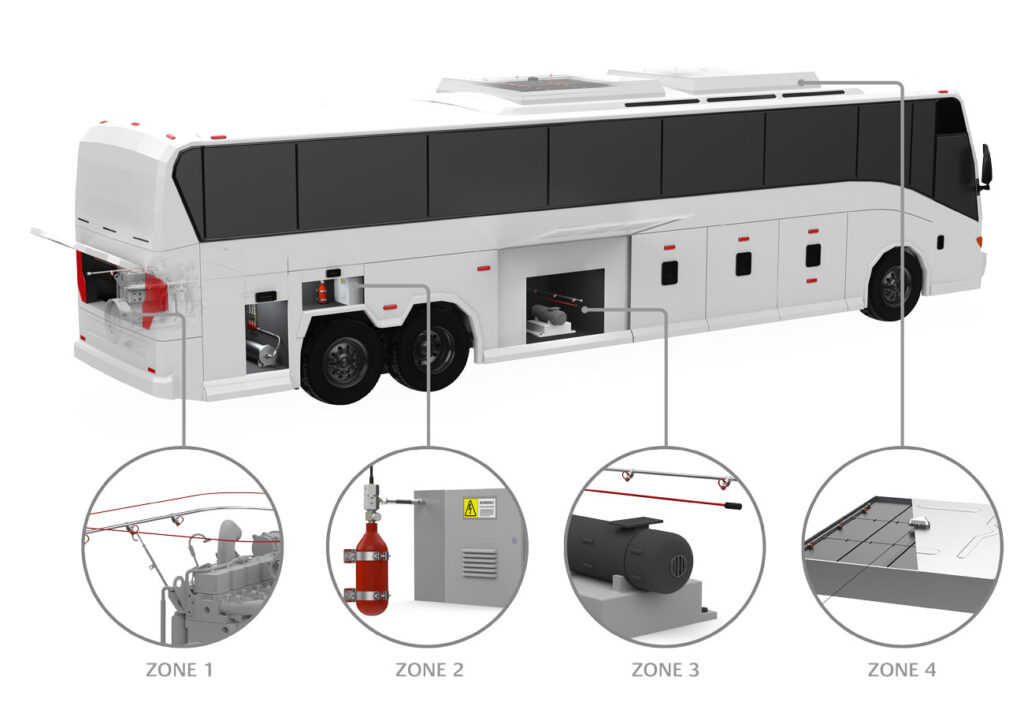
Managing risks effectively
To effectively manage the unique fire risks associated with electric buses and coaches, a structured risk-management approach is essential. The Research Institutes of Sweden (RISE) have proposed a comprehensive fire-risk management assessment. This systematic approach involves:
- Hazard identification: utilizing advanced methodologies such as Failure Mode and Effects Analysis (FMEA) to identify and prioritize potential hazards associated with electric powertrains.
- Risk estimation: creating a detailed risk map that provides a holistic perspective, differentiating between acceptable risks and those that demand immediate attention. This approach allows stakeholders to develop a nuanced understanding of the risks involved, guiding their mitigation strategies effectively.
- Risk evaluation: developing a meticulous action plan to address identified risks. This plan includes measures such as risk minimization through thoughtful design, implementation of active and passive fire-protection systems, enhancing maintenance protocols and bolstering training programmes. By systematically addressing these aspects, the bus and coach industry can significantly enhance its safety standards in the face of evolving technologies.
This meticulous risk-management process is pivotal in ensuring the safety of electric buses and coaches. As these vehicles continue to revolutionize public transport, proactive risk-mitigation strategies are not just an option but a necessity. By acknowledging the unique challenges posed by EVs and implementing advanced fire-suppression technologies and comprehensive risk-management strategies, the bus and coach industry can navigate this electrified future safely and efficiently.
Conclusion: ensuring a secure future in public transportation
Embracing the future of electric mobility demands more than just the adoption of new technologies; it requires a proactive approach to managing associated fire risks. By acknowledging the unique challenges posed by EVs and implementing advanced fire-suppression technologies, the bus and coach industry can not only ensure the safety of its passengers and operators but also maintain operational continuity. Moreover, a robust risk-management framework, as proposed by RISE, empowers stakeholders to systematically identify, assess and mitigate potential risks, fostering an environment of safety and innovation.
As pioneers of this electrified future, it is incumbent upon vehicle owners, operators and regulatory bodies to collaborate closely, sharing insights and best practices to enhance safety standards continually. By doing so, we can pave the way for a sustainable, secure and seamless future in public transportation, where passengers can travel with confidence, knowing that their safety is paramount. For further information on safeguarding your electric bus or coach fleet or to explore tailored solutions, do not hesitate to get in touch. Your commitment to safety not only shapes the future of transportation but also enriches the lives of millions of commuters worldwide.
For more information, go to www.dafo-vehicle.com
About the Author

Jonas Bergstrom
Jonas Bergstrom is Business Line Manager Bus & Coach at Dafo Vehicle Fire Protection.

You must be logged in to post a comment.