

Remote working has been on a steady incline since the 1980s, yet no one could have predicted the explosion of home working caused by the COVID-19 pandemic. Virtually overnight, businesses were forced to work from home and since then, the way we work and interact with one another has changed. Post-pandemic, many jobs have stayed hybrid or fully remote without seeing a fall in productivity. In this article, Richard Harris, Founder and Managing Director of Okappy, explains how UK businesses have been able to improve efficiency through remote working, even after the pandemic.
While some companies had remote work policies in place long before the pandemic, others were forced to adapt to this new way of working to continue operation throughout the pandemic. Despite the initial phases of uncertainty, after some adjustment many business owners have now realised the benefits to their company and their workforce.
Remote working was first implemented to ensure employee safety during the pandemic. I’m sure we all remember where we were when we watched the Prime Minister’s live broadcast telling us to stay at home. As the world started to open back up and we were allowed to mix in work environments, some employees had got used to working from home, and as normality started to resume, working professionals realised that their quality of life and mental wellbeing had increased with the flexibility home working gave them.
Improving employee wellbeing
Working from home can benefit mental wellbeing in several ways. Working remotely cuts down on multiple stress factors and has seen employees reporting better levels of concentration and over 65% of employees producing more work per hour.1
One of the big reasons for an improvement in wellbeing among remote workers is no more commuting to and from work. Remote working also gives employees more control over their work environment and allows them to create a workspace that is tailored to their needs.
Working from home allows for more autonomy and control over work tasks and schedules. Although many companies have core hours, some workers may find they are more productive in the mornings and some work better in the afternoon. Working remotely can allow for earlier or later starts which can lead to increased productivity from workers, which in turn can lead to higher job satisfaction and motivation.
Remote working gives employees a better balance between work and personal life. Things like childcare or other personal commitments are much easier when you can work from anywhere. This flexibility can lead to reduced burnout and increased job satisfaction.
Another benefit of remote working is it can enhance productivity. With workers now having greater flexibility and autonomy working from home, they are also being more productive. They want to stay working from home so are willing to put the work in to ensure productivity soars and they can stay in this situation. Studies have shown that employers who reported an increase in employees working from home have also reported a significant increase in productivity.2
As an added bonus, remote working also allows for cost savings. With a remote workforce, companies no longer need to maintain a physical office space for their employees. Research has found that, since the pandemic, the UK has seen 18 million square feet of redundant office space.3
Remote working can also reduce the need for physical paperwork and in-person meetings, saving time and money. This can save companies even more money which can be invested into other areas of the business.


Achieving greater efficiency and productivity
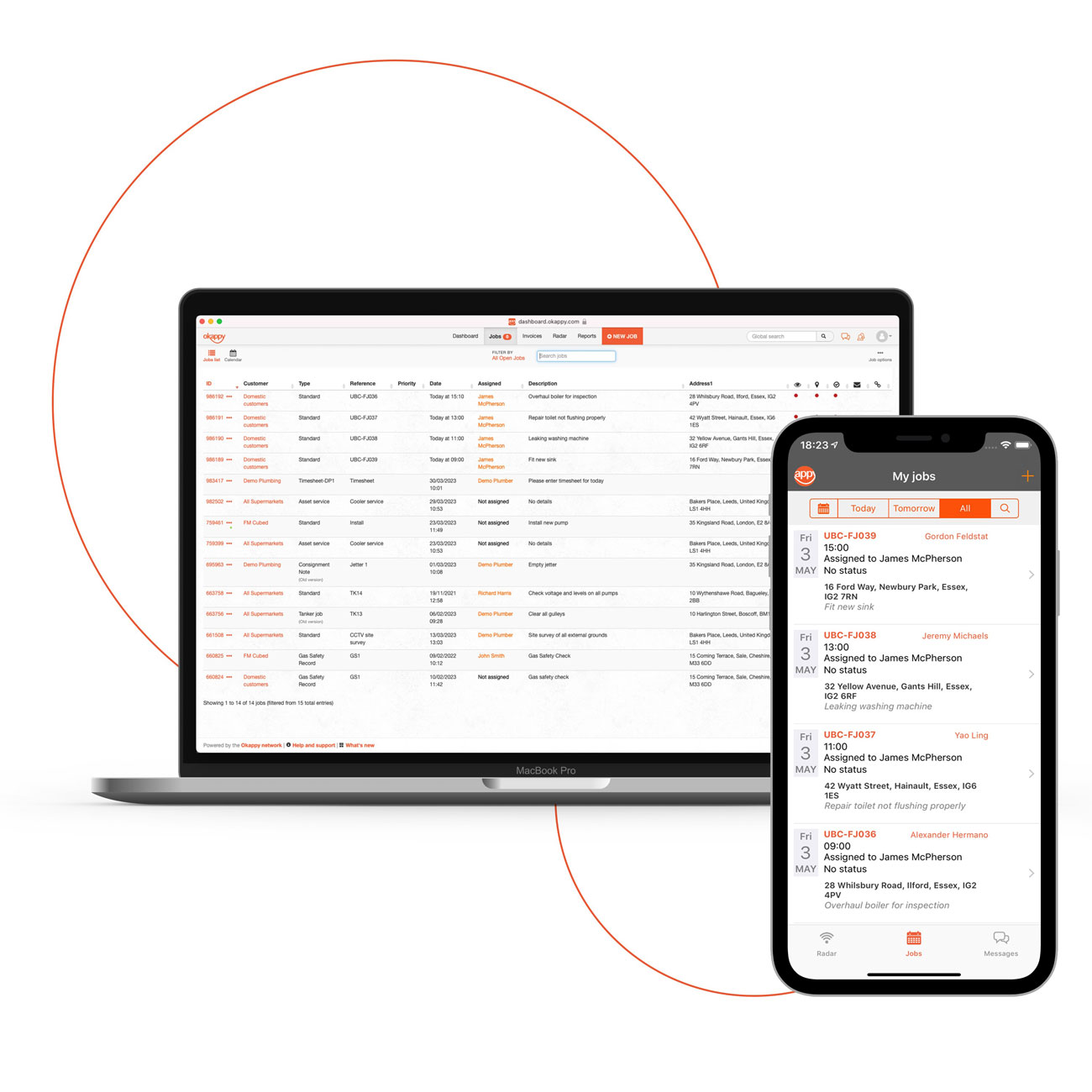
Field service management platforms have played a significant role in enabling remote work in facilities management and the fire-safety industry. These platforms allow field service technicians to remotely access information about customer accounts, service history, inventory and to communicate with their team members and customers in real time.
Managers can also get a complete overview of their team and the jobs they have been assigned to. Certain platforms will also allow GPS tracking and give external stakeholders certain visibility on jobs.
These platforms can be accessed from any location, allowing field workers to work from home or remotely while still providing efficient and effective service. By not having a paper trail of documents and having everything stored in a cloud-based system, job documents and team communications can be accessed from anywhere in the world in just a few clicks. The technicians will be needed on site at times to carry out the necessary work, but they can view job information anywhere and the managers can monitor their jobs and workforce remotely.
Not only do field service management platforms allow for remote working to be possible but they can also increase productivity by streamlining service operations, reducing the time and effort required to complete tasks such as scheduling appointments, dispatching technicians and processing payments. Further to this, these platforms can improve service quality by providing technicians with the information and tools they need to resolve issues quickly and efficiently.
At Okappy, we have seen some clients saving as much as four hours per week per member of staff. Our platform brings so many aspects of the business into one place and can integrate with other platforms. Employees, contractors and subcontractors can all communicate and follow jobs along each step of the process, leaving no stone unturned, which increases efficiency and time management for all parties involved. Jobs such as remote fire-door inspections can be completed quicker and more efficiently, saving companies and employees’ time.
Okappy also gives you networking capabilities. You can find new potential contractors, subcontractors and even customers on our platform, giving yet another advantage to field service management. Collaboration is key in our industries, so by being able to integrate that into field service management, there is yet another way to save time and enhance productivity.
Field service management for fire safety
Two industries currently benefiting from the use of field service management platforms are facilities management (FM) and fire safety. Both industries require on-site inspections and maintenance to ensure the safety and wellbeing of occupants. However, thanks to technology and field service management platforms, it has become possible for FMs and fire-safety professionals to work remotely while maintaining efficiency.
Another benefit of field service management platforms in FM and fire safety is the ability to manage and track work orders remotely. Field service management platforms allow for real-time communication between the office and field service technicians, enabling remote management of scheduling, dispatching and tracking. This allows for a quicker response time and higher customer satisfaction, without the need for on-site visits. Additionally, field service management platforms can track inventory levels and equipment data remotely, enabling technicians to operate more efficiently and effectively.
Facilities management and fire safety are just two of the industries currently benefiting from investment in technology and field service management platforms. By providing remote access to information and tools, streamlining service operations, and increasing service quality, these platforms are enabling UK businesses to provide excellent service and reduce costs while improving efficiency and productivity. As remote work continues to be a mainstream choice across many industries, it is likely that the use of technology and field service management platforms will only continue to grow.
For more information, go to www.okappy.com
References
1. https://thehomeofficelife.com/blog/work-from-home-statistics
2. https://www.cipd.co.uk/about/media/press/260422home-hybrid-working-increased-productivity#gref
About the Author

Richard Harris
Richard Harris, Managing Director and Founder of Okappy, founded the field service management platform in 2015. Since then, the platform has seen over 100,000 users. Okappy connects customers, employees, contractors and sub-contractors collaborating to ensure work is completed quicker and more efficiently.

You must be logged in to post a comment.