
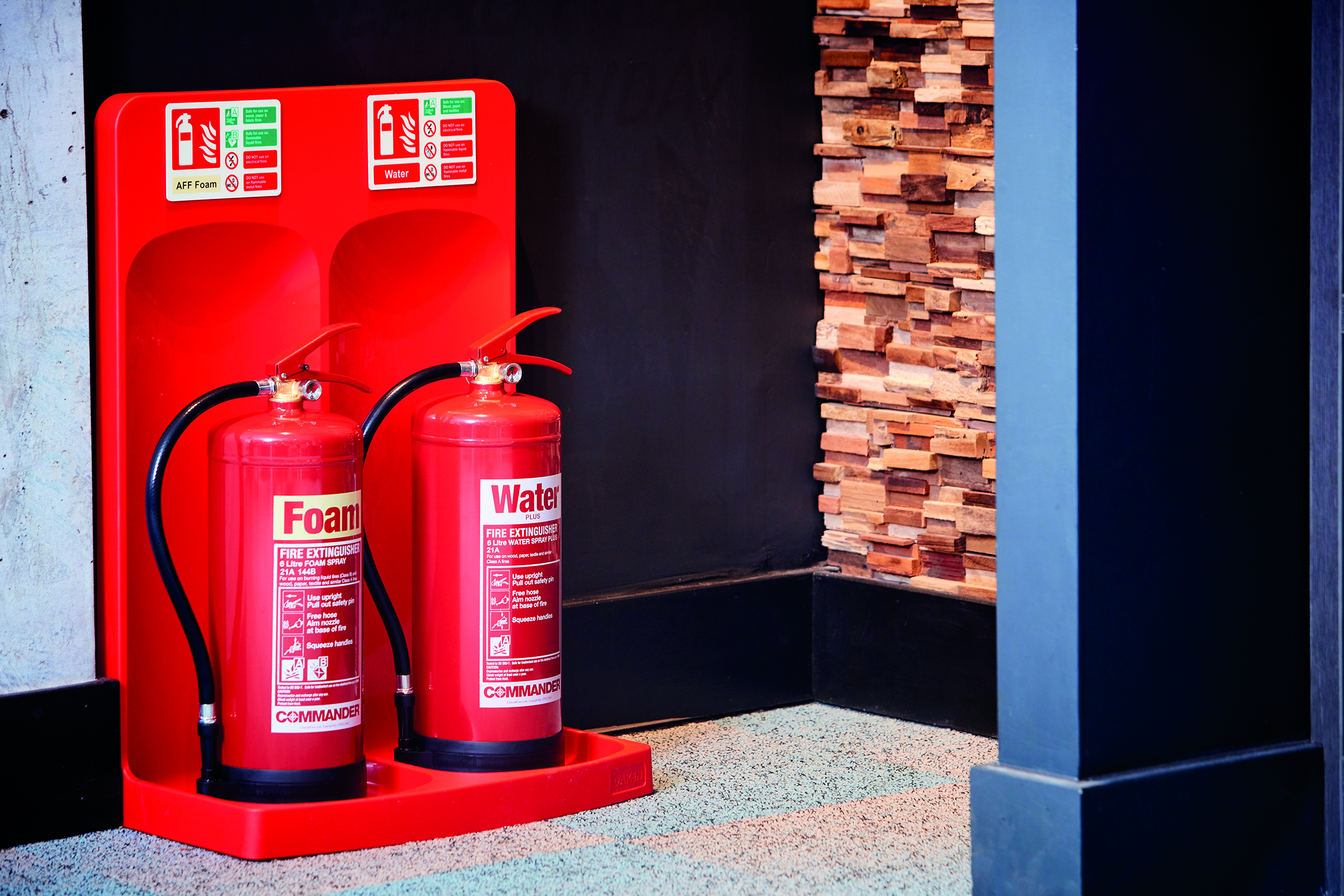
A trade supplier of high-performing fire extinguishers for over 45 years, CheckFire provides innovative products alongside unrivalled fire-safety insight and expertise. As a trusted source of information, CheckFire is often questioned about the real importance of fire extinguishers and whether they’re a necessity.
The answer is: yes – and not just to provide peace of mind there’s a first-aid response to fire on-site. Business and property owners are legally required to take responsibility for fire safety and implement precautions and preventative measures – including fire extinguishers.
Here, we highlight the crucial role of fire extinguishers, as well as discuss their place in the ‘new norm’ as the nation navigates the effects of the pandemic.
The real value of fire extinguishers
Fire extinguishers are vital in any setting and can make that life-saving difference in the event a fire takes hold. But more than this, employers and property owners are responsible for their installation and maintenance under the requirements of the Regulatory Reform (Fire Safety) Order 2005 (RRFSO). While many people mistakenly overlook the need for this crucial piece of fire-protection equipment, the Order applies to almost every type of building, including offices, schools, hospitals, care homes, restaurants, factories and construction sites. Fire extinguishers ensure business and property owners can meet the requirements of the Order in a number of ways, not least because they help people safely escape the building in an emergency.
No one-size-fits-all approach
It’s not as simple as one fire extinguisher being suitable for all settings. There are five main fire extinguisher types: water, foam, CO2, dry powder and wet chemical. Each one is assigned to a ‘class’ of fire, which are so named according to the fuel likely to start the fire. For example, a water extinguisher is used on Class-A fires, which are caused by flammable solids like paper or wood. Hospitals, schools and offices are likely to house water fire extinguishers. Meanwhile, a CO2 extinguisher is suitable for a Class-B fire, which has flammable liquid at its source. These extinguishers are likely to be seen on petrol station forecourts or in warehouses.
CheckFire’s market-leading and trusted Commander, CommanderEDGE and Contempo brands ensure premises benefit from high-performance and industry-compliant fire protection. The extinguishers are made in line with British Standards, with many units carrying the Kitemark certification, while each brand, along with several specialist units, caters for varying business objectives.
Fire safety adapted for the new world
Fire extinguishers remain a priority as we navigate the challenges and new norms brought about by the pandemic. The RRFSO still applies. However, as premises close and reopen in accordance with changing government guidance, they may experience changes in fire risk. Staff reductions may impact fire drills, while social distancing may mean different ways of working hence different fire risks.
The RRFSO requires fire extinguishers to be ‘maintained in an efficient state, in efficient working order and in good repair’. A fire-extinguisher service by a qualified and competent technician ensures equipment remains in good working order and means businesses are compliant with legislation – even throughout a pandemic.
Fire extinguishers can be a minefield if you’re not well versed in their purpose, type and placement. Fire-extinguisher suppliers provide peace of mind to stockists that buildings are sufficiently protected from fire risk and remain compliant with legislation. A supplier is a one-stop shop for every aspect of fire safety – providing access to innovative fire extinguishers, advice and expertise based on decades of intrinsic knowledge of the sector and marketing materials to better serve the needs of the end user.
For more information, go to www.checkfire.co.uk
