
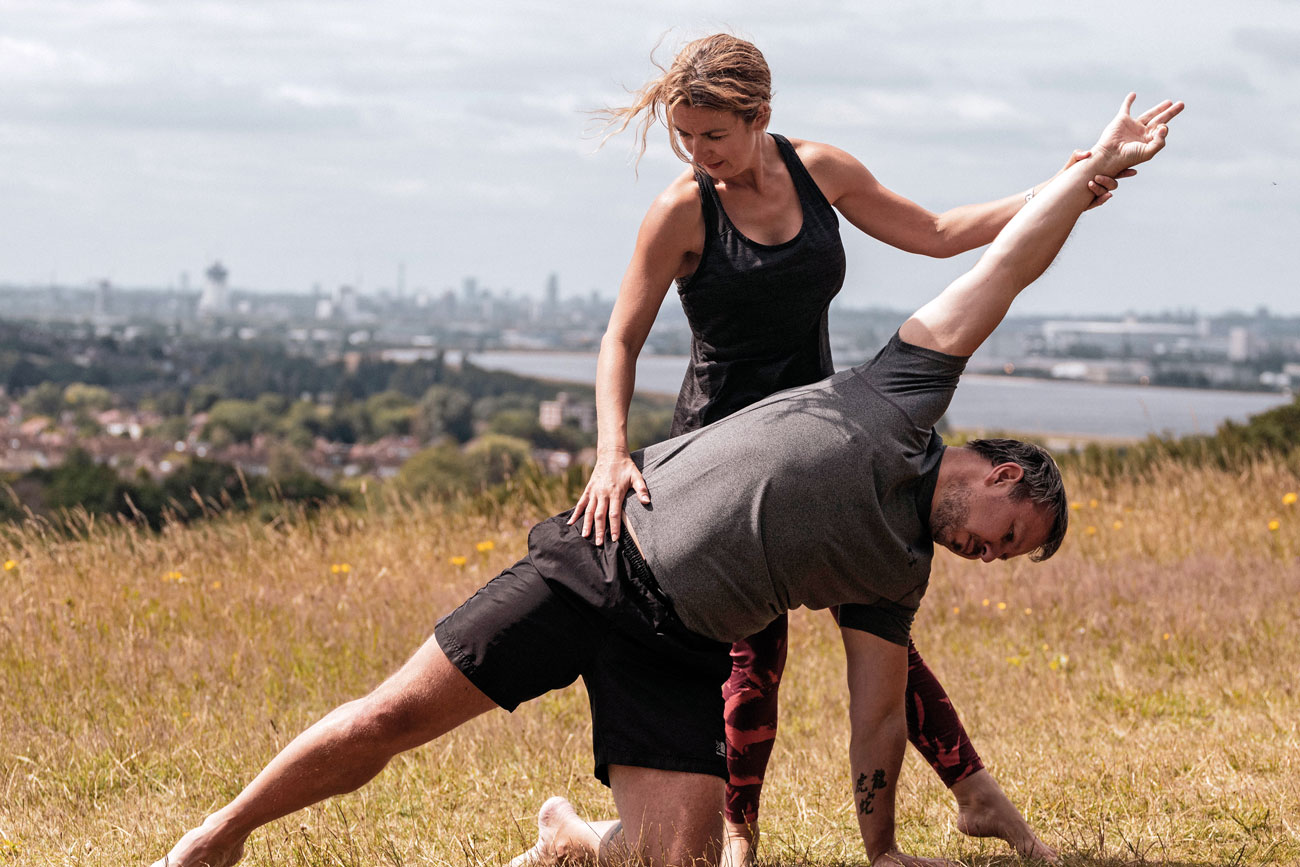
If you were to ask any firefighter what springs to mind when considering how to improve wellbeing and fitness, it’s unlikely that yoga would be top of their list. Nevertheless, the benefits attainable from even a short, regular practice are exceptionally wide-ranging. Those who work in intense environments are becoming more aware of the improvements in physical and mental wellbeing that result; this article takes a closer look at the ways in which yoga can help those in the fire service.
The phrase I hear most frequently when I ask if someone has thought about trying yoga is ‘But I’m not flexible enough!’
Put simply, yoga could be described as a way of making shapes, on a mat. However, there is a lot more to this ancient art than meets our modern-day eye.
My own journey with yoga began over ten years ago, at a studio in Hertfordshire where I planned to attend only for a couple of weeks while my personal trainer was on leave. Within a few classes I was hooked, although at that time I couldn’t quite put my finger on how this quirky activity of ‘making shapes on a mat’ provided me with so much energy and a compelling sense of clear-headedness afterwards. I became so convinced of the benefits that I later joined Harmony Yoga School in Cape Cod MA, to undertake intensive teacher training.

Within the fire service, yoga is unfortunately one of the lesser practised activities under the health and wellbeing umbrella, despite being proven to increase strength, stamina, balance and lung capacity – benefits considered key to maintaining a strong standard of capability as a firefighter. Additionally, yoga is also recognised as being able to stabilise and improve deeper psychological issues, and as a result is successfully used within trauma-related rehabilitation programmes across various industries throughout the world. Common physical issues such as tight hamstrings, back, neck and hip flexors (frequently worsened by clothing weight, equipment worn and tools used), can be dissipated with the movement and posture work employed within yoga, and the practice can also reduce the onset of not only trauma itself but also stress and fatigue experienced by those working irregular shift patterns.
Fitness and wellbeing are, rightfully, considered very carefully across the UK and international fire services, but the allocated/recommended time or regimes seem to vary widely from station to station; for example, the London Fire Brigade advises 1.5 hours per day, whereas in Hertfordshire Fire and Rescue Service it is 45 minutes per shift. Generally, firefighters are able to choose how they use this time, with many opting for strengthening, toning and cardio exercises, accessible via in-station gyms; others competing in sports such as football or rugby (although it is interesting to note that the non-contact game of volleyball gets a huge thumbs up due to less risk of injury!).
Where yoga is opted for, the more regimental, dynamic styles (such as Vinyasa and Ashtanga) tend to be the first choice although due to the sheer level of recharge sought after eventful, exhausting shifts, there is growing appreciation of styles such as Hatha, (a steadier pace and more simplistic sequencing), and Yin/Restorative (which encourage holding still postures for significantly longer duration, sometimes up to ten minutes).
Thankfully, the accessibility of yoga appears to be increasing. At the time of writing this article, Hertfordshire Fire and Rescue Service headquarters run weekly yoga classes and other stations in the vicinity confirm they have chosen to practise using technology such as the Down Dog app, YouTube videos, DVDs and other virtual platforms. An in-person yoga class schedule is soon to be offered at Barnet Fire Station and surrounding north London stations. Having developed in India over 5,000 years ago (and originally predominated by men), yoga transitioned in the Western world to something of a bendy sport for bendy women, some might say! This sometimes creates trepidation or doubt when it is explained or offered to male-dominated industries or to those more used to intense, dynamic training. Thankfully, a shift in opinion means increasing numbers of men are finding their way back into this strong and beautiful art, balancing the ratio again and delivering the benefits to both genders in more equal measure.
It is interesting to note that across the Atlantic, yoga within the FDNY is deemed a much more integral part of fitness, wellbeing and rehabilitation. Friends of Firefighters is an established 501(c)3 non-profit organisation providing free, confidential, and independent counselling and wellness services to New York City’s active and retired firefighters and their families, including those impacted by trauma suffered during the 9/11 disaster. For the last few years, yoga has been a fundamental part of their wellness services with a selection of teachers offering a free weekly class to help alleviate the stress that manifests physically in the body, as well as ease anxiety especially in the time of Covid-19.
When we hear the word yoga, we tend to envisage the body forming physical postures. Yoga in its entirety, however, covers a much broader spectrum of disciplines including breathing, meditation, social ethics, self-study and personal development.
Over the years, yoga’s popularity and diversity have increased enormously; so too have the reasons for practising it. Initially recognised for its ability to increase fitness levels and improve flexibility, yoga is now also known to amplify toning, strengthening, relaxation, mindfulness, and to develop a clearer, calmer mind. It is now widely regarded as an aid to injury prevention and lowering blood pressure and the more dynamic forms of yoga can significantly increase strength of the heart.
Learning the physical postures is a great starting point for beginners, eventually synchronising these with the breath, and maybe even a sprinkling of meditation once confidence and calmness increase. The temptation for competitiveness, especially among athletes and intense performers, should be avoided by yoga’s philosophy of staying present and humble. It is also important to avoid feelings of guilt when we finally choose to take our foot off the pedal and place our inner batteries on recharge. Aside from sleep, our mind and body naturally recalibrate when we simply rest and relax, allowing a natural rejuvenation of our strength and energy levels.

Yoga is a fun and extremely versatile practice, and good teachers discourage the ‘one cap fits all’ approach. I share my passion for yoga with a diverse array of students including men, women, young, old, near and far – those who enjoy a standard 9 to 5 and also those from unusual or extreme professions and work patterns. It can be taught in group classes, workshops, one to ones, online or in person and comes in many styles ranging from the dynamic and powerful to much slower, deep restorative ways which are fantastic for soothing aching muscles and tired joints. Yoga really does have something for everyone.
Classes for firefighters can be structured to amplify the benefits specifically to those practising, including but not limited to:
- breath work to increase lung capacity: this can conserve air within cylinders and also slow the body’s reactivity, reducing the ‘crash’ after adrenaline surges
- static and mobile postures which increase strength and manoeuvrability in joints and muscles
- meditation and mindfulness techniques to better control the onset of stress in any given situation
- stretches that increase suppleness, thereby reducing risk of injury
Finding the right instructor for you is essential in order to maximise the benefits that regular practice brings. Be sure to do your research, shop around, and find a teacher who is professional, insured and registered with a regulatory body (e.g. Yoga Alliance or the British Wheel of Yoga). Try to be realistic about your availability and what you are comfortable with; maybe finding a yoga buddy to share a private teacher or even for weekly outdoor sessions with your family. The beauty of yoga is that it is very amenable to most, if not all, needs – the most important tools required are simply the body and the mind. A mat is obviously helpful, but can definitely be foregone if you fancy doing some sun salutations on the beach or during a quiet 10 minutes in the office.
Awareness and appreciation and application of yoga are definitely increasing within the UK fire services and I would encourage anyone, regardless of gender, size, body shape, religion or beliefs, to dip their toe into this mystical art and explore the amazing range of benefits and rewards it can bring.
There are no rules or regulations restricting who is capable of practising, and experiencing the benefits of, yoga. But you are definitely only one class away from a very, very good mood and giving your mind and body the strength and rejuvenation they deserve. All this, simply from making shapes with our body, on a mat. You have absolutely nothing to lose but so very, very much to gain!
For more information, go to www.helencooperyoga.com
About the Author

Helen is an independent yoga teacher, based in London. Originally called to the Bar in 2005, she shares her passion of yoga and wellness in the UK and internationally, teaching individuals, classes and workshops, both in person and through virtual technology platforms.

You must be logged in to post a comment.