
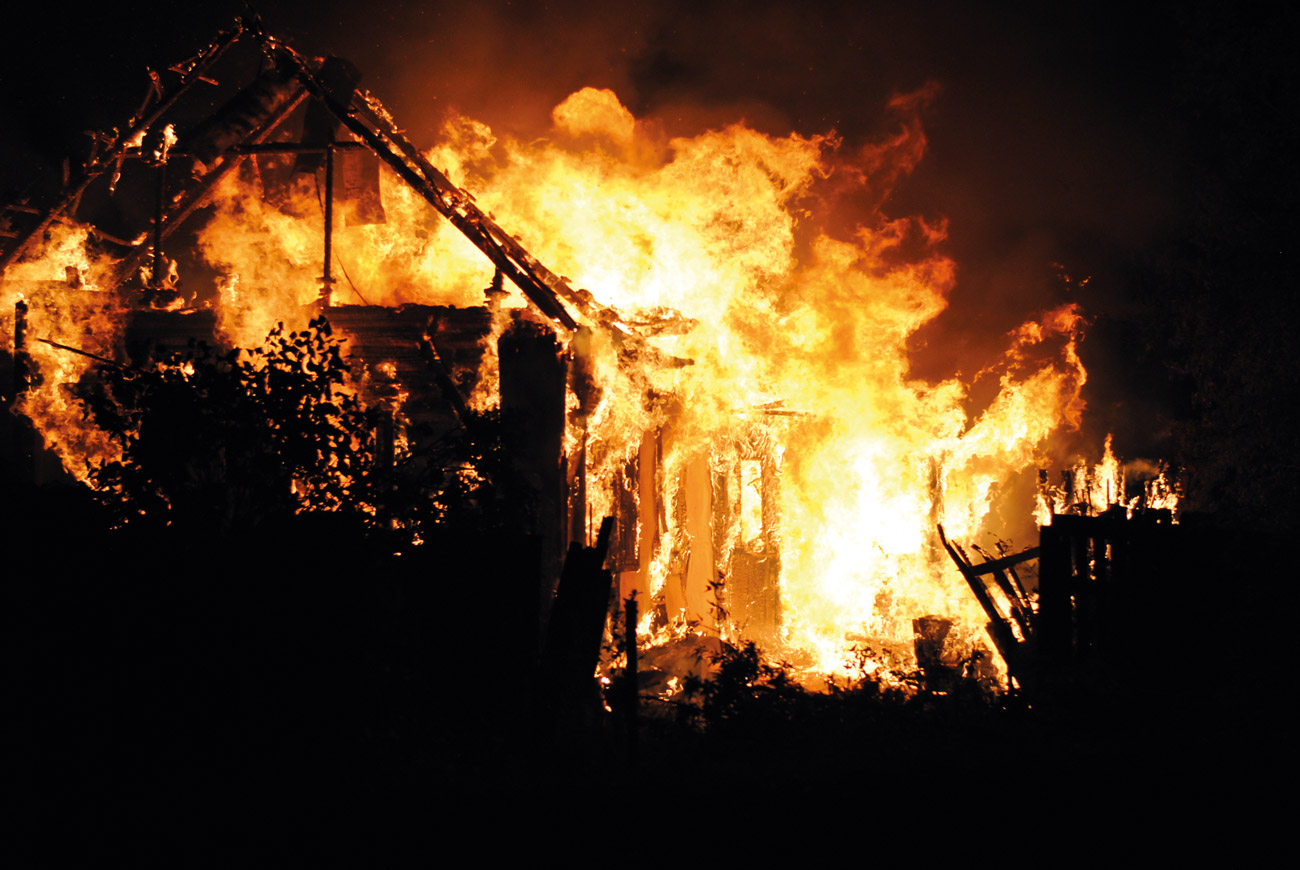
The recent Grenfell fire tragedy has brought to our attention that in a real-life fire situation we need to know that the fire-safety systems will work and continue to work while the premises are evacuated and firefighters tackle the blaze. The fire-detection devices, alarms, sprinkler systems and emergency lighting are all essential parts of the system, but often forgotten are the fire-performance cables connecting them and upon which they depend.
Fire-performance cables provide a higher level of fire resistance to fire than standard cables and are used in installations where the cable is required to maintain circuit integrity during severe fire conditions and to minimise the propagation and spread of fire.
The cables are designed for use in fire-alarm, fire-detection and emergency-lighting systems with the responsibility for keeping the systems operational while a building is being evacuated and during the subsequent firefighting operation. The cables use low-smoke, non-halogen materials to minimise smoke and to eliminate the emission of harmful gases such as hydrogen chloride. When gases of this nature come into contact with moisture (such as a fire-suppressant sprinkler system) they become acidic and highly corrosive, having the potential not only to be poisonous to humans but also to attack electronic circuitry.
In the Grenfell tragedy the intensity and subsequent rapid spread of the fire is alleged to have been caused by the cladding on the outside of the building and has once again highlighted the use of unsuitable materials being used and not meeting the required standards. Unfortunately, all too often this is the case with cables and they are not always what they claim to be. Given the highly competitive pricing of cables, some manufacturers have attempted to cut costs by using less copper (or even copper-covered aluminium or steel) and use alternative inferior insulation and sheathing materials, which do not meet the exacting requirements of the relevant British, European or international standards, resulting in a serious reduction in the safety and reliability of emergency systems.
In addition to the hazard posed to the public at large, concerns have been expressed throughout the supply chain, as most businesses are aware that they have a legal responsibility and duty of care to ensure that they are not selling non-conforming cables which could cause injury or loss of life. The 2009 Manslaughter and Corporate Homicide Act is now becoming more prominent in society and it clearly states that individuals can ultimately be held responsible if anything goes wrong (for example an electrocution or a fire which results in a death) with the possibility of a custodial sentence not being ruled out.
Sub-standard or counterfeit cables often look like authentic goods and may quote the relevant standards reference. However, when subjected to the necessary fire tests they may well only last a matter of minutes before failing to maintain circuit integrity and/or give off considerable amounts of dense black smoke and harmful gases. The cables will often work when being tested and signed off by contractors but may fail to perform at the correct level should they ever be involved in fire conditions – when people are depending on them.
A need for third-party accreditation
Third-party accreditation is common practice for standard building wires, but it is of the utmost importance for fire-performance cables. The Approved Cables Initiative (ACI) has identified and highlighted numerous examples of faulty cables found in the UK marketplace, including (but not restricted to) fire-performance cables (www.aci.org.uk).
Third-party approval demonstrates that the cable performs how the manufacturer claims and in accordance with the required standards. This is essential as fire-performance cables are designed to save and protect lives. Bodies such as BASEC (British Approval Service for Cables) and BRE (Buildings Research Establishment) and their approvals division LPCB (Loss Prevention Certification Board) work to established recognised standards compiled by British or internationally recognised authorities and are themselves regularly audited by agencies such as UKAS (United Kingdom Accreditation Service).
Approval bodies are responsible for monitoring the quality-management systems that manufacturers use to ensure the manufacturing processes and routine test procedures are capable of producing a product that meets the required standards. These bodies also independently test the products to ensure they meet the requirements of the relevant cable standard and all associated material and fire-survival tests – in essence, working on behalf of the specifier/buyer/installer to give confidence that the cable they are using is fit for purpose.

How to choose a fire-performance cable
The vast majority of reputable fire-performance cables will be independently tested and approved by both BASEC and LPCB, and also refer to standards such as BS6387 Cat CWZ and BS7629-1. The customer can contact either or both aforementioned approval bodies to confirm that a cable manufacturer is genuinely approved – this can be done via telephone or by using their online services (www.basec.org.uk and www.redbooklive.com).
Doncaster Cables, an established and leading manufacturer in the cable industry, expressed their views on this issue and how wholesalers can protect themselves and their customers:
‘Through market research we have concluded that there is a considerable demand for high-quality cables and flexibles including fire-performance types. Specifiers, wholesalers and contractors alike desire reassurance that the cables they are selecting/selling/installing are reliable and safe, and that they conform to the required standards.
‘Doncaster Cables provides this reassurance with our cables, by ensuring that every reel we supply goes through stringent quality control and thorough test procedures. We are also proud to say that all our fire-performance cables are manufactured in the UK. We believe that this commitment to UK manufacturing and British quality is the reason why wholesalers and companies overseas are turning to us to gain reassurance and have confidence in the cables they are purchasing.
‘Doncaster Cables is proud to manufacture our cables to the highest standards and compliment this with a superior service.
‘Fire-performance cables are designed to aid firefighting and rescue teams, and ultimately save lives by ensuring emergency circuits maintain their integrity and continue to work in fire conditions. We believe that our Firesure 500 and Firesure Plus cables match this brief perfectly and offer benefits that other fire-performance cables do not: a pressured sheath giving a compact design whilst eliminating air gaps within the cable, thus preventing the spread of smoke and fumes along the cable; an extremely robust and durable design giving enhanced resistance to kinks; twisted cores helping to prevent signal degradation and improve data transmission; and enhanced earth continuity due to the circuit protective conductor being pressured against and in continual contact with the metallic tapes.
‘All of these design benefits and the ethos of “quality first” provide Doncaster Cables customers with the reassurance that our fire-performance cables are fit for purpose and can be installed with confidence.’
For more information, go to www.doncastercables.com
About the Author

Terry Guest is BICC – Director and General Manager – Power Cables / Flexible Cables / Pyrotenax. Thomas Bolton Group – Managing Director of copper products / Italian cable plant. Doncaster Cables – Director.

You must be logged in to post a comment.