
A previously published article in this journal1 argued the importance of considering adoption of lighter-weight, more comfortable helmets, more appropriate for extended duration wildland firefighting operations. Whilst the extremely wet weather we have been experiencing over the past weeks in the UK might have frustrated us by curtailing barbecue and picnic plans, one advantage is the delay to the wildland firefighting season.
Extended periods of wet weather are more than just an annoyance, they are further evidence of our changing climate and its effect on extremes of weather. Not only are wildland fires becoming more common due to extended period of dryness and heat but so is flooding. In a month where we would expect the wildland fire season to start, fire services across the country were in action assisting residents in securing their properties and managing the fall-out from burst rivers and surface water run-off from already sodden ground unable to handle weeks of continuous rain.
Suitability of PPE for the job
There are important Health and Safety laws that must be complied with in terms of suitability and compatibility of PPE. Stringent requirements are placed on employers, issuers of PPE and, ultimately, users themselves to ensure that each item of PPE made available is compatible with other issued items and that it will protect the user from predictable risks. Too often though, it is the case that PPE optimised for the job of structural firefighting is inappropriate for many of the roles also undertaken by the modern firefighter such as flood response, confined space work, animal rescue and road traffic accidents. In fact, most of the work carried out by the modern firefighter is done whilst wearing PPE far bulkier than necessary. Inappropriateness or discomfort whilst wearing PPE increases the chance that the user will choose to remove it whilst still exposed to potential risks. If it is cumbersome or difficult to carry out certain operations whilst wearing the issued items, many users will admit to removing gloves, jackets or helmets to aid access to confined spaces, to cool off or to aid dexterity.
There are moves in the right direction with several fire services moving towards a ‘layered’ approach to turnout kit – for example, dual-purpose wildland/technical rescue tunics. Most fire services now issue separate rescue or ‘extrication’ gloves which have proved a popular improvement, aiding manual dexterity and encouraging increased adherence to glove wearing when operating tools and other equipment.
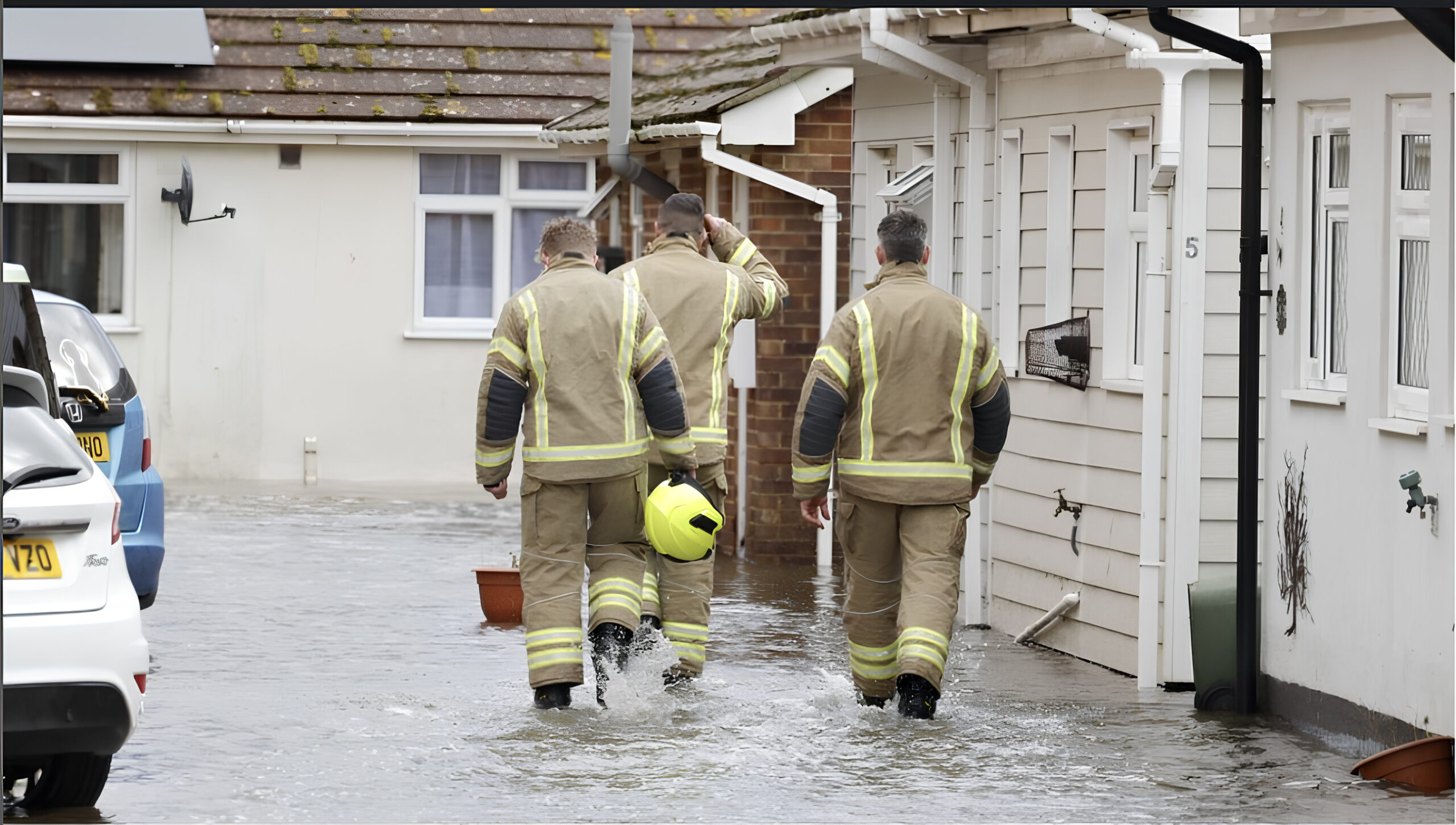
A recent image published in the Times newspaper2 shows firefighters moving door to door in a flood-affected area after yet another river had burst its banks. Showing three firefighters wading ankle-deep through flood water it depicts one firefighter carrying his bulky structural fire helmet, the others seem to be without their helmets at all. It might be that they had assessed the risk or had been authorised to remove their head protection. On the other hand, it could be that they had been wearing their heavy headgear for a few hours, were overheated and tired and wanted to give their necks a rest. This image is an excellent anecdotal example of the need for a rethink of the types of helmets firefighters are expected to wear during non-structural firefighting operations.
Too frequently, helmets are cited as being uncomfortable, too heavy, causing neck ache or too hot for general use. A lighter-weight and specifically designed product would therefore be far more appropriate and far less-expensive.
Multi-use helmets
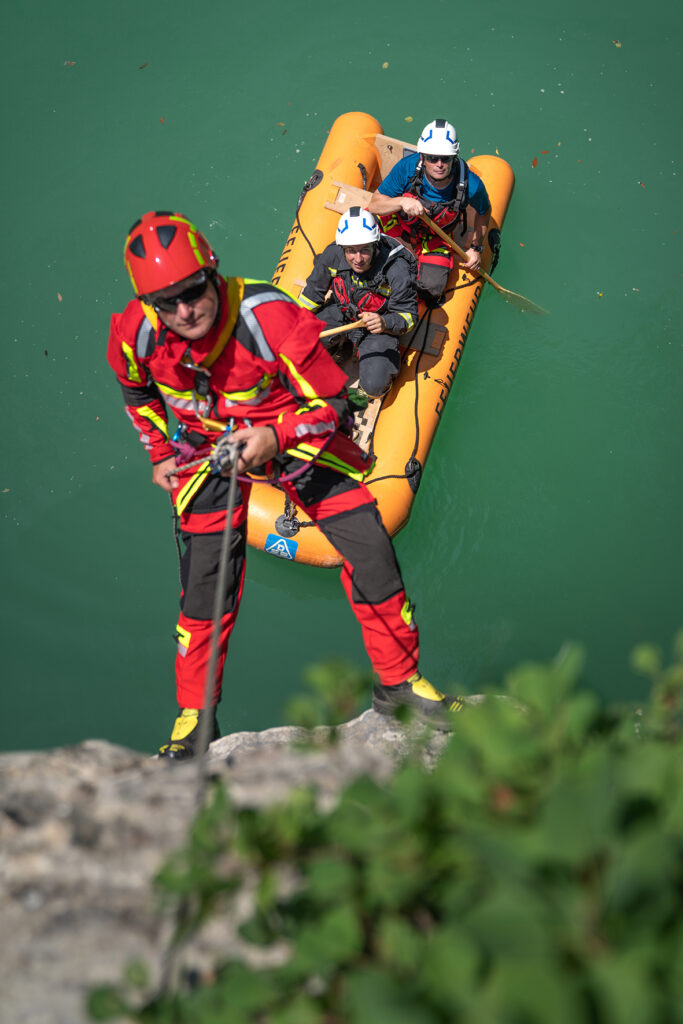
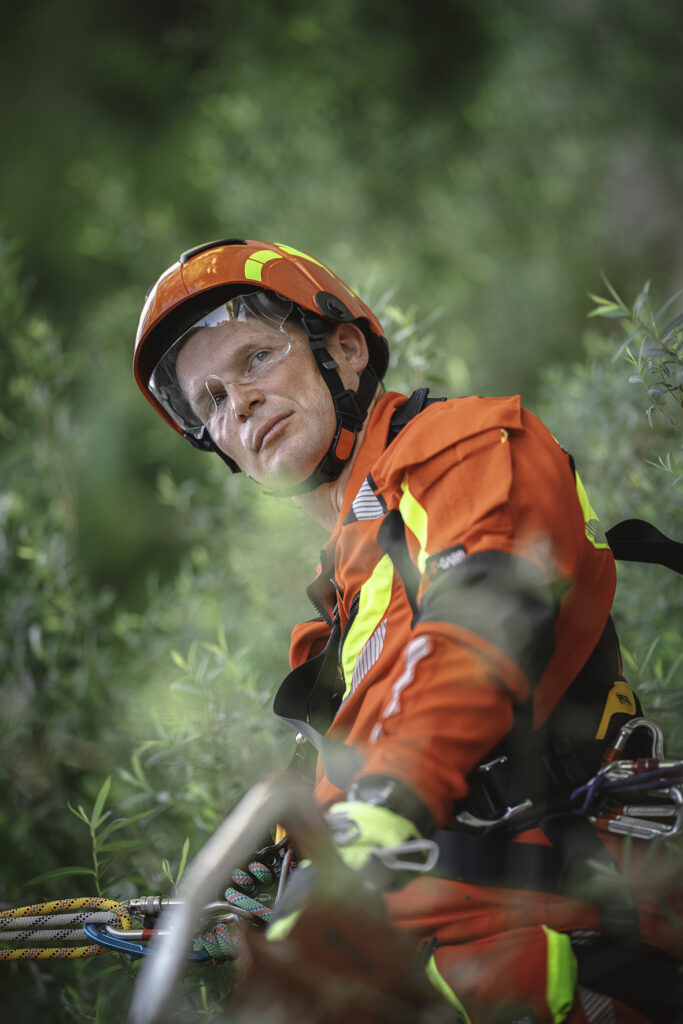
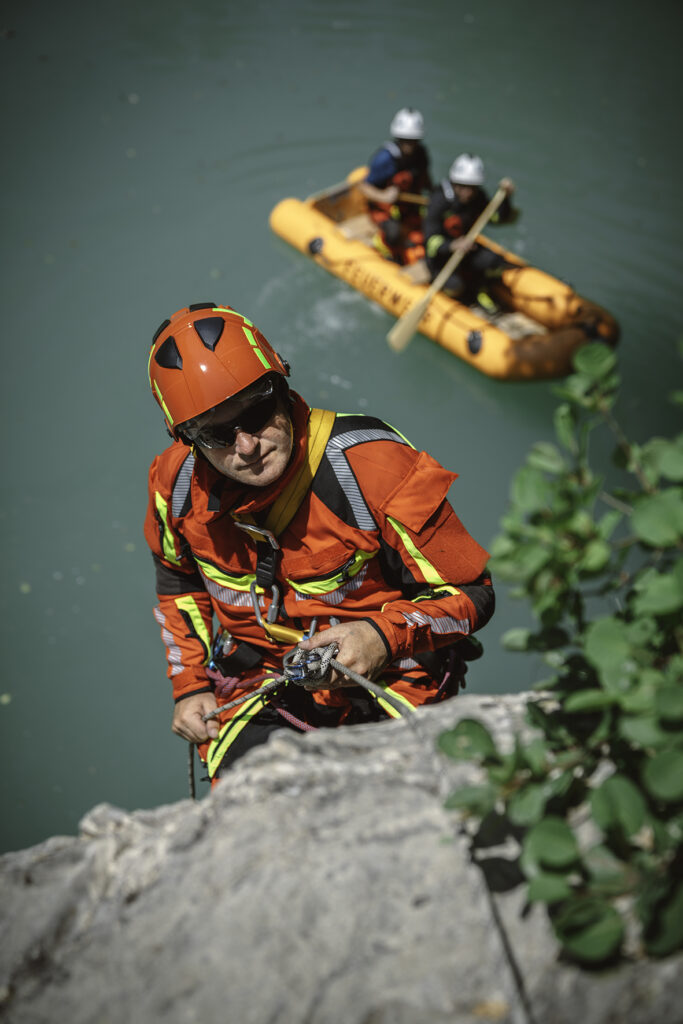
Since the publication of EN 164733 – Helmets for Technical Rescue in 2014, purchasers have had the ability to specify head protection designed for all of those non-structural fire tasks. Helmets designed to this stringent standard are far more compact, lightweight and, importantly, cheaper than structural firefighting standards. Helmets of this type are commonly used by specialist technical rescue teams, USAR practitioners and sometimes animal-rescue experts, but FRSs remain hesitant to roll them out for general use.
The list of non-structural fire work for which multi-role second helmets are an advantage is significant:
- Flood, water and ice rescue – both ‘wading’ and boat work
- Vehicle extrication and RTCs
- Technical rescue, at-height and line work
- Marine/coastal rescue (non-firefighting)
- Animal rescue
- Search and rescue
- Wildland firefighting
Swimming against the current?
When discussing the question of multi-use second helmets with users and specifiers, there are few practical barriers to adoption, with one common exception, or misconception: the nuances of certifications and requirements for helmets designed for use for water safety.
A very important aspect of the testing and certification of Technical Rescue helmets is the robustness of the shell and visors to ensure that they are suitable for a variety of risks including sharp and blunt vertical and lateral impacts to the head, high-speed impacts to the eye and face guards and, in the case of entrapment via the helmet – say, during line work or when in trouble in water – easy release of the neck strap. In short, a high-quality, fully approved EN16473 Rescue Helmet keeps the user safe from the majority of foreseeable dangers.
To meet, or preferably exceed, all performance levels appropriate for professional use, these helmets are necessarily around 15–25% heavier than basic climbing (EN124924), water rescue (PAS 0285) or canoe helmets (EN13856). The added bulk is needed to ensure good impact protection. It is particularly around the area of water rescue requirements that there continues to be a barrier to general acceptance of multi-use second helmets.
Those familiar with water rescue will be familiar with PAS028. This aged standard, originally created by a vested interest group back in 2002 was developed in absence of a European or British standard for helmets suitable for swift-water rescue. It was a great fill-in to aid a small number of manufacturers to standardise products that could be specified by interested users in the UK. PAS028 has served the market well but is now showing its age. It is outdated by 12 years by the publication of EN16473, a norm which is far more favoured by professional rescuers and manufacturers as certification to this norm proves protection against a far wider range of hazards. PAS028 has not been amended in 12 years. This is because the PAS publication process is expensive and needs to be financed, not by national standards bodies but those with interest in creation of a norm for commercial or specific interest. They are designed generally as a short-term measure until full EN or ISO standards take their place. They are, according to BSI, designed to be used to prevent an influx of inferior products to the market and to encourage innovation, best practice and enhanced safety.
Ironically, PAS 028 is now arguably a barrier to enhanced safety, not an enabler. This is because most water-rescue teams, fire services and other professionals follow DEFRA guidance note Flood Rescue – Guidance for Operations.7 This is an excellent document but unfortunately not up to date with modern safety helmets and the greater suitability of EN16473 products for not only water rescue but also line work, confined space, urban search and rescue and other non-structural operations, all of which will frequently coincide with flood and water-rescue activities.
Most EN16473 helmets feature all of the safety requirements of PAS028, EN12492 with the enhancement of the high-level impact and eye protection of structural firefighting helmets. To pack these features into one product, there is a small price to pay in weight, but this is minor trade-off when balanced with the significant enhancement to safety.
Call for change
There is an increasing level of adoption of EN16473 helmets as a multi-use second helmet to include water-rescue operations. More informed users are willing to accept the acknowledged 15–25% increase in weight for the sake of higher levels of all-round protection. They cite the fact that most flood and water operations expose wearers to as greater risk of falling tiles, wind-blown branches and other overhead hazards than risks in or on the water. The vital EN144588 eye and face protection norm, a key element of Technical Rescue helmets certification gives confidence to users that both head and eye protection is assured.
Even when in the water, as mentioned above, high-quality EN16473 products incorporate all aspects of PAS028 with the added advantage of enhanced protection for rescue professionals.
As an increasing number of fire services look towards a second multi-use helmet, we should seek amendments to guidance that is now out of sync with current safety norms and serves to limit user choice. By better informing our sector of the options available, services will be free to issue a second multi-use helmet with confidence as to the protection it offers, compliance with appropriate norms and suitability for use in a wide variety of common scenarios.
References
1. Wildland firefighting and the importance of ‘all-day’ comfort, UK Fire Magazine, November 2023
2. The Times Online, 10 April 2024
3. EN16473:2014 – Helmets for Technical Rescue
4. EN12492:2012 – Mountaineering equipment. Helmets for mountaineers
5. PAS 028:2002 – Marine Safety Helmets
6. EN 1385:2012 – Helmets for Canoeing and Whitewater Sport
7. Flood rescue concept of operations November 2019, Department for Environment, Food and Rural Affairs
8. EN14458:2018 – Personal eye-equipment. High performance visors intended only for use with protective helmets
About the Author

James Jones
James Jones is Managing Director of Vimpex Limited. Vimpex is a long-standing supplier of firefighting and Specialist Rescue Equipment and PPE to UK Public Sector Organisations. Vimpex has recently launched its Scandecon Decontamination brand, providing equipment and services to contribute to reducing the risk of cancer in UK firefighters.

You must be logged in to post a comment.