
Fire testing laboratories ensure the safety and reliability of various products and materials exposed to fire. While their focus is on evaluating fire resistance and performance, the importance of sustainability should not be overlooked. As the world is battling climate change and environmental concerns, fire testing laboratories must adopt eco-friendly practices and contribute to a more sustainable future. The 2023 United Nations Climate Change Conference, COP 28, is being hosted here in our hometown of Dubai in December, which is a perfect opportunity to elevate sustainable practices in fire testing laboratories and environmental responsibility within our sector.
Laboratory operations can have several adverse effects on the environment:
Energy consumption: fire testing involves using high-temperature furnaces, ovens and equipment. These operations require significant energy inputs, contributing to a substantial carbon footprint.
Resource consumption: testing specimens and materials, such as fire-resistant coatings, are often consumed during tests. This consumption can lead to resource depletion and generate waste.
Emissions: the combustion of fuels, typically used to achieve the required test conditions, can release greenhouse gases and other pollutants into the atmosphere.
Chemical waste: hazardous materials and chemicals are frequently employed in fire testing. If not managed responsibly, the disposal of these materials can pose environmental risks.
ESL’s corporate philosophy is ‘Ensuring a safer and sustainable future together’. Standing true to the motto, ESL has taken the lead in promoting sustainability in fire testing laboratories. To reduce the environmental impact, ESL has adopted a range of strategies and best practices:

1. Energy efficiency
One of the primary contributors to environmental impact is its energy consumption. To reduce the carbon footprint, ESL has implemented energy-efficient technologies and practices:
- Energy-efficient equipment: ESL has invested in energy-efficient furnaces, ovens and testing equipment. These technologies often consume less energy while maintaining high performance standards.
- Optimised scheduling: the ESL planning team schedules tests efficiently to minimise energy consumption.
- Lighting and HVAC systems: ESL uses energy-efficient LED fixtures and intelligent HVAC systems with programmable thermostats for optimal temperature control within the laboratory and offices.
2. Waste reduction and recycling
Efforts to minimise waste generation and implement responsible waste management practices are integral to ESL’s sustainability:
- Recycling programmes: ESL has Implemented comprehensive recycling programmes to reduce the volume of waste sent to landfills. We clearly label recycling bins and educate ESL staff about proper recycling procedures. ESL utilises water containment and recycling techniques in its operations.
- Reducing single-use plastic: a water filtration system to reduce consumption of bottled water is implemented at ESL. This decision was instrumental in ESL’s efforts to combat the environmental challenges of excessive plastic waste. The ESL team’s efforts have led to an astounding reduction of 50,000 plastic water bottles per quarter. This achievement speaks volumes about commitment to protecting the planet and preserving its resources for future generations.
- Hazardous waste disposal: ESL has developed and strictly adheres to protocols for disposing of hazardous materials and chemicals, partnering with licensed waste management companies to ensure compliance with environmental regulations.
3. Sustainable laboratory design
- Layout: the design of fire testing laboratories can significantly impact their sustainability. ESL has an efficient layout; it minimises energy wastage, optimises space utilisation and promotes natural lighting.
- The lab environment controls: the lab environment controls at ESL represent a significant milestone in environmental responsibility. ESL has implemented a water scrubbing system to reduce pollution, including smoke and combustible products, from being released into the atmosphere. ESL is particularly noteworthy because it is the region’s first fire laboratory to comply with this stringent pollution control measure. This proactive approach reflects a commitment to environmental sustainability, and we believe it sets a commendable example for others in the industry to follow.
4. ESG programme
ESL has implemented an environmental, social and governance (ESG) programme that recommends considering environmental, social and corporate governance issues.

Fig.1 ESL Green House Gases (GHG) – the process.
It includes identifying each process and the emission sources in Scope 1, 2 and 3 classifications. This data is used for emissions factor mapping, emissions calculations, inventory consolidation and emissions analysis.
5. Monitoring and reporting
To continuously improve sustainability efforts, ESL monitors and reports its performance by:
- Environmental metrics: regularly track and report environmental metrics such as energy usage, water consumption and waste generation. ESL uses this data to identify areas for improvement and set sustainability goals.
- Compliance monitoring: laboratory operations adhere to all relevant environmental regulations and standards at ESL. Regular audits and inspections help maintain compliance.
- Air quality monitoring: the monitoring is carried out for the testing areas, and results demonstrate ESL’s compliance with the regulatory requirements. The statement of compliance from Wimpey Laboratories LLC states:
‘All the measured pollutants were within the limit as per Cabinet Decree (12) of 2006, Federal Environmental Agency of UAE, Regarding Regulation Concerning Protection of Air from Pollution, Annexure – 07(a) & 7(b) “Maximum Allowable Limits for Air Pollutants Working Areas”. at the time of the proposed survey.
‘As per the above observation we have found that there is no dust & gaseous contamination exceeding the limit in all monitoring areas, everything under the prescribed limit as per the given standard guideline of Dubai Municipality Health & Safety Department Environmental Health Section – Technical Guidelines for Indoor Air Quality for Healthy Life (DM-HSD-GU119-IAQ), Table No: 2 – Common Air Pollutant in existing Building, Table No: 3 – Thermal & Physical Comfort.’
6. Employee engagement
Creating a culture of environmental responsibility within ESL is essential for long-term sustainability:

- Training programmes: training programmes are developed to educate laboratory staff about sustainability initiatives and their role in achieving environmental goals.
- Employee feedback: at ESL, employees are encouraged to contribute ideas and provide feedback on sustainability practices, fostering a sense of ownership and engagement.
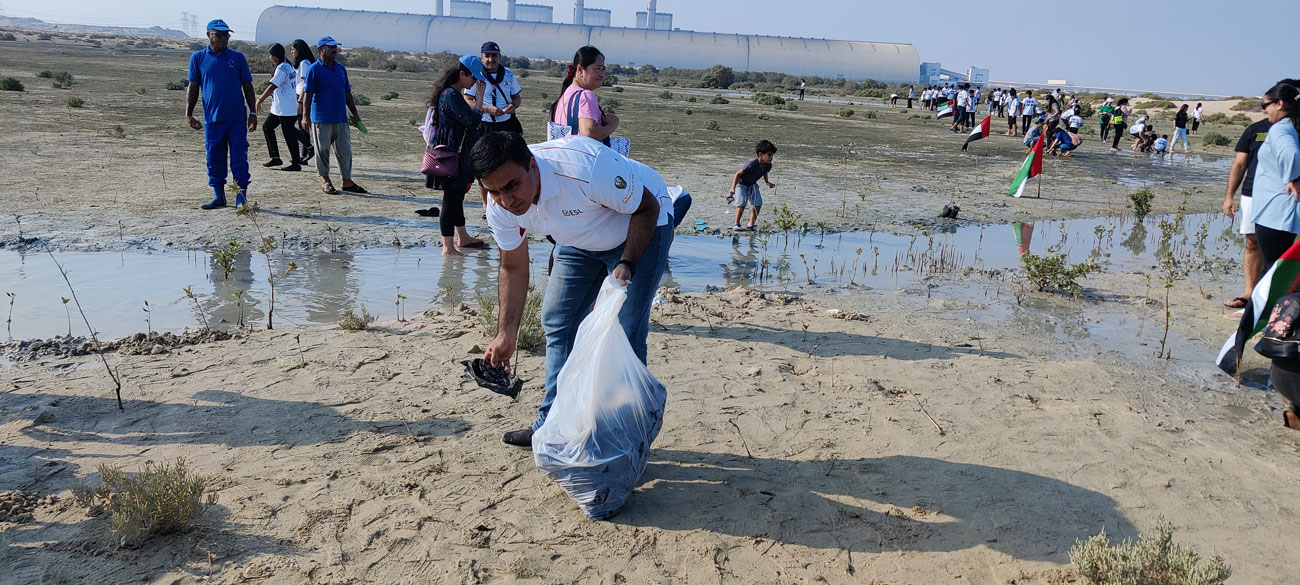
- Participation in activities: ESL encourages its employees to participate in sustainability initiatives. to support the UAE’s initiative to plant 100 million mangroves by 2030 to combat climate change and global warming, Ismaili CIVIC UAE and Emirates Marine Environment Group (EMEG) organised a drive at the Jebel Ali Wildlife Sanctuary. The event resulted in the donation and plantation of 7,000 mangroves in one day. It was an opportunity to participate and learn more about climate change and what steps we can all take to become champions of sustainable environmental change.
Sustainability in fire testing laboratories is not a mere option but a necessity in our increasingly eco-conscious world. It is evident from the initiatives taken up by ESL that fire testing laboratories can significantly reduce their environmental impact while benefiting from long-term cost savings and improved public perception. As technology advances and awareness grows, fire testing laboratories should continue to innovate and evolve towards a greener, more sustainable future where safety and environmental responsibility go hand in hand. Embracing sustainability is not just an ethical choice; it’s a smart one that ensures a safer and more sustainable future for all.
About the Author

Mustafa Chamadiya
With a rich tapestry of two decades dedicated to championing sustainability, quality, and health and safety management, Mustafa stands as a seasoned professional in the field. Holding the prestigious title of an approved IRCA (International Register of Certificated Auditors) principal auditor, Mustafa brings forth a wealth of knowledge and insights garnered through a decade-long auditing journey.
Presently, Mustafa serves as the guiding force behind Governance, Compliance, and Regulations at ESL, bringing a unique blend of strategic vision and hands-on experience to the forefront. In this pivotal role, Mustafa continues to navigate the complex landscape of standards and regulations, ensuring ESL remains at the forefront of industry best practices.

You must be logged in to post a comment.