
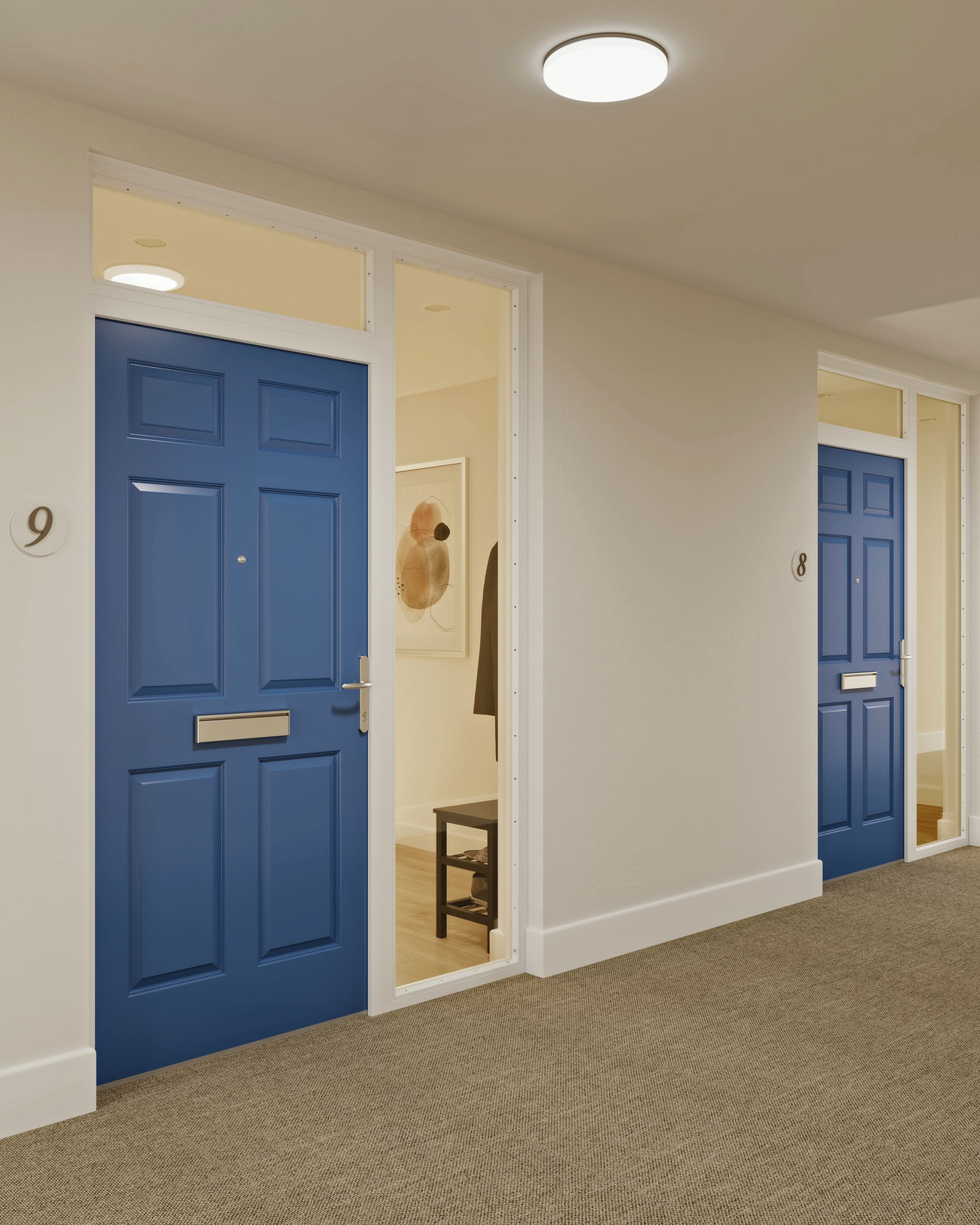
As we all know, a fire door is more than just a door; it is a critical element of a building’s fire-safety strategy.
Yet, while manufacturers put fire doorsets through rigorous testing procedures and independent evaluation to ensure they meet specific regulations and building codes, the reality is that there is still a level of oversight at the next step in the fire-door safety chain: installation.
Here, Glyn Hauser, fire-door expert at JELD-WEN, explains why there is a pressing need for a formalised, consistent and mandatory qualification scheme for the sector, as inaccurate fire-door installation continues to compromise the next chapter of fire safety.
Domestic fires are among the most devastating accidents that can occur, both in terms of injuries or fatalities and property damage. Yet, despite advances in fire-safety equipment, practice and regulation, they sadly still happen all too often.
According to the latest government statistics,1 there were 66,251 primary fires in the year ending June 2023, representing a 3.8% increase on the previous year. Tragically, there were 284 fire-related fatalities as a direct result, constituting an increase of 4.8% on the previous year, as well as 6,240 non-fatal casualties.
While the number of fires will never be zero, the reality is that there is still scope to do much more to reduce both the number and severity of incidents.
Along with curating greater fire-safety awareness, providing better training and education, and ensuring best-practice approaches, a key part of the answer lies in a more robust approach to the installation of fire doors.

The fire-door frontline
The critical importance of fire doorsets within industry is generally well understood.
As a key requirement for houses of multiple occupancy, all non-domestic properties and some dwellings, fire doors form one of the primary lines of defence in fire protection, enabling buildings to compartmentalise and delay the spread of fire from one area to another.
This design plays a critical role in mitigating the risks associated with fire and facilitating safe evacuation – especially in densely populated buildings such as high-rise flats.
Despite this, the reality is that fire-door safety has been subject to a certain degree of complacency, or even neglect in the UK. For the large part, this can be attributed to an inherent lack of clear regulatory guidance, poor installation and maintenance practices, and a limited understanding of the critical role fire doorsets play in building safety.
If a fire door fails to meet established standards or is improperly installed or maintained, its efficacy can be compromised. It takes just one compromised door to allow the transmission of fire or smoke to block a crucial escape route, placing lives at an unnecessary risk.
This was sadly demonstrated by the Grenfell Tower tragedy. Resulting in 72 deaths, the blaze was a brutal wake-up call, highlighting several inadequacies in the UK’s fire-safety standards.
On the night of the fire, many of the flat entrance doors either did not have a self-closer fitted or the closer that was fitted didn’t work. As a result, many were left open, causing toxic smoke from the blaze to pour at speed into lobbies and stairwells – the key routes of escape – resulting in the fire spreading quickly through the exterior cladding.
Following the incident, the UK’s fire-safety regime came under intense scrutiny and review.
Cue the Fire Safety Act 2021, which looked to improve fire-safety standards in buildings, particularly those of multiple occupancy.
Among its provisions, the Act clarified and extended the responsibilities of building owners and managers regarding fire safety, particularly concerning regular inspections of fire doors. This sits alongside the more recently introduced Fire Safety (England) Regulations 2022, which requires regular checks on millions of fire doors.
In addition, the Building Safety Act 2022 set out a host of tightened restrictions on how high-rise residential buildings should be constructed and maintained, including the introduction of an ‘Accountable Person’, who would ensure compliance throughout the building and address residents’ concerns.
Together, the goal is to form a comprehensive regulatory approach, which provides a clear delineation of responsibilities and requirements for ongoing maintenance and communication to enhance fire safety in residential buildings, particularly those at higher risk. However, concerns still remain about whether this is enough.
First hurdle failings
One of our biggest concerns is the continued scope for inadequate fire-door installation.
Many leading manufacturers continue to invest in the development of advanced fire doorsets, which are subject to rigorous testing and third-party certification to ensure full compliance. However, in many cases, the efficacy of the final product is at risk of being compromised at the first hurdle, simply because there is no formal qualification to install them. The Fire Safety Order (FSO) simply asks for a ‘Competent Person’, who has ‘sufficient training and experience or knowledge’. This allows general tradespeople, contractors and subcontractors on-site to undertake what we believe is a specialist role.
Installing a fire door is not only a critical safety task but a complex one. It requires detailed knowledge of the nuances between products, and an understanding of fire-safety regulations, to ensure compliance is ultimately achieved.
Multiple layers of fire-resistant materials, specialised hardware and seals that are designed to prevent the passage of flames and smoke are involved in a complete installation process. While a doorset design simplifies this process, by delivering all components pre-assembled and ready to be fitted, the installation of a fire door when its hardware is supplied separately (often in the case of customisation) requires expertise and attention to detail. Something as seemingly simple as a slight gap between the door, its frame and seal can have an impact on the level of fire resistance offered.
This separate-purchase approach can result in compatibility issues, weakened structural integrity and – most importantly – compromised safety performance. If, for example, the exact specification of the frame is not met, the door will not offer the expected levels of fire resistance once it’s been installed. Everything from a door’s material to its size, weight and functional performance can make a huge difference to the hardware requirements, and if these are not compatible, the fire door will not perform as it should.
Manufacturers should supply each fire door with its own installation instructions and certification data sheet to set out the exacting requirements of every component needed to ensure compliance. However, although addressing these detailed technical requirements may be a standard process for experienced installers, the wide range of variables involved can pose a significant challenge for non-specialists. The potential knock-on effect is that building managers responsible for conducting regular inspections of doors may also lack the knowledge when it comes to spotting the smallest of installation errors, meaning the problem may not actually get resolved.
Take all this into account and its no surprise that a previous fire-door inspection study found 36% of third-party certificated fire doors were condemned ‘due to both poor installation and poor maintenance.’1
Fit for the future
Even in the midst of a period of major reforms and regulations aimed at revolutionising the approach to fire-door safety, at JELD-WEN we believe there is still a job to be done in ensuring each and every fire door is properly installed and compliant.
It is for this reason, that in our recent whitepaper, ‘Fire Safety: Time to Shut the Door on Risk’, we advocate for the introduction of a legal requirement for all fire-door installations and maintenance work to be conducted by qualified installers, validated through a UKAS-accredited certification scheme.
Here, the remit would be to enable an approach similar to the Gas Safe Register whereby only qualified engineers are legally able to work on gas appliances in the UK. In this way, only trained professionals with expertise in fire-safety regulations and construction techniques should be able to install fire doors, to ensure the product performs as intended, is compliant and will protect building occupants from the risks associated with fire-door installation failures.
A moral motivation
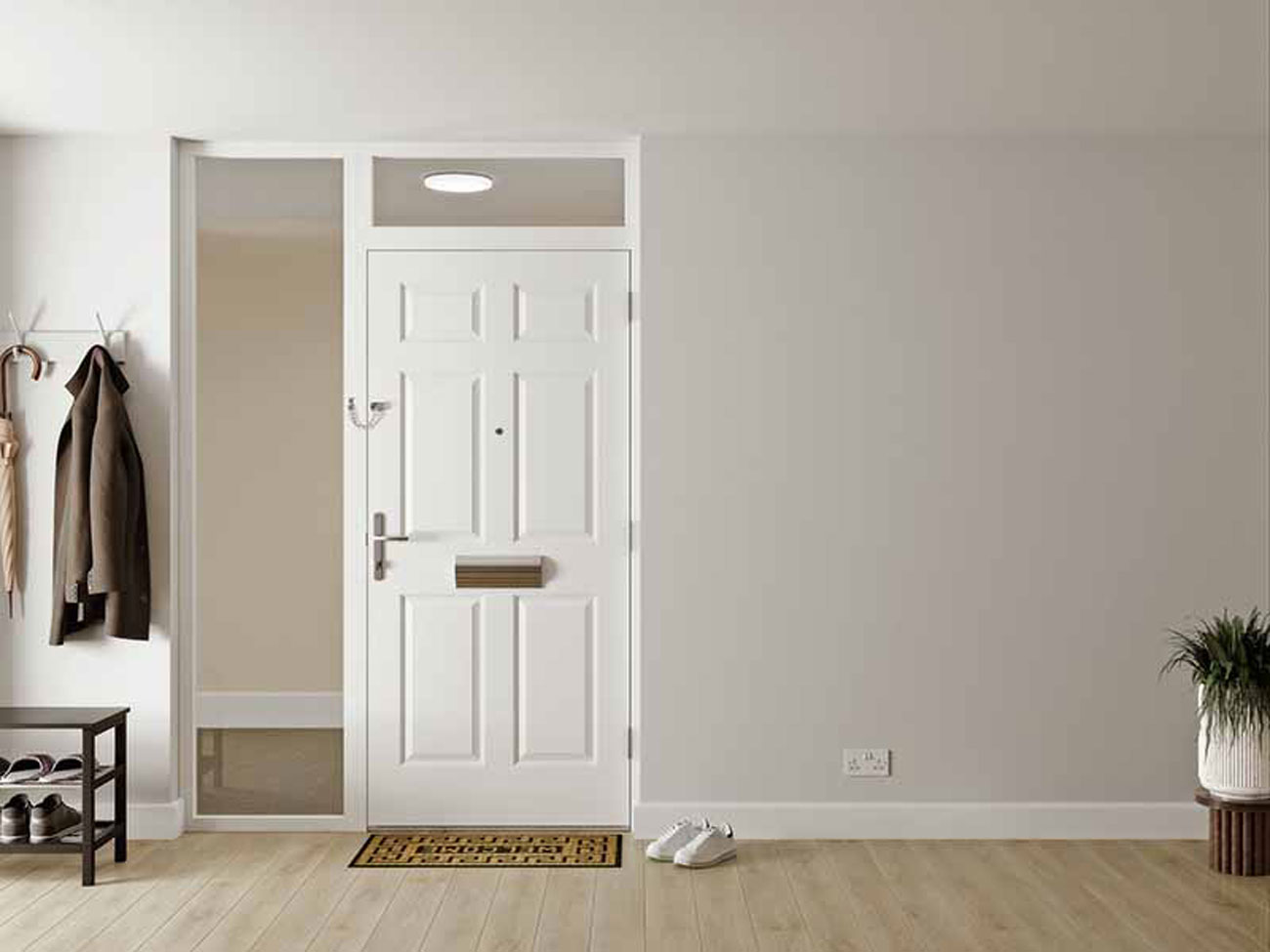
Ensuring best practice isn’t just a legal obligation; it’s a moral one. Though often overlooked, fire doorsets play a crucial role in building fire safety, protecting both key access points and living spaces in multi-tenancy buildings.
By investing in high-quality, independently certified fire doorsets and ensuring professional installation and adequate maintenance, building owners and managers can significantly enhance fire safety, ensure regulatory compliance and better protect occupants. After all, every fire door properly installed and maintained is another chance to save lives.
JELD-WEN’s ‘Fire Safety: Time to Shut the Door on Risk’ white paper is available for free to download. Go to https://www.jeld-wen.co.uk/fire-safety-white-paper
References
1. www.gov.uk/government/statistics/fire-and-rescue-incident-statistics-year-ending-june-2023
2. www.thefpa.co.uk/news/76-of-fire-doors-failed-inspections-in-2019

You must be logged in to post a comment.