
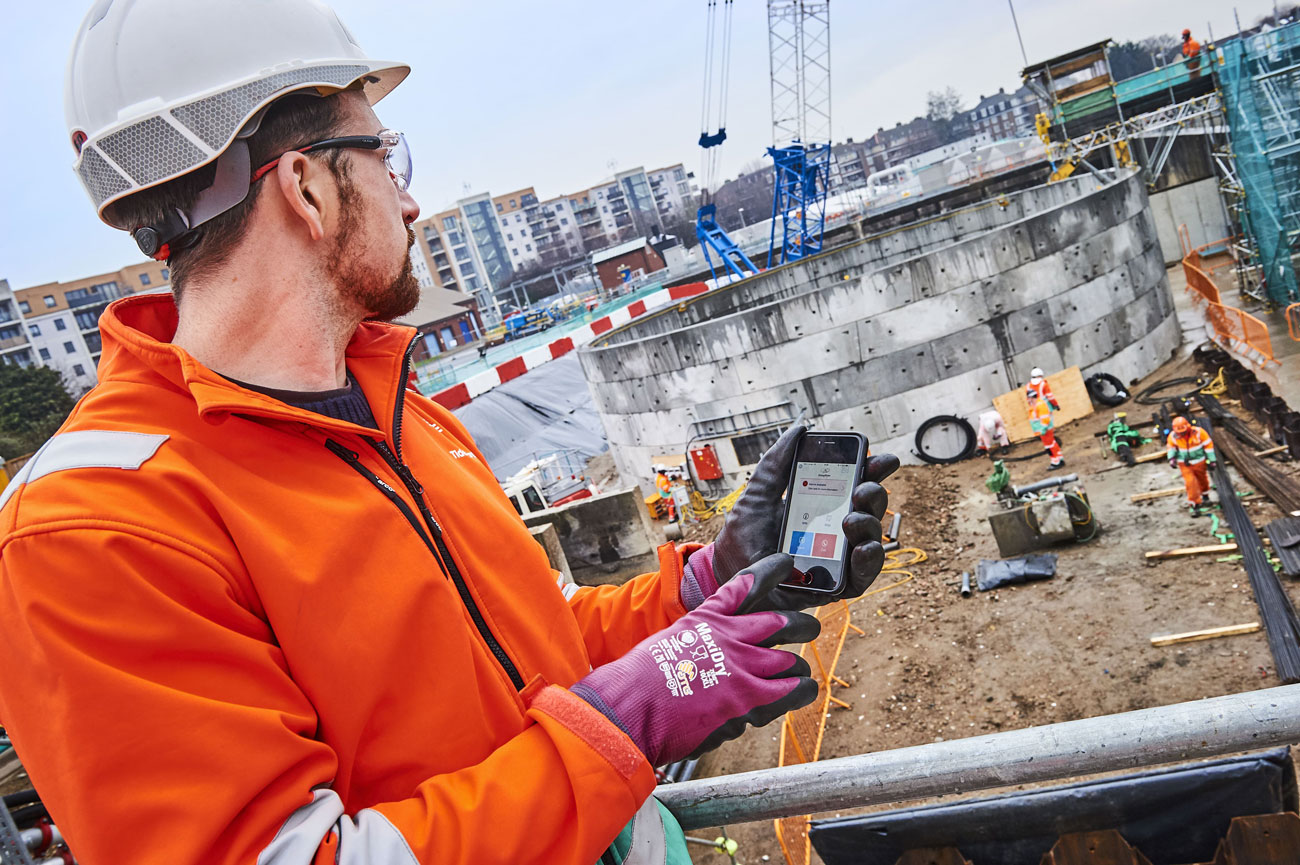
With fire on construction sites still a leading cause of loss of life and costly damages, the need for worldwide education and safety provision remains high. James Pecz, global marketing and business development manager at wireless solutions firm, Ramtech, discusses how its first in-depth white paper titled No Site Left Behind: The Modern Fire and Life Safety Solutions for Construction is helping to deliver fire and life safety awareness in the U.S.
Released in 2022, No Site Left Behind: The Modern Fire and Life Safety Solutions for Construction shines a light on the fire and life safety challenges that continue to lead to loss of life as well as millions of dollars in direct property damage annually.
At the heart of the white paper is an understanding of the fire safety challenges faced by American construction sites. In addition to how – despite the high statistics for fire disasters and the amount of attention received in the press – many U.S sites continue to rely on air horns as the primary source of evacuation. Furthermore, as fire safety rules can vary state to state, and sometimes city, there isn’t a unified approach to this national problem. Instead, safety is very much in the hands of site owners and managers, which means that ongoing education to ensure compliance is so important.
Understanding the issues
To illustrate the fire safety issues experienced in the U.S, according to the National Fire Protection Association (NFPA), local fire departments responded to an estimated average of 3,840 fires in structures under construction and 2,580 fires in structures under major renovation per year in 2013–2017.
What’s more, the fires in structures under construction caused an average of four civilian deaths, 49 civilian injuries, and $304 million in direct property damage annually. While those in structures under major renovation caused averages of eight civilian deaths, 52 civilian injuries and $104 million in direct property damage annually.
Further, a recent report from leading global corporate insurance carrier, Allianz insurance, analysed the new risks to the construction sector. Figures provided in the report showed fire and explosion incidents already account for more than a quarter (26%) of the value of construction and engineering claims over the past five years. With insurance claims from 2016 to 2020 reaching a total approximate value of €11.3bn (US$12.8bn), this is a sizable chunk of the economy.
U.S. construction site risks
Although the U.S. is not unique in its fire safety issues on construction sites, the sheer size of the U.S. and its various conditions and landscapes mean that there is a bigger challenge to protect vastly different types of sites.
From extreme weather at opposite sides of the spectrum, to built-up cities and coastal areas, construction and site managers across the U.S. need to plan accordingly for the weather, type of site and other location-specific considerations.
On top of this, the U.S. is also subject to global construction-site challenges, which happen during the construction phase as open sites are often more vulnerable to theft, vandalism and arson. Further adding to this risk is the fact the typical building protection systems such as sprinklers, fire walls and detectors are not always in place until the final stages of construction. Even breakout areas where construction workers go to prepare hot meals and drinks can present a hazard if equipment is used incorrectly or left unattended.
This is where the Ramtech white paper comes to the fore, to encourage a serious rethink about how construction sites could be made safer in the U.S. The white paper importantly highlights how more awareness and understanding of NFPA guidance, specifically the NFPA 241 (Standard for Safeguarding Construction, Alteration, and Demolition Operations), must be prioritised in order to save lives and protect construction sites.
The NFPA 241
A large portion of the white paper seeks to unpick the NFPA 241 standard, which has been central to fire safety education and compliance in the U.S. for 125 years.
According to the NFPA’s CodeFinder, NFPA 241 is referenced 121 times across 43 U.S states and territories. While the majority are following the 2019 edition, there are several using the 2009 and 2013 editions and a handful still referencing the 2004 edition – indicating a lack of consistency.
California was the state with the highest number of references, with 22 cities and counties listed as following NFPA 241. In North Carolina, there are eight mentions of the standard from varying editions.
In areas where there is no presence of NFPA 241 referenced, there are often other codes followed. New York City, for example, follows its own NYC Fire Code last updated in 2014, with some amendments made in 2018.
This extremely varied approach to fire safety standards is part of the challenge faced by the NFPA in encouraging a consistent approach to construction site safety. It indicates the state of confusion across America, particularly for project managers seeking to understand which codes and practices to follow. This lack of clarity is increasing the risk of huge damage to both livelihoods and site assets across the country.
With recent changes made to the NFPA in 2022, now is a particularly apt time to reassess the requirements, including aspects such as emergency contacts and communication procedures and a range of fire-protection systems for different operations. Site managers should also review information pertaining to on-site security, protection of existing structures and documentation, as well as direction for a life safety plan and actions for temporary utilities.
Another crucial area is the role of the Fire Prevention Program Manager (FPPM) – every U.S. construction site needs one person and an alternate to ensure that site safety is maintained, and processes are enforced in line with NFPA 241.

In practice
The NFPA Code 241 standard states that construction sites need to have security measures in place from the very moment ground is first broken, up to and including the final phase of building. To do this, many sites still rely on outdated air horns as an evacuation method on construction sites. However, this does come with disadvantages.
Namely, an air horn cannot provide site-wide evacuation as it isn’t able to tell you where the fire is located, merely that there is a fire somewhere on the site. It can also be hard to distinguish the noise of an air horn above other background sounds on a site, and in colder weather too, air horns can fail and not work at all. Furthermore, there isn’t the capability with an air horn to add in smoke/heat sensors and other added value functions such as a medical call feature.
Another form of widely used protection is watch patrols, where workers will walk around the site at regular intervals to check for safety issues. However, across large or complex sites it is impossible for patrols to be everywhere at once. The time taken to walk across the site could mean that a fire has started long before the patrol reaches it.
This is why investigating how technology can help to alleviate these traditional problems is a solution that the white paper sets out to explore.
Modern fire and life safety solutions
By leveraging technology, building owners, site managers and FPPMs can achieve a more robust level of protection than air horns or waking watch processes.
Encouragingly, steps are being taken to prioritise technology more in the U.S. A key example is the recent revision made to the San Francisco Fire Code, which now mandates that an approved temporary wireless fire detection and notification system needs to be in place during the construction of wood-frame buildings. This is a significant update and especially pertinent with the city having suffered from devastating fires in the past. It is also a pioneering moment that could influence other key states to do the same across America.
When using a temporary fire detection and notification system, such as the Ramtech WES3, it eliminates the need for a hardwired power source and there is no wired panel required as with most other similar systems. As well as being quick and simple to set up and deploy, the WES3 system greatly helps with the creation of a construction pre-incident plan in accordance with the NFPA. If you have a site with hundreds of workers and something happens, it is important to be able to pinpoint where the fire is and to also evacuate workers away from the blaze. WES3 effectively achieves this objective because each unit can be numbered and named so that all alerts give a precise location.
WES3 protection is constant, meaning that no matter the time or place, the fire can be detected and communicated to personnel via the use of secure radio frequencies. With an unlimited number of units able to be used per site, more units can be added as the build progresses. Repeater units ensure the signal gets a boost on especially large sites, while an emergency signal can also be triggered automatically or manually from anywhere. This is all possible without wires or cables and without having to rely on the presence of workers to detect and extinguish fires.

Final thoughts
Ultimately, it should be the ambition of construction and fire safety professionals in the U.S. to educate all bodies to take a uniform approach by choosing the latest edition of NFPA 241 for construction, alteration and demolition standards.
With today’s rising costs, supply chain issues and still trying to catch up since the Covid-19 pandemic, discussing these challenges and how they can be overcome is opportune. We hope the white paper will serve as a conversation starter and bring about real, positive change for the U.S. construction industry – with lessons that can also be applied to support the rest of the world to raise standards through life-saving technology.
To download No Site Left Behind: The Modern Fire and Life Safety Solutions for Construction please visit www.ramtechglobal.com/white-paper
About the Author

James Pecz
James Pecz, global marketing and business development manager at Ramtech

You must be logged in to post a comment.