
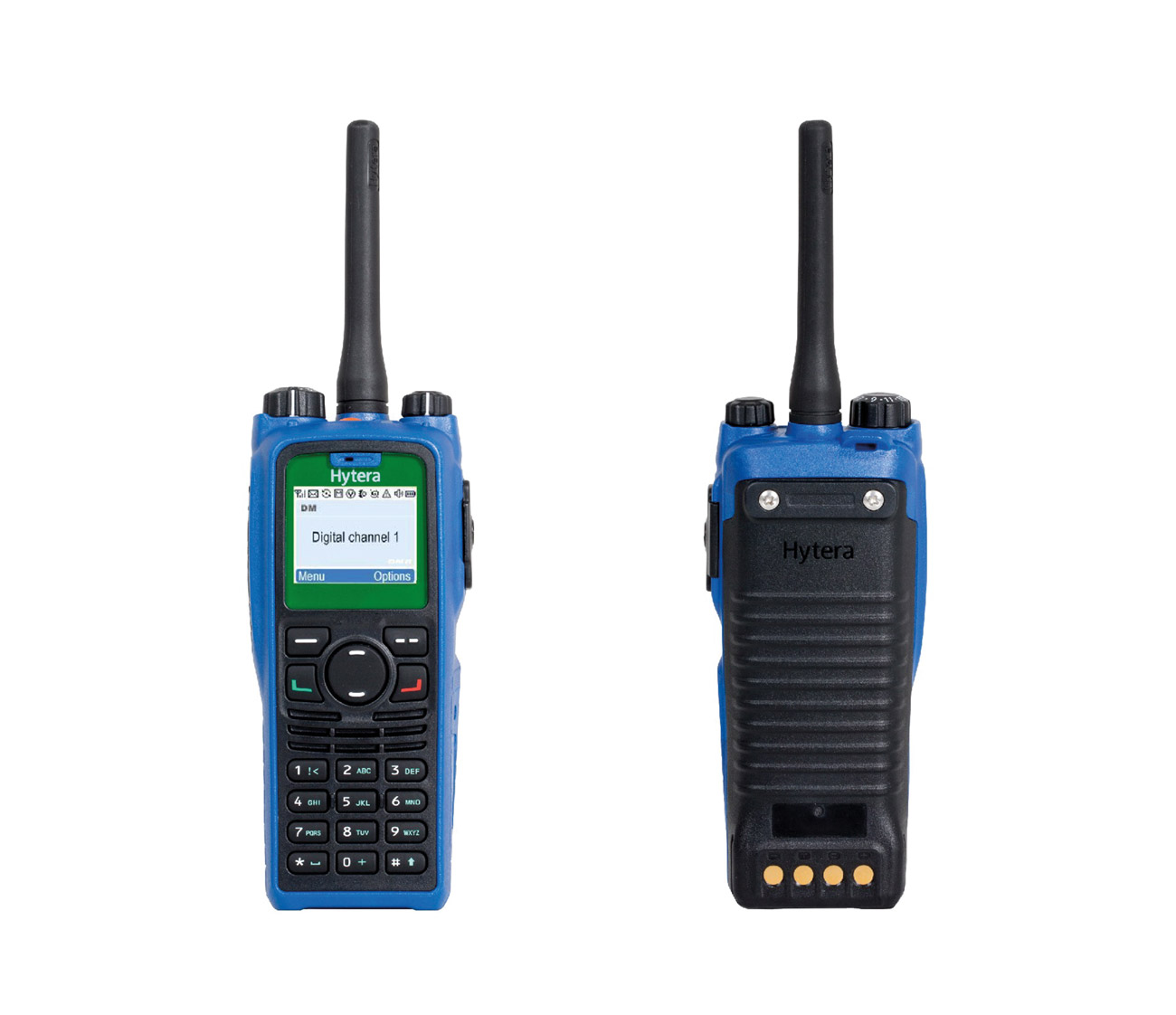
UK Fire and Rescue Services deploy a mix of TETRA, DMR (Digital Mobile Radio) and analogue radios. The fire appliances are equipped with TETRA mobile radios, which use the UK’s nationwide Airwave emergency services communications network.
“The main communications between the officer in charge of the incident and the fire brigade’s command and control centre is done over the Airwave TETRA network,” explains Simon Bingham, senior account manager at Radiocoms Systems, which has supplied radio equipment to many UK FRSs.
But once on the fireground, the operational firefighters rely on handheld DMR or analogue radios operating in ‘simplex’, direct device-to-device mode. The FRSs have been allocated six Home Office approved channels (4 simplex, 2 duplex) in the 450–470MHz (UHF 2 band).
“In a typical house fire you’ll have a team outside damping down the fire and spraying water, and breathing apparatus (BA) teams working in pairs, who are counted in and out of the building by the entry control officer. They use two separate radio channels: a BA channel and an incident channel,” explains Simon.
It is not always possible to cover the entire fireground using simplex-mode communications. Some fire services install repeaters in shopping centres, tall buildings and tunnels to provide wider coverage when needed. Hytera offers fixed-site DMR repeaters and portable, fast-deployable repeater solutions, such as the RD965 digital/analogue outdoor repeater, which can be used to extend coverage.
Firefighters require dependable, rugged, lightweight and waterproof radios able to withstand high temperatures. Devices must have a long battery life and provide loud, clear audio in noisy environments. Simplicity and ease of use are a must, as no fireman wants to struggle to operate a radio in the noise, confusion and poor visibility of a fire.
Hytera offers a range of analogue/digital DMR handheld portables that meet these requirements. All Hytera models in the PD600 series and above are certified to IP67 or higher against dust and water intrusion. Hytera radios are complemented by a range of accessories including wired and wireless headsets and different types of remote speaker microphones, as well as belt clips and other attachments.
Hytera also offers ATEX intrinsically safe radios for use in potentially explosive environments in the shape of the PD715Ex and PD795Ex (with full keypad and display unit). These are certified for use in Intrinsically Safe Zone 1 (and 21) as well as Zone 2 (and 22).
The PD715IS and PD795IS are certified for use in Intrinsically Safe Zone 0 (or 20) where high levels of hazardous product are present continuously. They are the only DMR radios certified to meet the stringent conditions for operation in Zone 0. The radios also conform to the ‘ia’ certification, meaning the radio circuit has three protective measures, allowing for the occurrence of two faults during operation without risking the user’s safety.
Workplaces such as oil and gas installations and petrochemical plants are unlikely to be allowed to operate without their own fire brigades, which should be equipped with ATEX radios. Ports, airports and manufacturing plants with fuel installations or storage of other hazardous products on site are likely to follow suit.
Many private organisations now operate with smaller workforces, so they depend a lot on lone workers. To help protect their staff they can use the safety features supported by Hytera radios such as Man Down and Lone Worker alerts and GPS location-based apps to monitor, track and locate their workers.
Hytera and authorised partner Radiocoms Systems are the perfect choice to fulfil the communication needs of modern national and private fire brigades.
For more information, go to www.hytera.co.uk
