
In recent years, the UK emergency services sector has changed significantly as roles and responsibilities have evolved, and new technology and procurement practices have been introduced. This has had a significant impact on the PPE industry, leading to the emergence of a new generation of products, designs and services. As new research and technologies are revealed, and new regulatory standards and trading practices are established, it’s an exciting time for the industry.
Here are just some of the key topics and issues likely to remain a focus for the industry in the coming years:
Technology
The history of firefighting PPE in the UK is fascinating, and tells us a lot about the impact of technology. From the early 1800s to the 1960s, firefighting PPE remained remarkably unchanged, largely due to the limited fabrics available to manufacturers. Woollen tunics and trousers were favoured for well over a century, before rubber leggings were introduced in the 1930s. The 1960s, however, marked a new era for the industry thanks to the emergence of new specialist materials offering heat and flame protection. This led to a swift and dramatic transformation of firefighter PPE. The world’s leading fibre manufacturers such as PBI Performance Products and DuPont, and fabric manufacturers such as WL Gore and Hainsworth, have since all made huge technological strides in creating highly specialised materials which offer a wide range of protective benefits.
The most recent technological advances have been made in response to research highlighting two significant threats to firefighter safety beyond the hazards of fire: heat stress and cancer.
Heat stress is caused by a dangerous rise in core body temperature, brought on when faced with the intense heat of a fire, and exacerbated with physical exertion. We now know it is especially life-threatening for firefighters and is the number-one cause of firefighter casualties. Fibre and fabric innovations have enabled PPE manufacturers to produce multi-layered garments that protect from inside and out, allowing internal heat and moisture to escape, whilst keeping the body cool and dry. Today, a select combination of fabrics can offer resistance to fire, increased breathability, control of moisture, and a lighter weight – all of which help to reduce the occurrence of heat stress.
The threat of cancer through smoke contamination is not so well-understood, but several recent international research studies point to a possible link between carcinogens found in smoke particles and higher rates of cancer among firefighters.
The new challenge for the industry is to create PPE that acts as a barrier to toxins and potentially harmful smoke particles, whilst remaining breathable so that the body stays cool and dry. The face and neck have been identified as significant areas of dermal exposure to products of combustion and potential carcinogens. In response, Bristol’s new Particulate Protection Hood, launched at the end of last year, features DuPont’s new Nomex NanoFlex particulate barrier and is proven to be 99.8% efficient at preventing particle exposure.
Cleaning and maintenance
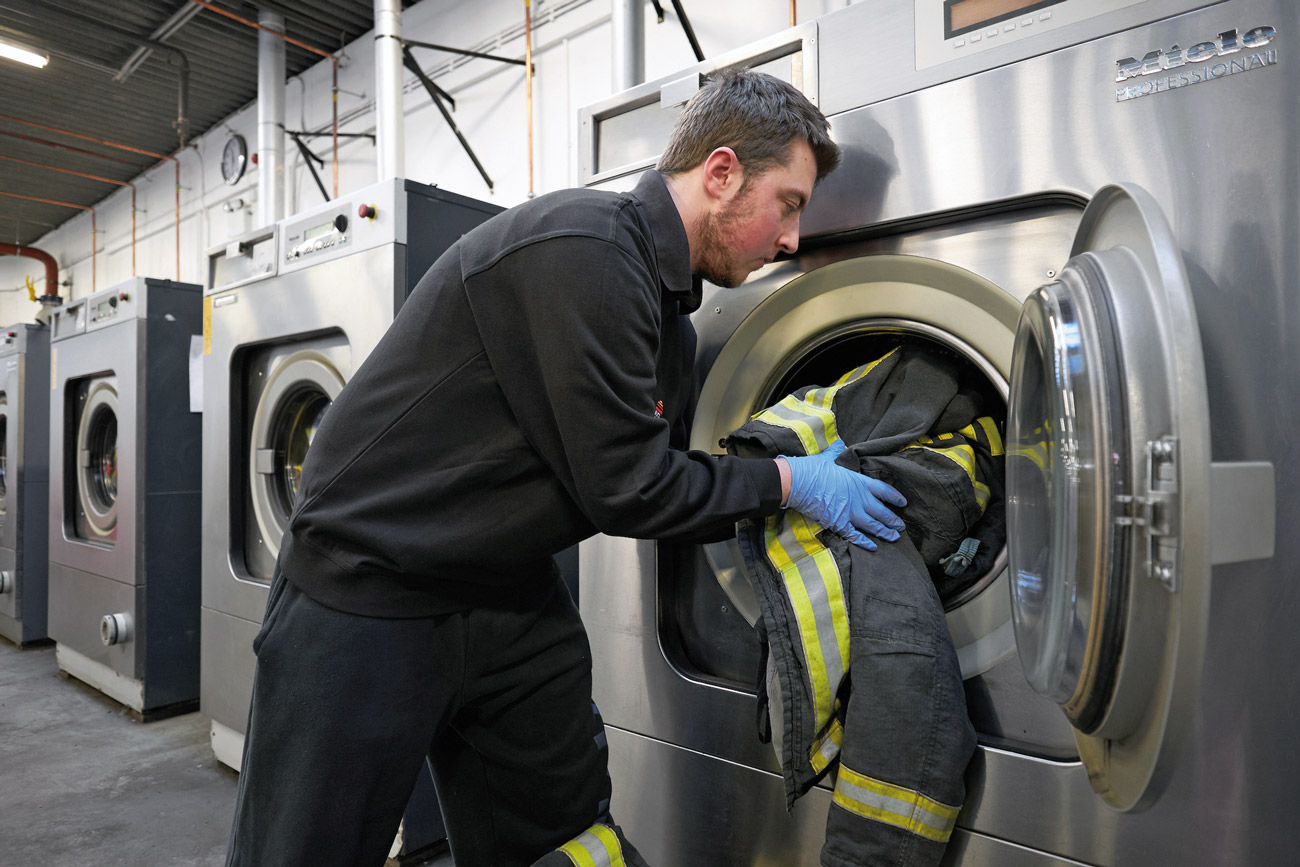
Health concerns over cancer risks have also prompted changes in the way kit is cleaned and maintained. Recent studies have found that dangerously high levels of harmful chemicals can linger on firefighters’ protective gear following exposure to smoke. The professional cleaning of PPE following a fire-related incident, along with other practices such as swift removal of contaminated garments, has been highlighted as a practical means of reducing the risk of carcinogens entering the body.
Here in the UK, the industry is leading the way in the provision and take-up of professional cleaning and maintenance for firefighter PPE. Whereas in many corners of the globe, firefighters either have their kit cleaned at the station or are expected to use their washing machine at home, the vast majority of UK Fire and Rescue Services (FRSs) now expect professional managed services provision as part of their PPE contract, and they follow strict guidelines and procedures for doffing garments after fire-related incidents.
The UK national standards body, the British Standards Institution (BSI), has been calling for the creation of a European standard to set firm criteria for the cleaning, maintenance, and repair of firefighters’ PPE. Facing resistance to this in Europe, the BSI is now working to develop a national standard, to ensure best practice at least in the UK.
Here at Bristol Uniforms we continue to take cleaning and repair very seriously. More and more we’re finding that FRSs across the UK are appointing us on long-term contracts to handle the cleaning and repair of their PPE, and our in-house Managed Services provision continues to be a growing part of our UK business.

Design
The role of a firefighter is ever-evolving, and today thanks partly to better fire prevention initiatives, UK firefighters spend much less time fighting fires. Figures from the Fire Brigades Union show that less than 10% of rescue incidents take place at fire-related emergencies. Instead, the majority of call-outs are for a wide variety of other incidents including traffic accidents, medical emergencies, flooding, chemical spills, public unrest, collapsed buildings and water rescue.
Just as Fire and Rescue Services across the country are having to adapt to respond to this variety of situations, designers and manufacturers of firefighters’ PPE are also faced with the challenge of adapting PPE to suit these new roles. For example, in a move away from the traditional approach to firefighters’ PPE, Bristol Uniforms was the first manufacturer to introduce a new layered approach using a set of three garments. The LayerFlex™ range is particularly useful when a fire service is faced with a range of operations requiring varying levels of protection. When used in different combinations, the mid-layer coat, top coat and trousers provide the required levels of protection for structural firefighting as well as technical rescue.
Innovative designs have also been developed for more specific applications. For example, Search and Rescue operations often take place once the immediate danger of flame is removed, with USAR or technical rescue teams entering enclosed and confined spaces where high temperatures and often toxic smoke are hazards. Bristol’s RescueFlex is tear and puncture resistant and provides protection against blood-borne pathogens. It offers physical protection at high-risk points such as the knees and elbows, a high level of flexibility to afford manoeuvrability in confined spaces, and is lightweight to minimise heat stress. The coat and trouser can be zipped together to maintain protection when manoeuvring and crawling.
Procurement
Historically, individual FRSs around the UK have procured their own PPE, liaising directly with manufacturers to specify, trial and select their own kit. But recent years have seen FRSs increasingly working together to simplify the PPE procurement process, which has been supported by government and industry leaders alike. The advantages for the fire service include time and cost savings, taking advantage of volume discounts, and ensuring optimum quality and performance through more robust and vigorous testing procedures.
Following the success of initial programmes, such as the Integrated Clothing Project (ICP) the Central PPE and Clothing Contract (CPCC) and South East and Eastern Regional Collaborative PPE Framework, the industry has experienced a general movement towards further collaboration, culminating in the national Collaborative Framework launched in June last year.
The new Framework, managed by Kent FRS and fulfilled by Bristol Uniforms, is open to all UK FRSs. It provides access to high-quality PPE ensembles, suitable for the varying roles and activities faced by the modern firefighter, whilst saving considerable time and resources by simplifying and streamlining the procurement process. To date, 13 UK FRSs have signed the Access Agreement to take part in the scheme, with many more expressing an interest.

What does the future hold?
Looking ahead to the next 20 years or so, it is likely that the development of new fibre and fabric technology will continue with the aim of making PPE even lighter and more comfortable to wear. We are also likely to see greater collaboration between FRSs and all emergency services, not just in procurement, but in many administrative and operational activities. As the role of the UK firefighter evolves to meet these new challenges, PPE designs and materials will continue to adapt to best protect them from the potential hazards of the modern world.
Contamination and its potential link to cancer is likely to remain top of the agenda for some time to come, and as more studies are undertaken, there will be a lot of discussion about how best to mitigate the risks. More widespread regulation for professional cleaning is likely to be put in place, along with the emergence of an infrastructure of professional cleaning provision across the developed world.
At Bristol, we’ll be working closely with industry partners to help maintain the UK’s position as a world leader in the development of cutting-edge firefighters’ PPE and in the provision of excellent Managed Services, helping to promote best practice both at home and beyond.
For more information, go to www.bristoluniforms.com
About the Author

Roger Startin is Joint Managing Director of Bristol Uniforms and has been part of the Bristol team for over 30 years.

You must be logged in to post a comment.